
Shettima Unveils Kwara Factory, 4,000 Jobs
Vice President Kashim Shettima has commissioned the new Kwara Garment Factory in Ilorin, projecting 4,000 jobs at full capacity, alongside an 11-storey Revenue Service headquarters.
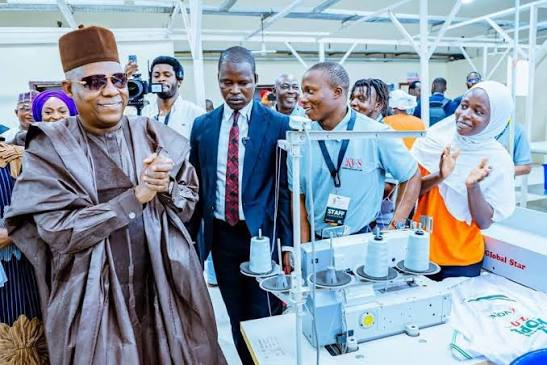
In a significant boost to Nigeria’s local manufacturing and industrialization drive, Vice President Kashim Shettima has officially commissioned the Kwara Garment Factory in Ilorin. The state-of-the-art facility, designed for multi-shift production, is projected to create at least 4,000 direct jobs once it reaches full operational capacity, marking a major milestone in the economic revitalization of the North Central region.
The commissioning ceremony, held on Wednesday, was a highlight of the Vice President’s strategic visit to Kwara State. It coincided with the historic turbaning of Governor AbdulRahman AbdulRazaq as the first Sardauna of Ilorin by the Emir of Ilorin, Alhaji Ibrahim Sulu-Gambari. The dual events underscored a strong synergy between traditional institutions, state governance, and federal support for grassroots economic development.
According to a statement by the Vice President’s media aide, Stanley Nkwocha, the garment factory represents a critical step toward reducing Nigeria’s reliance on imported textiles while directly addressing the pervasive challenge of youth unemployment. The facility is already demonstrating tangible progress, with over 500 workers successfully recruited and rigorously trained for its initial operations. As production scales up, the factory is expected to stimulate ancillary businesses, including logistics, packaging, and raw material supply, thereby creating a robust local value chain.
During the commissioning, Vice President Shettima lauded Governor AbdulRazaq’s administration for its strategic investments in education, healthcare, and road infrastructure. He emphasized that these foundational improvements are prerequisites for attracting and sustaining large-scale industrial projects.
“These are chapters in the story of a state as its people encounter it: the lesson a child can attend, the treatment a household can seek, and the market a farmer can reach,” Shettima remarked, urging the state government to maintain its current trajectory of inclusive and sustainable development programmes.
Additionally, the Vice President inaugurated the 11-storey Kwara Revenue Service House. This modern edifice will serve as the administrative headquarters for the Kwara State Internal Revenue Service (KW-IRS). The new facility is expected to significantly enhance the state’s internally generated revenue (IGR) by providing a centralized, technologically advanced environment for tax administration, thereby improving operational efficiency, transparency, and taxpayer compliance.
The convergence of these two projects—a job-creating manufacturing hub and a modernized revenue collection center—paints a comprehensive picture of Kwara State’s ambition to achieve financial autonomy. By boosting local production and simultaneously strengthening revenue generation mechanisms, the state is laying a durable foundation for long-term fiscal stability.
The landmark events attracted a high-profile array of dignitaries, reflecting the national significance of Kwara’s developmental strides. Attendees included the First Lady’s representative and wife of the Vice President, Nana Shettima; the Minister of Industry, Trade and Investment, Jumoke Oduwole; and the Attorney-General of the Federation and Minister of Justice, Lateef Fagbemi, SAN.
Traditional rulers also graced the occasion, notably the Emir of Zazzau, Nuhu Bamalli, and the Soun of Ogbomoso, Oba Ghandi Afolabi Olaoye, Orumogege III. Furthermore, the event served as a gathering of regional leadership, with Governors from Imo, Kebbi, Plateau, Ekiti, Ogun, Niger, Bayelsa, and Kaduna states in attendance to witness the historic commissioning and turbaning ceremonies.
As the Kwara Garment Factory transitions from its initial operational phase to full capacity, it stands as a testament to the viability of targeted, state-level industrial policies. For the 500 workers already on the payroll, and the thousands more expected to join, the facility is not just a factory; it is a beacon of hope and a practical realization of economic empowerment in the heart of Nigeria.
Sponsored
Related stories
 Youth Empowerment
TAFTA Trains 150 Female Creators to Build Sustainable Careers
, tools, and industry connections through its maiden Creator HQ programme, a three-day immersive training focused on content creation, intellectual property protection, and monetisation. Supported by the Mastercard Foundation, the initiative is designed to help women turn their creative talents into sustainable businesses and long-term careers.
 Youth Empowerment
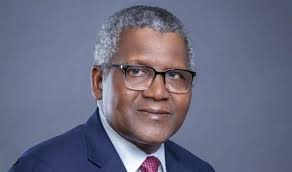
Dangote Foundation Gives Students Free Shares
The Aliko Dangote Foundation has launched a Student Share Grant Initiative that will fund an additional 10 shares in the Dangote Petroleum Refinery IPO for eligible tertiary students who subscribe for a minimum of 10 shares in their own names. Chairman Aliko Dangote says the programme is about developing a mindset — equipping young Nigerians with the knowledge and opportunity to understand how economic value is created and how they can participate in it.
 Youth Empowerment
FG Empowers 70 Media Managers With Tablets
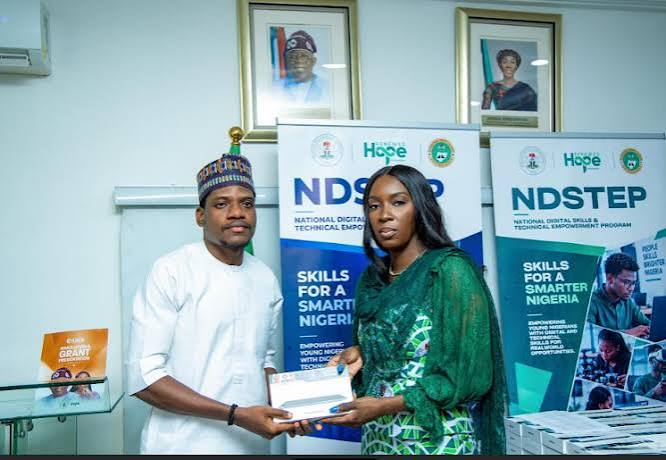
The Office of the Senior Special Assistant to the President on TVEE has given tablets to 70 digital media personnel to strengthen awareness of government vocational and entrepreneurship programmes ahead of the NPRGS Oyo State rollout.
 Youth Empowerment
MSS Academy Graduates 56 Youths in Event Technology
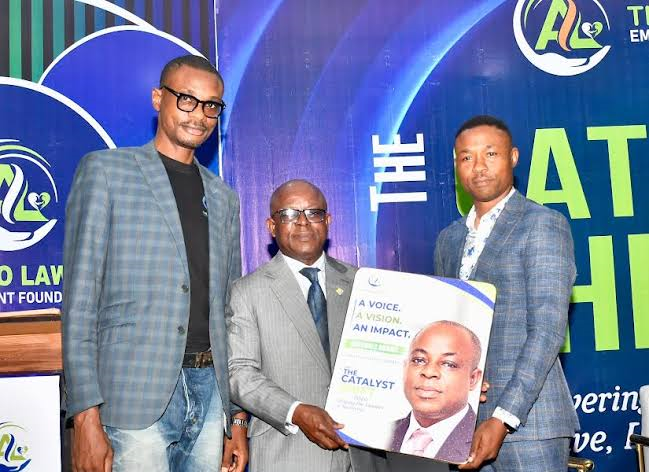
The Mobile Screen and Sound (MSS) Limited Technical Academy has graduated 56 students from its 10-week training programme in sound engineering, lighting design, and stage production, as part of efforts to equip young Nigerians with employable skills and reduce youth idleness. The academy has also promised automatic employment for the best five graduating students, underscoring its commitment to bridging the gap between training and industry placement.
Comments (0)
Leave a comment
All comments are moderated before publishing. Your email is never published.