
Reaching Hospital No Longer Enough to Save Pregnant Women, Professor Warns as Study Exposes 998 Maternal Deaths
A Professor of Obstetrics and Gynaecology has issued a stark warning that the belief that reaching a tertiary hospital guarantees survival during childbirth is no longer true in Nigeria. Presenting findings from a national study that recorded 998 maternal deaths and 1,451 near-misses across 42 public hospitals, the expert revealed that systemic failures, acute equipment deficits, severe brain drain, and institutional delays are the new killers, even for women who make it to the facility alive.
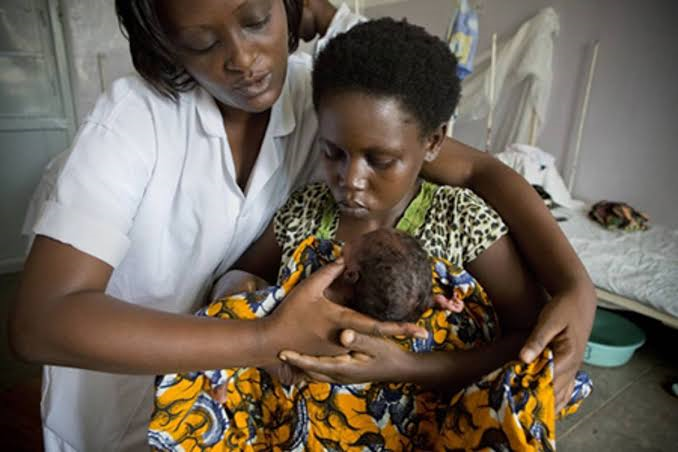
A Professor of Obstetrics and Gynaecology, George Ugwu, has declared that the long-held belief that reaching a tertiary hospital is the ultimate safety net for women experiencing childbirth complications is no longer true in Nigeria. He noted that new medical research reveals a troubling reality: timely physical arrival at a high-level health facility no longer assures survival. Instead, systemic failures, acute equipment deficits, severe brain drain, and institutional delays within public tertiary hospitals continue to claim the lives of pregnant women who made it to the hospital alive.
Speaking at the 251st Inaugural Lecture of the University of Nigeria, held at the UNN Business School Auditorium, Enugu Campus, Ugwu, who also serves as the Enugu State Commissioner for Health, raised the alarm over the institutional bottlenecks crippling emergency maternal care across the country. He delivered a paper titled, 'The Mother, The Child and The State: My Triumphant Journey from Evidence to Action,' presenting key findings from the Nigerian Near-Miss Maternal Death Surveillance Network.
The study, conducted across 42 public tertiary health institutions nationwide, monitored 91,702 live births. Researchers recorded a staggering 2,449 severe maternal outcomes, comprising 1,451 near-misses and 998 maternal deaths. Captioned 'When getting there is not enough,' the study exposed how arrival at a tertiary health centre often fails to save lives due to internal delays, un-booked patient statuses, and lack of immediate equipment readiness.
"We found that competencies in a system-dependent diagnosis fail when blood, theatre, equipment, or staff readiness fails. Correct diagnosis won't work if proper things are not put in your hands to work with. Physical arrival at the tertiary hospital does not mean survival is assured," Ugwu stated. Recounting a tragic encounter early in his career – where an un-booked pregnant woman bled to death in a labour ward – the fertility expert noted that Nigeria bears a disproportionate share of global maternal mortality. Although the country accounts for roughly 2.8 per cent of the global population, it contributes nearly 29 per cent of maternal deaths worldwide.
The research highlights that the challenge is no longer simply about access to facilities but about the quality of care received upon arrival. This aligns with the well-documented "three delays" framework that contributes to maternal deaths in Nigeria: delay in the decision to seek care, delay in reaching a health facility, and delay in receiving adequate care at the facility. While much attention has historically been focused on the first two delays, this new evidence suggests that the third delay – within the hospital itself – is now a critical and deadly factor.
The findings also resonate with other tragic cases that have drawn national attention, such as the death of Kemi Folajimi in April 2025, who was reportedly turned away from a private clinic for failing to deposit N500,000 upfront, and the case of an Abuja-based woman who lost her twin fetuses after delays caused by a physical referral letter requirement and cash deposit demands. These incidents underscore a system where care discontinuity, broken referral processes, and missing medical records are costing lives.
Compounding these infrastructural deficits is the massive exodus of trained healthcare professionals. Research cited by Ugwu indicates that 79.8 per cent of Nigerian healthcare workers are actively seeking to leave the country due to worsening insecurity, poor remuneration, and inadequate working tools. "These push factors act in isolation or in combination to push our physicians and health workers out of this country. To retain skilled workers, the conditions required to practice effectively must be put in place," he stressed.
To avert these preventable deaths, Ugwu advocated the immediate establishment of dedicated early pregnancy assessment units equipped with resident gynaecologists and functional ultrasound machines across public health institutions. Addressing policy solutions, he urged state governments and health administrators to move beyond routine clinical procedures by adopting the United Nations' AAAQ framework Availability, Accessibility, Acceptability, and Quality – to ensure care is affordable and dignified. He also called on the National Assembly to increase the Basic Healthcare Provision Fund allocation from the current 1 per cent to 5 per cent of the Consolidated Revenue Fund. This, he noted, would cushion the impact of dwindling international donor support and ensure sustainable funding for maternal and child healthcare.
"Judge service expansion by readiness, quality, and respectful care," Ugwu advised. He emphasised that every priority maternal and child health indicator must be assigned a named owner, a continuous feedback cycle, and an auditable response. The message is clear: for Nigeria's pregnant women, simply reaching a hospital is no longer enough. The system must be equipped, staffed, and prepared to save lives once they arrive.
Sponsored
Related stories
 Health
Diri Orders Free Quarterly Health Checks for All Bayelsa Residents at Secondary Facilities
Governor Douye Diri has directed Bayelsa's Ministry of Health to begin free quarterly medical check-ups across all eight local government areas, aimed at helping residents who cannot afford routine screening and promoting early detection of diseases.
 Health
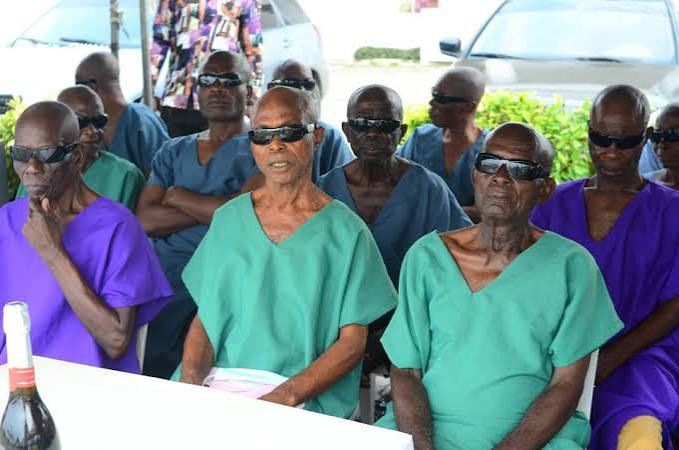
‘Priceless Gift of Sight’ Reaches 400,000 Beneficiaries
FCMB and the Tulsi Chanrai Foundation say their 15-year eye care partnership has reached over 400,000 Nigerians, as a World Sight Day roundtable in Abuja pushes for private-sector funding to sustain and expand care.
 Health
FUNAAB Launches Africa’s First AI Disease Surveillance System
Researchers at the Federal University of Agriculture, Abeokuta, have developed IDS-Master, a groundbreaking AI-powered surveillance system that detects infectious disease outbreaks in real time by analysing reports from community leaders, health agents, and ordinary residents. Described as Africa's first fully AI-driven event-based surveillance platform, the innovation promises to bridge critical gaps in outbreak detection across underserved rural communities where delays in reporting can cost l
 Health
NAFDAC Seeks Global Partners for Local Vaccine Production
The Director-General of the National Agency for Food and Drug Administration and Control (NAFDAC), Prof. Mojisola Adeyeye, has called on international partners to support the establishment of vaccine manufacturing facilities in Nigeria, saying local production is the missing link in the agency’s push to attain World Health Organisation Maturity Level 4 for vaccine lot release. She spoke at the 8th Nigeria Pharma Manufacturers’ Expo in Lagos, where she commended President Bola Tinubu’s Executive
Comments (0)
Leave a comment
All comments are moderated before publishing. Your email is never published.