
Port Harcourt Hospital Founder: Nigeria Can Reverse Medical Tourism Through Digital Healthcare, AI Diagnosis
Dr Richard Okoye, founder of Save-A-Life Mission Hospital in Port Harcourt, says sustained investment in digital technology and diaspora medical collaboration can reverse Nigeria's medical tourism trend and boost life expectancy.

Founder of Save-A-Life Mission Hospital, Port Harcourt, Dr Richard Okoye, has said Nigeria can reverse its medical tourism trend and improve the country's poor life expectancy outcomes through sustained investment in technology, local healthcare capacity, and closer collaboration with Nigerian medical professionals based abroad.
Okoye, a medical scientist, explained that he chose to remain in Nigeria despite the mass migration of medical professionals commonly referred to as "Japa," opting instead to invest in building what he described as a world-class, fully digitalised healthcare system within the country.
Speaking at a press conference in Port Harcourt, Okoye expressed concern over Nigeria's deteriorating doctor-to-patient ratio, particularly in rural communities where access to medical care remains severely limited. According to him, the challenge extends beyond the sheer number of doctors leaving the country, since the ongoing migration also represents a broader depletion of expertise and quality within the wider healthcare system. He said this trend has contributed directly to Nigeria's low life expectancy, stressing that maternal and child health outcomes remain major determinants of the country's overall health indicators.
Okoye traced his intervention back to 2014, when he first conceived the idea of developing technology capable of embedding international standards of medical practice into everyday healthcare delivery. He disclosed that work on the underlying technology began in the United States in 2016 and has since evolved into a comprehensive digital healthcare ecosystem now deployed at Save-A-Life Mission Hospital and in several underserved communities.
According to Okoye, the hospital currently uses real-time patient monitoring, electronic medical records, artificial intelligence-assisted clinical decision support, and a dedicated situation room where doctors continuously monitor patients. He explained that the hospital's "My Home Clinic" application allows patients to book appointments, submit medical information ahead of consultations, and receive professional guidance remotely, without needing to be physically present at the facility for every interaction.
He said the underlying system can also assist doctors with differential diagnoses, recommended investigations, and medication choices, while actively flagging or blocking prescriptions that could pose risks to patients with certain underlying conditions. "This technology is not meant to replace doctors. It is meant to ensure that whatever anybody is doing is within the international standard of medical practice," he said.
Okoye added that the same technology is being adapted for deployment in rural communities, where unreliable electricity and limited internet connectivity remain major obstacles to healthcare delivery. He disclosed that the hospital has already deployed solar-powered systems and satellite connectivity in some communities in Abia State, enabling local health workers to transmit patients' vital signs to doctors in real time. The initiative, he explained, includes remote monitoring devices for blood pressure, blood sugar, and urine tests, with particular emphasis on detecting complications among pregnant women before they escalate into emergencies.
Looking ahead, Okoye disclosed plans to introduce an advanced ambulance system into Nigeria in October, describing it as a mobile emergency-care unit equipped with technology that would allow doctors to monitor patients remotely while they are still in transit to hospital. He explained that the system is designed to help bridge the gap between primary, secondary, and tertiary healthcare facilities through structured triage and real-time referral processes.
Beyond the technological infrastructure itself, Okoye said Save-A-Life is also building a system through which Nigerian doctors based abroad can support patients within Nigeria remotely, while periodically returning to the country to train and work directly alongside local medical teams. He noted that this model is already attracting patients from other Nigerian states and even other countries, with Nigerians in the diaspora able to remotely monitor the treatment of relatives receiving care at the Port Harcourt facility.
According to Okoye, the hospital is also investing in advanced medical procedures and equipment, including robotic technology, with the aim of offering treatments locally that Nigerians have historically had to travel abroad to obtain. He said the ultimate objective of these combined efforts is to reverse medical tourism by making high-quality healthcare consistently available within Nigeria itself.
Beyond the direct health implications, Okoye argued that the economic benefits of this approach extend well beyond the healthcare sector alone, insisting that a healthy workforce is essential to national productivity and broader economic development. "Your prosperity is tied to your health. The productivity of any company is directly proportional to the health of the individuals that make up that company," he said.
He disclosed that Save-A-Life has already drawn interest from state governments, including the Abia State Government, in deploying aspects of its digital healthcare model more broadly across communities within their jurisdictions. Okoye noted that the hospital currently draws only about 30 per cent of its patients from Port Harcourt itself, with the majority travelling in from other states and countries to access its services.
He expressed optimism that continued investment in technology, medical training, and healthcare infrastructure would gradually place Nigeria on an upward trajectory in life expectancy, while reducing the number of Nigerians who feel compelled to travel abroad for medical treatment they could otherwise receive at home. "The reversal of medical tourism is absolutely the summary of it," he said.
Ready for your next link whenever you are.
Sponsored

Related stories
 Health
Diri Orders Free Quarterly Health Checks for All Bayelsa Residents at Secondary Facilities
Governor Douye Diri has directed Bayelsa's Ministry of Health to begin free quarterly medical check-ups across all eight local government areas, aimed at helping residents who cannot afford routine screening and promoting early detection of diseases.
 Health
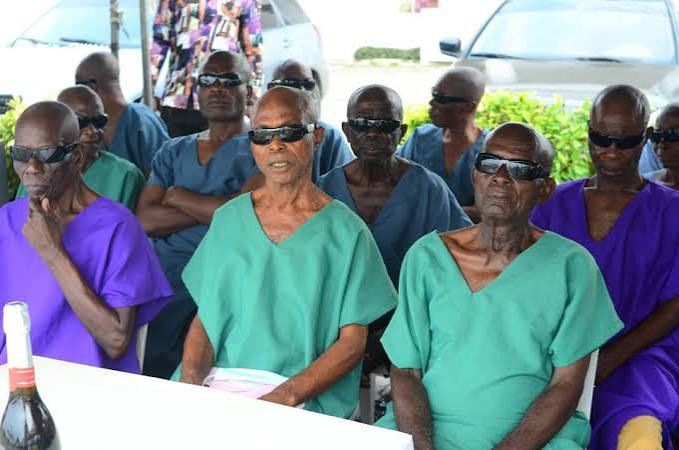
‘Priceless Gift of Sight’ Reaches 400,000 Beneficiaries
FCMB and the Tulsi Chanrai Foundation say their 15-year eye care partnership has reached over 400,000 Nigerians, as a World Sight Day roundtable in Abuja pushes for private-sector funding to sustain and expand care.
 Health
FUNAAB Launches Africa’s First AI Disease Surveillance System
Researchers at the Federal University of Agriculture, Abeokuta, have developed IDS-Master, a groundbreaking AI-powered surveillance system that detects infectious disease outbreaks in real time by analysing reports from community leaders, health agents, and ordinary residents. Described as Africa's first fully AI-driven event-based surveillance platform, the innovation promises to bridge critical gaps in outbreak detection across underserved rural communities where delays in reporting can cost l
 Health
NAFDAC Seeks Global Partners for Local Vaccine Production
The Director-General of the National Agency for Food and Drug Administration and Control (NAFDAC), Prof. Mojisola Adeyeye, has called on international partners to support the establishment of vaccine manufacturing facilities in Nigeria, saying local production is the missing link in the agency’s push to attain World Health Organisation Maturity Level 4 for vaccine lot release. She spoke at the 8th Nigeria Pharma Manufacturers’ Expo in Lagos, where she commended President Bola Tinubu’s Executive
Comments (0)
Leave a comment
All comments are moderated before publishing. Your email is never published.