
Oxfam, Partners Empower North-East Communities to Take Charge of Post-Insurgency Development in Adamawa, Borno
Oxfam Nigeria and its implementing partners have trained community stakeholders and local government officials in Adamawa and Borno states to take ownership of their development priorities, as part of a broader push to reposition the North East in the post-insurgency era.
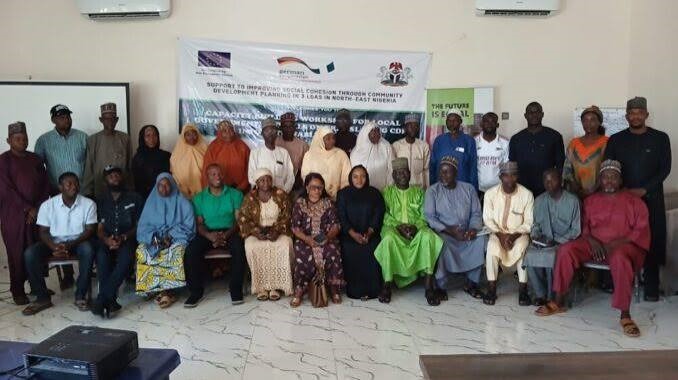
As part of ongoing efforts to reposition Nigeria's North East geo-political zone in the post-insurgency era, Oxfam Nigeria, working in collaboration with a coalition of implementing partners, has empowered community stakeholders across Adamawa and Borno states to take charge of their own development needs and priorities.
The initiative brought together Oxfam and partners including the European Union, German development cooperation agencies, Cruden, the Coalition for Development and Rights in Nigeria (CODERHI), and the Yaharakai Foundation, working jointly under a programme titled "Support to Improving Social Cohesion Through Community Development Planning." Beyond community-level stakeholders, the programme also extended to local government officials, including directors, heads of budget departments and financial officers, who were trained to sharpen their understanding of the National Chart of Accounts (NCoA) , a standardised budgeting framework approved by Nigeria's Governors' Forum for adoption across the country's 774 local government councils.
The beneficiaries of the programme, who included community leaders, other local stakeholders and development actors, were drawn from three local government areas: Guyuk in Adamawa State, and Biu and Kwaya Kusar in Borno State. The selection of these particular local governments reflects the programme's targeted approach, focusing resources on communities within states that bore some of the heaviest impact of the North East insurgency over the past decade and a half.
Speaking at the event, Oxfam project coordinator Samuel Lashon said the initiative had become especially important given that the region has now moved from active insurgency into what he described as a post-insurgency era, creating a corresponding need for communities and their stakeholders to take ownership of their development priorities and drive the implementation of those priorities for the direct benefit of their people. He expressed satisfaction with the impact the project has had on North East communities so far, noting that it has been yielding tangible results, with residents across various communities embracing the initiative, taking greater ownership of their development issues, and embarking on self-help projects across sectors such as water supply, school renovations, and bridge and road construction.
Lashon added that the project is expected to go a long way in promoting unity and sustainable development while strengthening social cohesion, by giving communities the opportunity to identify their own challenges and implement development priorities through an inclusive, participatory planning process rather than having priorities determined for them externally.
Also speaking at the event, one of the project's beneficiaries and a member of the Ward Development Support Committee (WDSC), Charles Samson, said the initiative has enabled communities to complement government-led development efforts using locally generated funds to execute their own projects, rather than depending entirely on government intervention to meet their development needs. Another beneficiary, Zainab Ibrahim, said the empowerment support and grants extended to beneficiaries across various communities would go a long way toward supporting local development and improving overall living conditions for residents.
The programme forms part of a broader pattern of international and non-governmental engagement in Nigeria's North East, where years of insurgency-related displacement and destruction have left significant gaps in local infrastructure, governance capacity and community cohesion. Community-driven development models of this kind have increasingly gained traction among development agencies operating in the region, based on the premise that development outcomes tend to be more sustainable when local communities are directly involved in identifying needs and executing solutions, rather than relying solely on top-down government or donor-led interventions.
By pairing grassroots community empowerment with technical capacity-building for local government officials on standardised budgeting frameworks, the programme appears designed to strengthen development outcomes from both directions — equipping communities to identify and pursue their own priorities, while also ensuring that local government structures have the financial management capacity needed to support and sustain those efforts over the longer term.
As the North East continues its transition from active conflict toward reconstruction and stabilisation, initiatives like this one are likely to remain a key part of the broader strategy for rebuilding social cohesion, restoring public trust in local governance structures, and ensuring that recovery efforts are shaped by the communities they are intended to serve.
Sponsored

Related stories
 Programs
NABCO begins Phase 3 recruitment with focus on ICT and healthcare graduates
The Nation Builders Corps has opened applications for Phase 3 targeting 50,000 graduates in ICT, healthcare, education and agriculture.
Programs
Free SHS programme records 1.2 million enrolments in 2024/25 academic year
The Ghana Education Service reports 1.2 million students enrolled in the Free Senior High School programme in the current academic year.
Comments (0)
Leave a comment
All comments are moderated before publishing. Your email is never published.