
Ogun Invests ₦5bn in Women’s Livelihoods Under Abiodun’s Gender Agenda
Governor Dapo Abiodun’s administration in Ogun State has invested over ₦5 billion to empower 100,000 women, blending economic support with political inclusion to strengthen families and secure the state’s future.
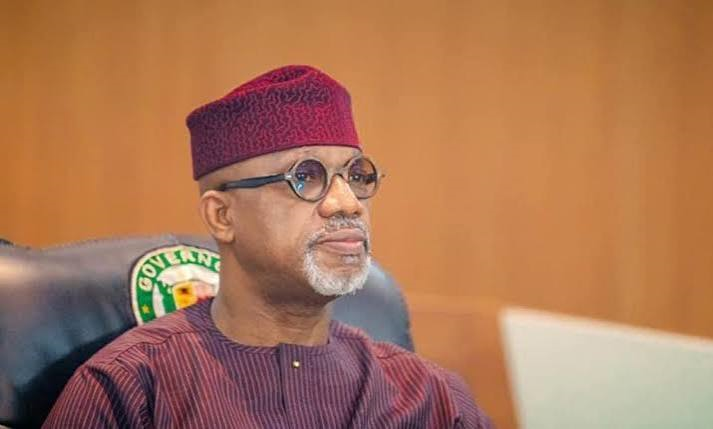
A government’s commitment to gender equality is best measured not by the volume of its announcements, but by the creation of lasting pathways for women to earn, lead, and shape society. By this metric, Governor Dapo Abiodun’s administration in Ogun State has established a clear, deliberate, and highly impactful women’s agenda that is fundamentally transforming the socio-economic landscape of the Gateway State.
Under Governor Abiodun’s leadership, women’s development has evolved beyond episodic, short-term assistance. It is now deeply integrated into the state’s broader economic and social strategy. Recognizing that Ogun’s development cannot be complete while its women remain economically constrained or excluded from decision-making, the administration has championed a holistic approach encompassing productive capital, skills acquisition, financial inclusion, enterprise development, and leadership opportunities.
The scale of this intervention is substantial. In strategic partnership with the World Bank-supported Nigeria for Women Project, the Ogun State government has directly empowered approximately 100,000 women. Furthermore, official data indicates the establishment of 8,759 Women Affinity Groups, actively engaging 247,273 women across the state’s 20 Local Government Areas. These figures reflect a multi-dimensional approach to grassroots mobilization and economic inclusion.
At the heart of this economic strategy is the "Oko’wo Dapo" livelihood support program. Relaunched with renewed vigor in 2022, the initiative initially provided direct livelihood grants to 2,094 women. By early 2026, Governor Abiodun reported a monumental milestone: over ₦5 billion had been invested in women-focused livelihood programs over a six-year period. This includes approximately ₦3 billion channeled through the World Bank-supported initiative, complemented by ₦2 billion in direct funding from the Ogun State government. To date, the Oko’wo Dapo program alone has empowered roughly 55,000 women, enabling them to build sustainable, independent livelihoods.
This state-level commitment has also been reinforced through high-level strategic collaboration. During a recent visit by the First Lady of the Federal Republic, Senator Oluremi Tinubu, Governor Abiodun pledged full institutional support and seamless cooperation from the state government. This synergy ensures strong alignment between Ogun’s localized women-focused programs and the First Lady’s national initiatives on women’s economic empowerment and social inclusion.
The broader significance of this agenda extends far beyond individual financial gain; it is a direct investment in household and community stability. Women are the backbone of household welfare, agriculture, commerce, and local economies. Strengthening their livelihoods inherently fortifies families against economic shocks, reduces vulnerabilities to exploitation and trafficking, and fosters resilient communities.
However, Governor Abiodun recognizes that true advancement cannot end with economics alone. Women must also have a definitive seat at the table where critical decisions are made. Consequently, his administration has actively created pathways for women to serve in the State Executive Council, the State House of Assembly, the National Assembly, and various boards, agencies, and parastatals. These appointments transcend mere statistical representation; they grant women the authority, visibility, and platforms necessary to influence public policy and governance.
Ultimately, this dual approach of economic opportunity and institutional inclusion gives the women’s agenda profound depth. It redefines women not merely as beneficiaries of government programs, but as dynamic entrepreneurs, professionals, policymakers, and equal partners in governance. As Ogun State continues to measure the lasting impact of these policies through stronger enterprises, improved incomes, and greater civic participation, Governor Abiodun’s blueprint stands as a model for how empowering women is the surest path to strengthening families and securing a prosperous future for the entire state.
Sponsored

Related stories
 Youth Empowerment
Katung Empowers Southern Kaduna Women, Youths Through Traditional Crafts
Senator Sunday Marshall Katung has trained and empowered women and youths in Zonkwa, Zangon Kataf LGA, with vocational skills in ceramic and pottery, tie-and-dye, and bead-making,backed by start-up funds to turn craft into cash. It is the latest in a series of human-capital interventions from the Kaduna South lawmaker, and beneficiaries say the message is clear: promises are being translated into action, one skill at a time.
 Youth Empowerment
EU, GIZ Empower 1,000 Northeast Households with Business Kits
The SEPIN-SUSI programme has distributed business establishment kits to 1,000 vulnerable households across Adamawa and Borno States—550 in Numan and 450 in Kwaya Kusar,under a GIZ-implemented Graduation Approach backed by the European Union and Germany’s Federal Ministry for Economic Cooperation and Development. It is a deliberate shift from short-term relief to sustainable livelihoods, with beneficiaries trained in shoemaking, fishery, tailoring, catering, and poultry production.
 Youth Empowerment
NGO Empowers 120 FCT Youths With Tech Skills
Givchris Global Services Limited has begun a six-month, free skills programme in Kwali, Abuja, training 120 young people aged 12 to 30 in computer hardware and mobile phone repairs to boost self-employment.
 Youth Empowerment
1,000 Tech Scholars to Benefit From Ekeh Foundation, NCS Partnership
The Leo Stan Ekeh Foundation has signed a Memorandum of Understanding with the Nigeria Computer Society to provide mentorship, technical training, and practical industry experience to 1,000 beneficiaries of its technology scholarship programme. The initiative will select students from all 36 states and the FCT, covering their education from first year through graduation while pairing each scholar with a dedicated industry mentor.
Comments (0)
Leave a comment
All comments are moderated before publishing. Your email is never published.