
NSA Unveils New Security Framework to Tackle Oil Theft, Pipeline Vandalism
Nuhu Ribadu unveils standard procedures to coordinate security agencies and contractors, protect oil infrastructure and curb crude theft.
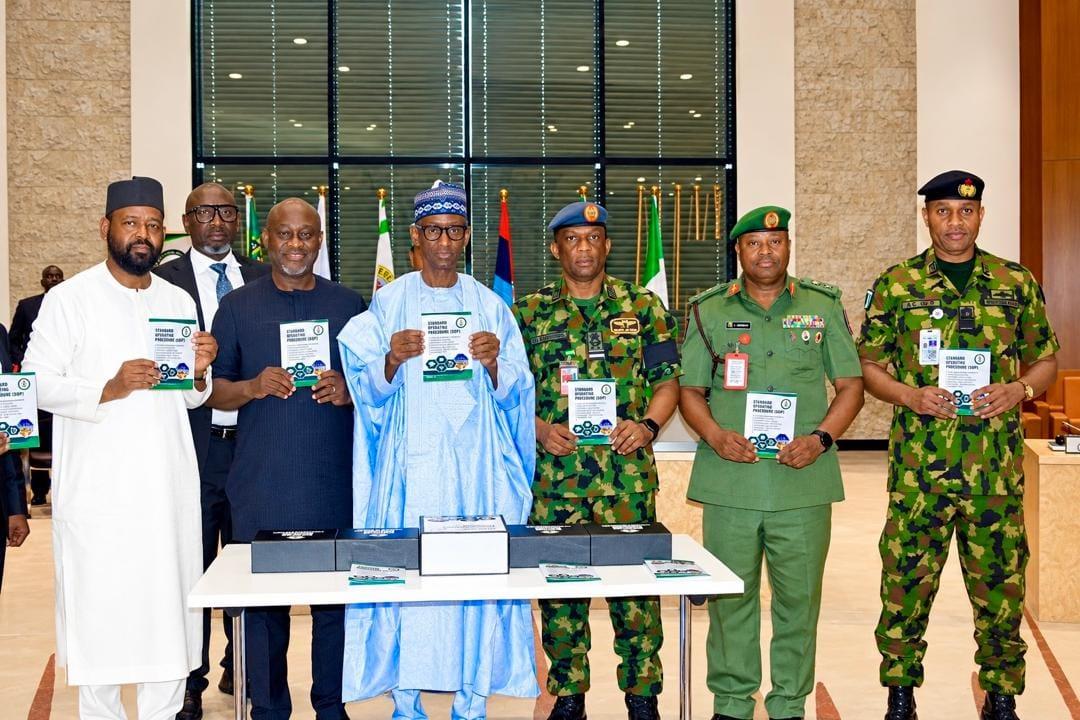
The National Security Adviser, Nuhu Ribadu, has unveiled a new security framework designed to strengthen the protection of Nigeria’s oil and gas infrastructure and improve the fight against crude oil theft, pipeline vandalism and illegal refining.
The framework, known as the Standard Operating Procedure (SOP) for the Nigerian Oil and Gas Industry-Wide Security Architecture, was unveiled on Monday at the Office of the National Security Adviser in Abuja.
It establishes common procedures for government security and intelligence agencies, private surveillance contractors, regulators and other industry stakeholders involved in securing petroleum assets.
Ribadu said Nigeria’s oil and gas resources remained vital to the country’s economic stability and national development, but persistent theft, vandalism and illegal refining had undermined production, reduced government revenue and damaged the environment.
He said the new framework was developed through consultations involving the Armed Forces, security and intelligence agencies, the Nigerian National Petroleum Company Limited (NNPCL), regulators and private surveillance contractors.
According to the NSA, the document is intended to clarify responsibilities, strengthen command and control, improve intelligence sharing and standardise procedures for surveillance, arrests, detention and the handling of recovered petroleum products.
The unveiling follows reported gains from industry-wide security operations. NNPCL said the collaboration had contributed to the recovery of more than 2.4 million barrels of stolen crude oil, the deactivation of over 10,000 illegal refineries and refining sites, and the removal of nearly 7,000 illegal pipeline connections. More than 3,700 suspects were also reportedly arrested.
Speaking on behalf of NNPCL Group Chief Executive Officer Bashir Ojulari, company representative Dahiru Gwarzo said protecting oil infrastructure required coordinated action because no single agency, operator or contractor could tackle the problem independently.
He said the framework would help reduce operational conflicts and improve accountability among the organisations working in the sector.
The Commandant-General of the Nigeria Security and Civil Defence Corps, Ahmed Audi, also expressed support for the initiative, saying the procedures would help regulate personnel conduct and strengthen protection of petroleum infrastructure.
Ribadu urged all participating institutions to ensure that the procedures reached field personnel and were incorporated into their operations.
He stressed that the framework’s effectiveness would depend on implementation, professionalism, information sharing and compliance with the law.
The initiative is expected to support efforts to protect critical energy assets, reduce oil losses and improve confidence in Nigeria’s petroleum industry.
Sponsored

Related stories
 News
Oyo Doctors Suspend Strike, Resume Work After One Week
The Association of Medical and Dental Officers of Oyo State has suspended its one-week strike and directed members to resume clinical duties while negotiations with the state government continue.
 News
FG Moves to Repeal 1963 Fire Service Act, Rename Agency
The Federal Government plans to replace the 1963 Fire Service Act with new legislation that will transform the Federal Fire Service into the Federal Fire and Rescue Service, expanding its emergency response responsibilities.
 News
Bomb Threat Diverts London-Sofia Flight to Hungary
A Wizz Air flight travelling from London to Sofia was diverted to Budapest after receiving a bomb threat, prompting a Hungarian Gripen fighter jet to escort the aircraft to safety.
 News
Mutfwang Says Tinubu Is Repaying Debt from Buhari’s Advance Crude Sales
Plateau State Governor Caleb Mutfwang says the Buhari administration sold crude oil before production, leaving the Tinubu government to meet the resulting obligations while managing the country’s economic challenges.
Comments (0)
Leave a comment
All comments are moderated before publishing. Your email is never published.