
Stakeholders Demand Safeguards Against Risks of Industrial Animal Farming
Environmental and agricultural stakeholders have urged the Federal Government to introduce stronger regulations, ensure transparency and protect local farmers and host communities as Nigeria considers a proposed $2.5bn investment in industrial animal farming by Brazilian meat-processing company, JBS.
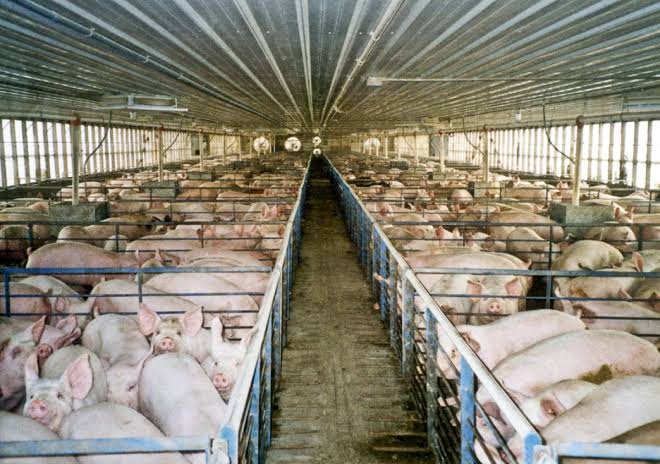
Stakeholders in the environmental and agricultural sectors have called for stronger regulatory safeguards, transparency and protection of local farmers amid concerns over the potential environmental, health and economic implications of industrial animal farming in Nigeria.
The call was made at a stakeholders’ workshop on Industrial Animal Farming and its Implications held in Calabar, Cross River State, where participants examined the proposed $2.5bn investment by Brazilian meat-processing company, JBS, and its possible effects on local communities, food systems and livelihoods.
The Deputy Executive Director of Environmental Rights Action/Friends of the Earth Nigeria, Mariann Bassey-Olsson, urged the Federal Government to make public the memorandum of understanding (MoU) signed with the company, arguing that Nigerians needed access to the agreement to understand the scope and implications of the proposed investment.
She said the scale of the project required careful scrutiny beyond its projected financial value and employment opportunities, particularly regarding land acquisition, environmental protection, local food production and the welfare of host communities.
According to her, publicly available information indicated that JBS was proposing six facilities comprising three poultry plants, two beef-processing facilities and one pork-processing facility.
She said the proposed facilities raised important questions about their locations, land requirements, environmental safeguards and operational arrangements.
Bassey-Olsson called for independent environmental and social impact assessments before the project commenced, insisting that the findings should be made accessible to affected communities.
She also urged the authorities to scrutinise the company's environmental commitments and supply-chain practices to ensure that the investment would not undermine local food systems or expose communities to avoidable risks.
While acknowledging that large-scale investments could create employment opportunities, she questioned the quality of jobs likely to be generated and called for measures to ensure that Nigerians benefited meaningfully from the project.
Also speaking, the Director of Programmes at the Health of Mother Earth Foundation (HOMEF), Joyce Brown, said the organisation had continued to advocate transparency and accountability regarding the proposed investment.
Brown disclosed that the foundation had requested access to the agreement between the company and the government but had yet to receive a response.
She said affected communities needed adequate information about the project to understand its potential implications and participate meaningfully in decisions that could affect their livelihoods.
According to her, the investment could have consequences for land, water resources and local food production, particularly for small-scale livestock farmers who might struggle to compete with a large multinational company.
She urged the government to establish appropriate regulatory measures to protect local producers while improving their access to credit, processing and storage facilities, markets and infrastructure.
Brown said such interventions would help smallholder farmers improve productivity and remain competitive as the livestock sector expanded.
The Coordinator of Peace Point Development Foundation, Umo Isua-Ikoh, expressed concern about possible pressure on community-owned land, warning that large industrial projects could restrict farmers' access to land if adequate safeguards and consultations were not established.
Isua-Ikoh called on the government and investors to respect community rights and ensure that affected residents were consulted before decisions were taken on land acquisition and project implementation.
He also urged authorities to conduct comprehensive assessments of the possible effects of the proposed facilities on water resources, land and surrounding communities.
The stakeholders maintained that their concerns did not amount to opposition to foreign investment or agricultural development but reflected the need for responsible business practices, transparency, community participation and environmental protection.
They stressed that the proposed investment should be subjected to effective regulation and public scrutiny to ensure that its economic benefits did not come at the expense of local farmers, public health and the livelihoods of host communities.
Sponsored

Related stories
 News
NDC Chieftain Faults FG’s Appeal Against £420m Enugu Coal Miners’ Compensation Ruling
A chieftain of the Nigeria Democratic Congress, Okenna Peter Agubuzu, has criticised the Federal Government’s appeal against a £420 million compensation judgment for families of 21 coal miners killed during the 1949 Iva Valley Massacre, urging the government to withdraw the appeal.
 News
One Dead as Three Trucks Collide on Lagos-Ibadan Expressway
One person has died following a collision involving three trucks along the Lagos-Ibadan Expressway in Ogun State. The accident occurred around the BNX axis, with traffic authorities confirming that the affected vehicles had been evacuated and normal movement restored.
 News
Oyo APM Tells Tinubu Nigerians Need Better Living Conditions, Not Name-Calling
The Allied Peoples’ Movement (APM) in Oyo State has criticised President Bola Tinubu over his remarks at the APC rally in Ibadan, urging him to focus on improving Nigerians’ living conditions rather than attacking political opponents.
 News
Reps FCT Committee Celebrates Betara at 60, Commends Legislative Leadership
Members of the House of Representatives Committee on the Federal Capital Territory have congratulated their chairman, Muktar Betara, on his 60th birthday, praising his leadership, legislative contributions and commitment to public service.
Comments (0)
Leave a comment
All comments are moderated before publishing. Your email is never published.