
Nile University Replaces Certificate Culture with AI, Robotics and Skills Training
Nile University of Nigeria is betting big on artificial intelligence, robotics, and hands-on technical training to close the gap between what graduates learn in classrooms and what employers actually need. With 100 AI-powered interactive boards, a planned robotics laboratory, and a new vocational institute, Vice-Chancellor Dilli Dogo says the era of certificates without competence is over.
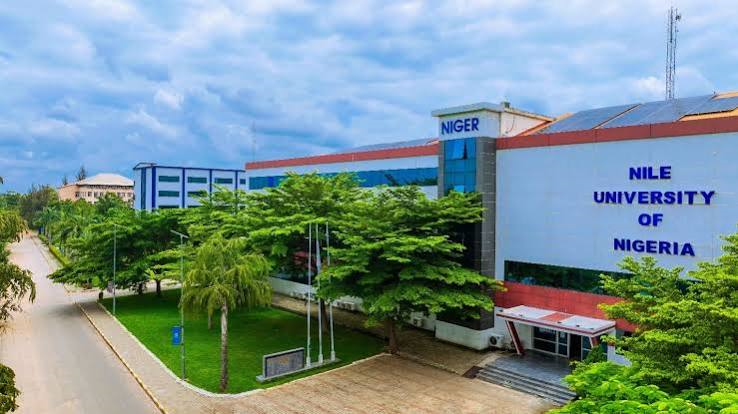
Nile University of Nigeria has launched a sweeping rethink of what a university education should deliver, shifting its focus from certificates to practical competencies in artificial intelligence, robotics, and technical vocational skills, Vice-Chancellor Professor Dilli Dogo has announced.
Speaking in Abuja ahead of the university’s 14th convocation, scheduled for November 17–19, 2026, Dogo said the institution is deliberately restructuring its academic model to address the persistent mismatch between what graduates are taught and what the modern workplace demands. “We believe education in the 21st century must go beyond certificates,” he said. “The industry, public and private sectors expect more than certificates from graduates. They want skills”.
The university has already deployed 100 AI-enabled digital interactive boards across its classrooms to deepen interactive teaching, research, and student engagement. It is also developing a dedicated artificial intelligence and robotics laboratory, alongside an Institute of Technical and Vocational Skills designed to equip students with the hands-on competencies emerging industries urgently need. The proposed institute will focus on practical areas including the maintenance of electric vehicles, solar energy systems, and modern industrial equipment—skills Dogo says Nigeria cannot afford to keep importing. “We cannot continue importing electric cars and all kinds of machinery when the people to maintain them do not exist,” he said. “These are gaps we are working proactively to address”.
The push is not confined to engineering and technology. Nile University is preparing to commission a Medical Simulation Centre, where medical students and healthcare trainees will develop clinical judgement and decision-making skills in simulated environments before ever touching a real patient. The university recently inducted 75 newly qualified medical doctors at its fifth MBBS attestation ceremony, reflecting the continued expansion of its health sciences training. In entrepreneurship, 30 student-led startups graduated from an initial cohort of 45 teams at the 2026 Collective Lab Demo Day, giving students room to test business ideas alongside their academic work. The institution has also expanded into cybersecurity, with recent discussions with the Nigeria Police Force on research and professional development.
Dogo said the university has strengthened its skills-first approach through partnerships with professional bodies, allowing students in relevant disciplines to pursue professional qualifications alongside their degrees—a move that gives graduates a dual advantage in a crowded labour market. The infrastructure is keeping pace. Construction has begun on a 4,500-seat multipurpose hall and convocation centre, with additional academic facilities and staff accommodation also in development.
The 14th convocation itself will open on November 17 with a lecture titled “Nexus Between Education and Security: Implications and Lessons for Sub-Saharan Africa,” delivered by former Chief of Army Staff, General (Ambassador) Tukur Yusuf Buratai (rtd). First degrees and prizes will be presented on November 18, while honorary degrees, postgraduate diplomas, and higher degrees will be conferred on November 19. The university will confer an honorary degree on Alhaji Mahmud Yayale Ahmed, former Head of the Civil Service of the Federation and former Secretary to the Government of the Federation, in recognition of his distinguished public service and contribution to national institutional development.
For Nile University, the message is unmistakable: a degree is no longer enough. In a country where youth unemployment remains stubbornly high and employers routinely complain that graduates lack basic workplace readiness, the institution is staking its reputation on producing graduates who can build, maintain, diagnose, and innovate—not just recite theory. Dogo’s closing argument is a challenge to the entire sector: universities must play a more active role in addressing national challenges through research, innovation, and practical training. Whether other institutions follow suit remains to be seen, but Nile University has already put its classrooms, laboratories, and curriculum where its rhetoric is.
Sponsored

Related stories
 Tech & Education
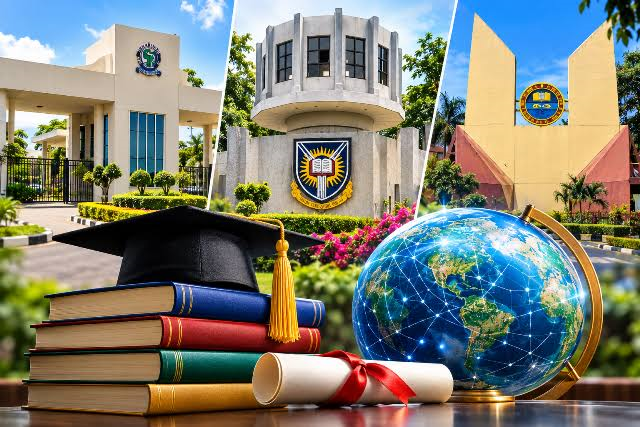
UNILAG Jumps Over 700 spots in 2027 World Rankings,Making Africa's Biggest Gain
The University of Lagos has recorded Africa’s biggest ranking leap, soaring from the 1,401–1,500 band to joint 697th in the 2027 QS World University Rankings: Sustainability. The milestone—driven by gains in environmental education, governance and equality—marks Nigeria’s strongest global showing yet and lifts the country to fourth in Africa, but experts warn that six universities out of more than 300 is a wake-up call, not a victory lap.
 Tech & Education
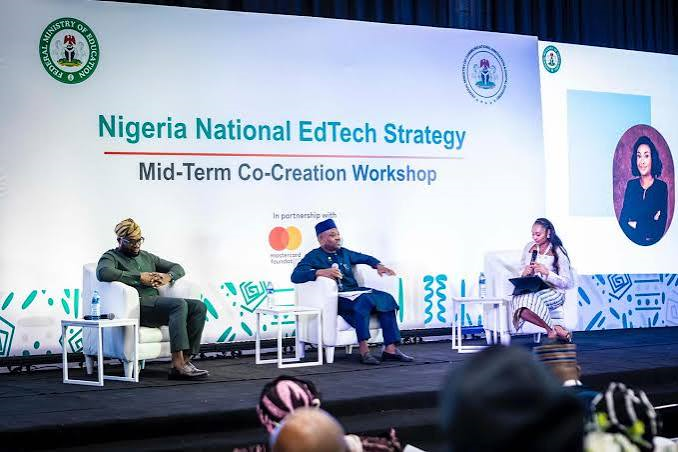
FG Unveils National EdTech Strategy to Reach 20 Million Out-of-School Children
The Federal Government has launched Nigeria’s first-ever National EdTech Strategy, a sweeping policy framework designed to wire classrooms, train teachers, standardise digital content, and close the country’s gaping education divide. But with 20 million children out of school, erratic power supply, and a yawning digital skills gap, analysts warn the strategy will live or die on implementation—and funding.
 Tech & Education
Taraba Governor Approves Lecturers’ Allowances, Urges ASUU to End Strike
Governor Agbu Kefas has approved 100 per cent payment of CATA, CONTTA and Earned Academic Allowances, including arrears dating back to January 2026, in a bid to break a month-long strike that has paralysed Taraba’s tertiary institutions and left final-year students in limbo. But ASUU has yet to formally call off the action—and the ball is now in the union’s court.
 Tech & Education
Tantita, Honerich Empower Sapele Pupils with Back-to-School Relief
Tantita Security Services Nigeria Limited and Honerich Nigeria Limited have extended their back-to-school CSR drive to Ogwere Primary School, Ikwegwu, and Ethiope Modern Primary School in Sapele, Delta State, distributing school bags, exercise books, water bottles, and mathematical sets to pupils in underserved communities—reinforcing a growing corporate push to keep host-community children in school and learning.
Comments (0)
Leave a comment
All comments are moderated before publishing. Your email is never published.