
Nigeria Pays Five Times More Interest on Private External Loans, World Bank
Nigeria paid an average interest rate of 9.6 per cent on new external loans from private creditors in 2025, compared with 1.9 per cent from official lenders, according to the World Bank, as the country's external debt rose to $145.02bn.
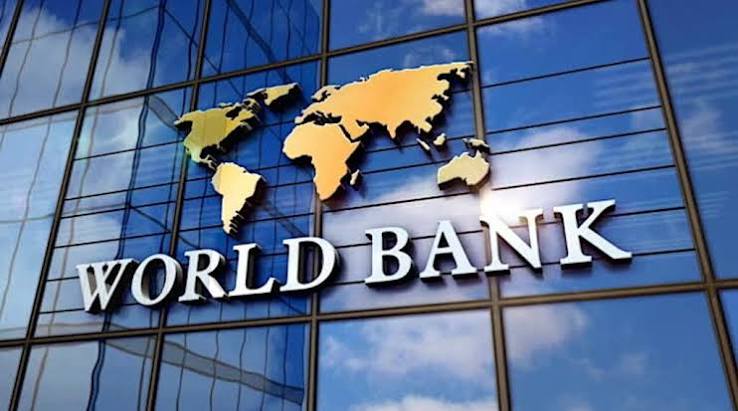
Nigeria paid five times more in interest on new external loans obtained from private creditors than on financing secured from official lenders in 2025, highlighting the rising cost of accessing international capital.
The World Bank Group disclosed this in its latest International Debt Statistics, which showed that private creditors charged Nigeria an average interest rate of 9.6 per cent, compared with 1.9 per cent offered by official lenders.
The report also revealed significant differences in the repayment conditions attached to the two categories of borrowing.
Loans from official creditors carried an average maturity period of 25 years and a five-year grace period, while private creditors offered an average maturity of 12 years and an eight-year grace period.
The figures indicate that Nigeria faced substantially higher interest costs and shorter repayment periods when accessing private international financing.
The World Bank report further showed that Nigeria's total external debt stock increased by 6.6 per cent to $145.02bn in 2025, from $136.05bn in 2024.
The country's external debt has risen from $83.21bn in 2015, representing an increase of approximately $61.8bn over the decade.
A breakdown of the 2025 debt profile showed that public and publicly guaranteed obligations accounted for $62.40bn, while private nonguaranteed debt stood at $54.48bn. Short-term external debt accounted for another $28.14bn.
Within the public and publicly guaranteed category, multilateral creditors accounted for $31.37bn, bilateral lenders held $6.68bn, while private creditors accounted for $24.35bn.
The World Bank's International Development Association was Nigeria's largest multilateral creditor, with $18.53bn, while International Monetary Fund Special Drawing Rights allocations accounted for $5.52bn.
China remained Nigeria's largest bilateral creditor, with $5.67bn, followed by France with $774m and other bilateral lenders with $237m.
The report also highlighted the country's external debt servicing obligations, showing that debt service as a proportion of export earnings stood at 19 per cent in 2025, representing a 9.6 per cent increase.
Debt service relative to Gross National Income also rose by 6.9 per cent to five per cent.
However, Nigeria's external debt-to-export ratio declined by 4.3 per cent to 212 per cent, while external debt as a proportion of Gross National Income fell by 6.6 per cent to 51 per cent.
The contrasting movements indicate that although some debt stock indicators improved, the burden of servicing external obligations increased during the period.
Commenting on global debt transparency, World Bank Group Chief Statistician Haishan Fu said the institution had worked with borrowing countries for more than five decades to develop comprehensive and comparable external debt records.
She explained that the reconciliation of loan information submitted by borrowing countries with corresponding records provided by bilateral creditors had helped identify discrepancies, validate information and improve the reliability of debt statistics.
Fu stressed that debt transparency required cooperation between borrowers and creditors, adding that accurate information was essential for effective debt management and informed financing decisions.
The World Bank's findings come amid growing concerns about rising borrowing costs in developing economies and the pressure of debt repayments on resources available for infrastructure, healthcare, education and other development priorities.
Sponsored

Related stories
 News
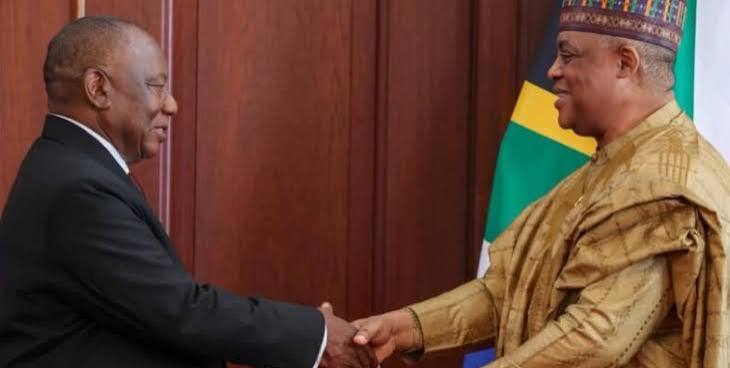
South Africa Releases Fani-Kayode’s Speech After Diplomatic Protest
The South African Presidency has released the full recording of Nigerian Ambassador Femi Fani-Kayode’s address to President Cyril Ramaphosa after the envoy protested its omission from an official livestream of a diplomatic ceremony in Pretoria.
 News
US Air Force Captain Arrested in Japan Over Suspected Drunk Driving
Japanese police have arrested a 27-year-old US Air Force captain in Okinawa on suspicion of drunk driving, amid heightened scrutiny of misconduct involving American military personnel stationed in the country.
 News
Ramaphosa’s Spokesman Tells Nigerian Mission to Stop Disgracing Country
South African President Cyril Ramaphosa’s spokesperson, Vincent Magwenya, has criticised Nigeria’s High Commission over its account of an alleged intervention by the President after Nigerian High Commissioner Femi Fani-Kayode’s speech was omitted from a diplomatic ceremony livestream.
 News
Jonathan Urges Nigeria to Abandon Religious, Ethnic Bias in Leadership Selection
Former President Goodluck Jonathan has called for an end to religious, ethnic and other divisive considerations in choosing political leaders, insisting that Nigeria’s development depends on prioritising competence and merit.
Comments (0)
Leave a comment
All comments are moderated before publishing. Your email is never published.