
Kuje Chairman Shekwolo Reaffirms Commitment to Education Development, Teachers' Welfare
Kuje Area Council Chairman Danjuma Samuel Shekwolo has pledged continued investment in public primary education, citing renovated classrooms, new school blocks, and efforts to resolve outstanding teacher welfare issues.
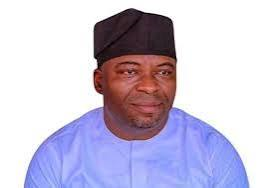
The Chairman of Kuje Area Council, Hon. Danjuma Samuel Shekwolo, has reaffirmed his administration's commitment to revitalising public primary education, improving teachers' welfare, and creating a conducive learning environment for children across the council.
The chairman made the commitment during a meeting with head teachers of Local Education Authority (LEA) schools in Kuje Area Council held on Friday, an engagement that brought together school leadership from across the council to discuss ongoing priorities within the education sector.
Shekwolo commended teachers for their dedication and sacrifices in shaping the future of children despite the challenges confronting the education sector, noting that education remained a top priority of his administration. His remarks reflected a broader emphasis many local government administrations across Nigeria have placed on public primary education in recent years, particularly amid ongoing national conversations around infrastructure deficits and teacher welfare within the basic education subsector.
On infrastructure, the chairman assured that the council would witness significant development in the education sector going forward. He disclosed that four classrooms with accompanying offices had already been renovated at Chibiri, Pasali, Toto-Ganbiya, and Rubochi, while new classroom blocks had been constructed at Gova, Ruga Fulani Kango, and Affa II. These interventions, according to Shekwolo, form part of a broader effort to address longstanding infrastructure gaps that have historically affected learning conditions at public primary schools within the council.
Beyond physical infrastructure, the chairman also disclosed that the council had provided exercise books and other learning materials for distribution to pupils in public primary schools. He assured that the distribution process would be properly monitored to ensure that the materials reach the intended beneficiaries, an assurance that speaks to broader concerns often raised in Nigeria's public education system around the diversion or mismanagement of learning materials meant for pupils.
On the matter of teachers' welfare, Shekwolo said his administration was making efforts to address outstanding welfare issues, including arrears of annual increments and promotions, issues that have historically affected staff morale within public education systems at various levels of government across Nigeria. He noted that since the assumption of office, attention had been given to some of these lingering matters, though he did not provide a specific timeline for the full resolution of the outstanding arrears.
The chairman further disclosed that the council was reviewing staff deployment and transfers to ensure that teachers are appropriately positioned and their services effectively felt within their communities, a move suggesting the administration is looking beyond immediate welfare concerns toward broader structural improvements in how teaching staff are allocated across the council's schools.
In closing, Shekwolo charged head teachers to demonstrate effective leadership, punctuality, discipline, and accountability, stressing that laziness, absenteeism, and dereliction of duty would not be tolerated under his administration. The charge places a corresponding expectation on school leadership even as the council works to address its own commitments around infrastructure and welfare, framing the relationship between council and school administrators as one of mutual accountability.
The Kuje intervention adds to a broader pattern of area council and local government-level education initiatives across the Federal Capital Territory and other parts of Nigeria, where administrations have increasingly sought to demonstrate commitment to basic education through a combination of infrastructure renovation, learning material distribution, and efforts to address teacher welfare concerns, even as questions remain about the pace and sustainability of such interventions across the country's public primary education system as a whole.
Sponsored

Related stories
 Tech & Education
Bamidele Unveils N200m Renovated Science College
Senate Leader Opeyemi Bamidele has commissioned the renovated Government Science College, Iyin-Ekiti, personally funded at over N200 million, donating buses to the school and nearby FUTESI while promising a second phase of upgrades.
 Tech & Education
Abia Students Crowned Global Debate Champions
Students from public schools in Abia State, representing Nigeria, have emerged overall champions at the 2026 International Schools Debate Championship in Doha, Qatar, winning four major trophies and 12 laurels after defeating teams from Jordan, India, Qatar, the Philippines, Kenya and others. The historic victory has been hailed as proof that Governor Alex Otti's education reforms are producing world-class scholars.
 Tech & Education
WAEC Appoints Suleiman Kum as New Head of Nigeria National Office
The West African Examinations Council has appointed 56-year-old Suleiman Danlami Kum as the new Head of the Nigeria National Office, succeeding Dr Amos Josiah Dangut, who has assumed office as the council’s Registrar and Chief Executive Officer. A seasoned test developer, administrator and executive with 28 years of service, Kum is expected to drive technological innovation and examination security across Nigeria’s foremost examinations body.
 Tech & Education
Emmanuel College ’88 Set Renovates Classrooms, Pays Exam Fees
The Progressives of the Unique 1988 Set of Emmanuel College Owerri have unveiled a renovated five-classroom block and paid NECO and WAEC fees for financially disadvantaged students at their alma mater.
Comments (0)
Leave a comment
All comments are moderated before publishing. Your email is never published.