
Kaduna Empowers Women Leaders Against GBV
The Gender Awareness Trust (GAT) has trained 12 Christian women and cultural leaders in Kaduna State as trainers to prevent and respond to gender-based violence, leveraging their grassroots influence to challenge harmful norms
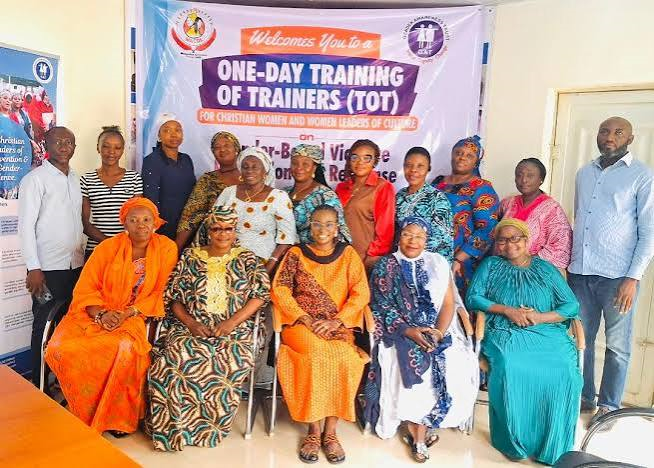
In a strategic move to combat the persistent challenge of gender-based violence (GBV) at the grassroots level, the Gender Awareness Trust (GAT) has successfully trained a cohort of Christian women and women leaders of culture in Kaduna State. The intensive one-day Training of Trainers (ToT) workshop, held recently in Kaduna, equipped 12 selected participants from Zangon Kataf and Kaduna South Local Government Areas with actionable strategies to prevent and respond to GBV within their communities.
The initiative, implemented under the "Empowering Christian Women and Leaders of Culture for Prevention and Response to Gender-Based Violence in Nigeria" project, represents the second phase of GAT’s targeted intervention in the state. The programme was made possible through crucial funding and technical support from the Women Aid Collective (WACOL), a prominent non-governmental organization dedicated to advancing women's rights and safety across Nigeria.
Speaking during the training, GAT’s Executive Director, Dr. Lydia Umar, emphasized that the unique social and cultural positions occupied by these women place them in a powerful vantage point to drive meaningful, lasting change. She noted that faith actors, community influencers, and custodians of culture possess inherent platforms to shape critical conversations around relationships, family life, dignity, and mutual respect.
“Women leaders and custodians of culture have platforms through which they can shape conversations around relationships, family life, dignity, and respect, making their involvement critical to efforts aimed at preventing violence before it occurs,” Dr. Umar stated.
The core objective of the workshop extended far beyond mere knowledge acquisition. Participants were challenged to transition from passive attendees to active advocates and trainers. Dr. Umar urged the women to leverage their respective spheres of influence to promote core values of justice, equality, and protection, while actively encouraging their families and communities to reject harmful behaviors and cultural practices that expose women and girls to violence, abuse, or discrimination.
A defining feature of this intervention is its cascading "Training of Trainers" (ToT) methodology. Recognizing that a one-day workshop cannot singularly dismantle deeply entrenched societal norms, the programme is explicitly designed for exponential reach. The 12 trained leaders are now expected to take the knowledge and skills acquired beyond the training venue, sharing them with other women and community members in their respective domains.
Dr. Umar stressed that the ultimate success and measurable impact of the programme would depend largely on the trainees' ability to translate theoretical lessons into practical, community-driven activities.
“The impact of this programme will depend largely on the ability of the trainees to translate the lessons into practical activities within their communities,” she explained. “Participants are expected to conduct step-down trainings in Zangon Kataf and Kaduna South, thereby extending the reach of the intervention and creating a wider network of women equipped to identify, challenge, and prevent harmful practices associated with GBV.”
This localized approach is particularly vital in Northern Nigeria, where cultural and religious frameworks heavily dictate social norms. By empowering women who already command respect and trust within these frameworks, GAT is fostering an organic, culturally sensitive resistance to gender-based violence. Instead of imposing external solutions, the initiative amplifies internal voices that can safely and effectively challenge harmful traditions from within.
As the participants return to Zangon Kataf and Kaduna South, they carry a renewed mandate: to transform their communities into safe havens for women and girls. Through sustained step-down trainings and grassroots advocacy, this cohort of leaders is poised to ignite a broader movement, proving that the most effective defense against gender-based violence often begins with the empowered voices of women at the very heart of the community.
Sponsored

Related stories
 Youth Empowerment
1,000 Tech Scholars to Benefit From Ekeh Foundation, NCS Partnership
The Leo Stan Ekeh Foundation has signed a Memorandum of Understanding with the Nigeria Computer Society to provide mentorship, technical training, and practical industry experience to 1,000 beneficiaries of its technology scholarship programme. The initiative will select students from all 36 states and the FCT, covering their education from first year through graduation while pairing each scholar with a dedicated industry mentor.
 Youth Empowerment
Ibadan NGO Empowers 100 Girls, Urges Oyo to Fight Child Marriage
The Oluwakemi Olusola Girl Child Foundation, with two partner foundations, gave 100 girls in an underserved Ibadan community medical checks, school bags, food, hygiene kits and counselling, while calling on the Oyo government to intensify its fight against child marriage.
 Youth Empowerment
NNPC, Eni Award Postgraduate Scholarships to 30 Nigerian Graduates
The NNPC/Eni Joint Venture has awarded postgraduate scholarships to 30 Nigerian graduates for the 2026/2027 academic session, selecting the beneficiaries from over 3,000 applicants. Ten scholars will study at top universities abroad, including Imperial College London and the University of Aberdeen, while the remaining 20 will pursue degrees in Nigerian institutions across engineering, geosciences, renewable energy, and energy transition disciplines.
 Youth Empowerment
100,000 Pupils Get N20,000 Each Under N2bn Fund
First Lady Oluremi Tinubu has launched a N2 billion Learners Retention Support Programme that will provide N20,000 each to 100,000 pupils in its first phase, alongside the distribution of two million packs of sanitary towels and back-to-school materials to girls in public basic schools across Nigeria. The initiative, flagged off to mark the 2026 International Day of the Girl Child, is designed to remove the financial and hygiene barriers that force thousands of Nigerian girls out of the classroo
Comments (0)
Leave a comment
All comments are moderated before publishing. Your email is never published.