
Jonathan Urges Nigeria to Abandon Religious, Ethnic Bias in Leadership Selection
Former President Goodluck Jonathan has called for an end to religious, ethnic and other divisive considerations in choosing political leaders, insisting that Nigeria’s development depends on prioritising competence and merit.
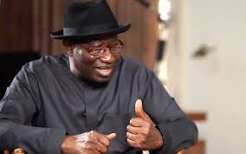
Former President Goodluck Jonathan has warned that Nigeria will continue to face developmental challenges unless it abandons what he described as primitive methods of selecting political leaders based on religion, ethnicity, language and other narrow considerations.
Jonathan said the country must prioritise competence and merit in choosing those entrusted with public responsibilities, noting that even highly qualified individuals could be overlooked under a system driven by religious and ethnic affiliations.
He made the remarks on Saturday at the Herbert Macaulay Colloquium in Lagos, organised to commemorate the 162nd anniversary of the birth of the Nigerian nationalist, who was born on November 14, 1864.
The former president lamented that political leadership recruitment in Nigeria remained influenced by religious denominations and other divisive factors, which he said undermined the country's prospects for meaningful development.
He cited an unnamed state in southern Nigeria where, according to him, an individual must belong to a particular Christian denomination to become governor, despite the overwhelming Christian population.
Jonathan argued that such practices prevented capable people from emerging as leaders, regardless of their qualifications and abilities.
He also identified weak institutions, corruption, inconsistent policies, inadequate infrastructure and insecurity as major obstacles to Nigeria's development.
On the country's democratic system, the former president called for comprehensive reforms, describing the existing structure as opaque and amorphous.
He said Nigeria needed a democracy that guaranteed broader public participation, respect for the rule of law and human rights, judicial independence, accountability, political pluralism and an active civil society.
Jonathan further emphasised the importance of strengthening the education sector, urging the government to invest in functional education and establish research-oriented universities capable of driving technological advancement and innovation.
Citing India, Singapore and South Korea as examples, he noted that the countries had made significant progress by investing in quality education and developing their human capital.
He stressed that Nigeria could not achieve meaningful development with weak educational institutions, adding that the country must deliberately invest in its brightest minds and build world-class universities to compete internationally.
Paying tribute to Macaulay and other founding nationalists, Jonathan said the most meaningful way to honour their contributions was to build a country that reflected the ideals and aspirations for which they struggled.
He maintained that celebrating the sacrifices of the country's founding figures should go beyond commemorative events to include concrete efforts towards national development.
Sponsored

Related stories
 News
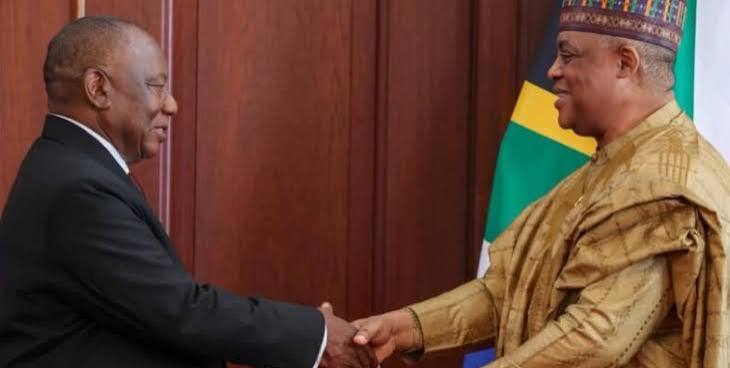
South Africa Releases Fani-Kayode’s Speech After Diplomatic Protest
The South African Presidency has released the full recording of Nigerian Ambassador Femi Fani-Kayode’s address to President Cyril Ramaphosa after the envoy protested its omission from an official livestream of a diplomatic ceremony in Pretoria.
 News
US Air Force Captain Arrested in Japan Over Suspected Drunk Driving
Japanese police have arrested a 27-year-old US Air Force captain in Okinawa on suspicion of drunk driving, amid heightened scrutiny of misconduct involving American military personnel stationed in the country.
 News
Ramaphosa’s Spokesman Tells Nigerian Mission to Stop Disgracing Country
South African President Cyril Ramaphosa’s spokesperson, Vincent Magwenya, has criticised Nigeria’s High Commission over its account of an alleged intervention by the President after Nigerian High Commissioner Femi Fani-Kayode’s speech was omitted from a diplomatic ceremony livestream.
 News
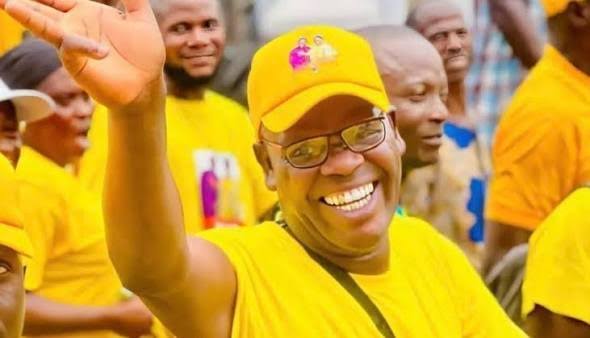
Oriyomi Hamzat Declares Support for Tinubu Ahead of 2027 Election
Oyo State Accord Party governorship candidate, Oriyomi Hamzat, has declared that he will support President Bola Tinubu's re-election bid in 2027, citing his party's position and the need to avoid anti-party activities.
Comments (0)
Leave a comment
All comments are moderated before publishing. Your email is never published.