
Jigawa Resolves NECO Results Delay
Jigawa State has resolved the delay in public school students' NECO results, attributing the temporary setback to a bank transaction glitch that caused government funds to bounce back
The Jigawa State Government has successfully resolved a recent delay that prevented public school students from accessing their 2026 National Examinations Council (NECO) results, attributing the temporary setback to an unforeseen bank transaction glitch. The clarification comes after days of mounting anxiety among students, parents, and guardians across the state who were unable to retrieve their academic records following the national release of the results.
The 2026 NECO Senior School Certificate Examination (SSCE) results were officially released nationwide on Wednesday, September 24, 2026, by the Registrar and Chief Executive of NECO, Prof. Dantani Wushishi. While students in many parts of the country seamlessly accessed their profiles, findings on the ground in Jigawa State revealed a stark disparity. Students in public schools across major educational hubs, including Dutse, Hadejia, and Gumel, were met with error messages or locked portals when attempting to view their results.
The unexpected delay sparked widespread concern and speculation within local communities. Parents and guardians, already navigating the financial and emotional stresses of the academic season, expressed deep frustration over the lack of immediate information, fearing that the delay might negatively impact their wards’ subsequent admission processes into tertiary institutions.
Addressing the growing public concern on Tuesday, the Jigawa State Commissioner for Higher Education, Prof. Isa Chamo, provided a comprehensive explanation of the situation. He clarified that the delay was neither intentional nor a reflection of any administrative negligence on the part of the state government or the examination body. Instead, it was the direct result of a technical failure within the banking sector.
“The delay is not intentional. The funds we deposited to NECO to facilitate the release of results for our public school students bounced back due to bank transaction issues,” Prof. Chamo explained.
In the Nigerian public education system, state governments often bulk-pay examination fees and result-processing charges on behalf of public school students to alleviate the financial burden on low-income families. In this instance, the funds allocated by the Jigawa State Government for this purpose were inadvertently reversed by the banking system due to a technical glitch, temporarily halting the authorization required for NECO to unlock the results for these specific candidates.
Prof. Chamo emphasized that the state government acted swiftly upon discovering the anomaly. The necessary financial transactions were immediately reprocessed and verified, ensuring that the outstanding obligations to NECO were fully settled. Following this corrective action, NECO confirmed the receipt of the funds and promptly restored access to the results portal for all affected Jigawa public school students.
Seeking to calm the nerves of the public, the Commissioner issued a strong reassurance regarding the state’s unwavering commitment to educational advancement. He urged parents, guardians, and students to remain calm, emphasizing that the administration of Governor Umar Namadi remains deeply invested in the academic success of the state’s youth.
“No student will be left behind. The government of Governor Umar Namadi has paid all requisite fees, and we have resolved all issues with NECO,” Prof. Chamo affirmed. He confirmed that by 6:00 PM on Tuesday, all affected students would have full, unhindered access to their results on the official NECO portal.
While the situation has been satisfactorily resolved, the incident highlights the inherent vulnerabilities of relying heavily on digital financial infrastructure for critical public services. A single technical glitch in the banking sector can inadvertently trigger a cascade of administrative delays, causing unnecessary psychological distress to students awaiting pivotal academic milestones.
Education stakeholders have since called for the establishment of more robust contingency protocols and real-time communication channels between state ministries of education, examination bodies, and financial institutions. Such measures would ensure that if similar technical hiccups occur in the future, they can be identified and rectified proactively, with transparent, real-time updates provided to the public to prevent the spread of misinformation and undue panic.
For now, the students of Jigawa State can breathe a sigh of relief, as their academic records are once again accessible, allowing them to proceed with their next educational steps without further hindrance.
Sponsored

Related stories
 Tech & Education
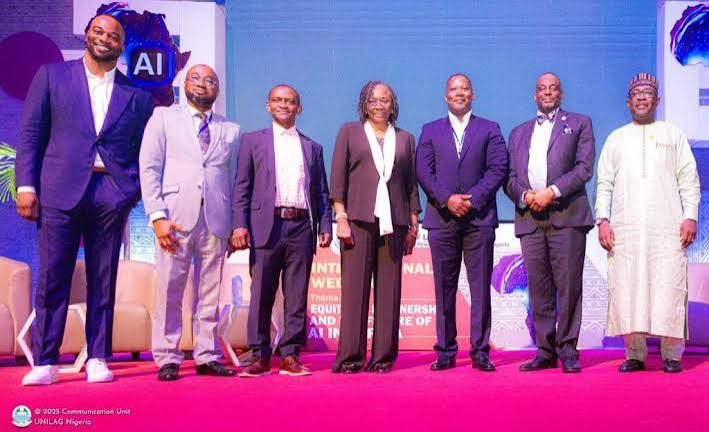
African Universities Urged to Rethink Teaching in AI Era
At UNILAG's International Week, leaders from the University of Ghana, UNILAG and UNDP argued that AI makes memorisation-based teaching obsolete and urged universities to reform curricula, assessment and incentives to reward critical thinking and innovation.
 Tech & Education
Otti’s Wife Supports 1,000 Abia Pupils With School Materials
The wife of the Abia State Governor, Mrs. Priscilla Otti, has distributed back-to-school materials to 1,000 indigent pupils from 50 public schools across the state's 17 local government areas, declaring that a child's background should never be a barrier to greatness. The intervention, organised by the Safe Tent Care Initiative in collaboration with the Abia State Universal Basic Education Board, is designed to support families struggling to provide essential educational materials for their chil
 Tech & Education
AI Era: Experts Warn Nigerian Graduates Face Skills Gap
Education experts have warned that Nigerian universities risk producing graduates who are ill-prepared for an AI-driven global job market unless curricula are urgently overhauled. At the StudyIn Global Study Conference 2026 in Lagos, stakeholders called for proactive curriculum reform, ethical AI adoption, and a shift from producing AI users to nurturing AI innovators who can solve real-world problems.
 Tech & Education
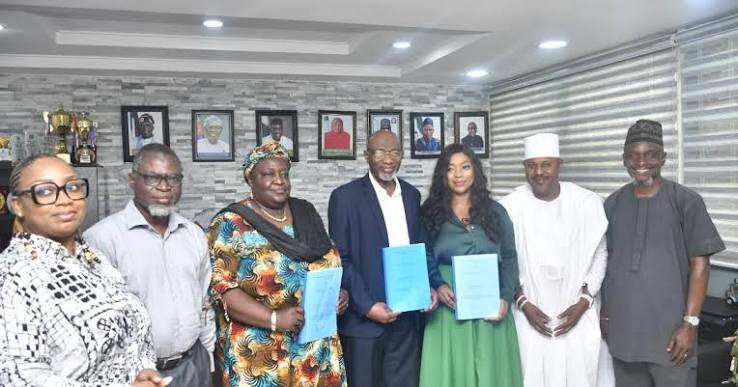
YABATECH, Threatremeter Launch Filmmaking Centre
Yaba College of Technology has signed a partnership with Threatremeter Nigeria Limited to establish a Centre for Filmmaking and Production, offering certified training in acting, directing and film production for students and the public.
Comments (0)
Leave a comment
All comments are moderated before publishing. Your email is never published.