
HBM Nigeria Trains 120 Women in Construction Skills
HBM Nigeria Plc has commenced its 2026 Female Tilers and Block-Laying Training initiative, equipping 120 women across Lagos and Ogun States with practical construction skills, entrepreneurship training, and business management knowledge. The six-week programme, delivered in partnership with the Lagos State Employment Trust Fund, is designed to expand women's participation in the building and construction sector while addressing the persistent gender gap in skilled trades.
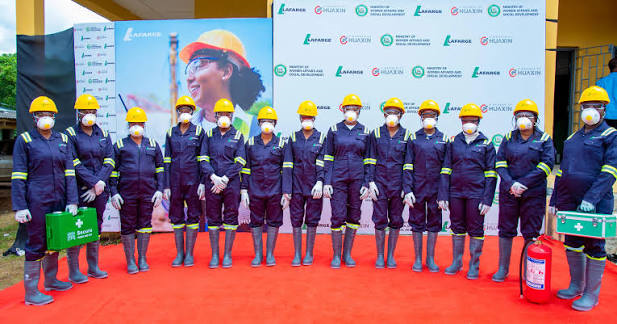
HBM Nigeria Plc, a leading provider of innovative building solutions and manufacturer of cement, ready-mix, mortar and Plaster of Paris products, has commenced its 2026 Female Tilers and Block-Laying Training initiative, equipping 120 women across Lagos and Ogun States with practical construction skills to expand their participation and economic opportunities in the building and construction sector.
The six-week training is being implemented across three locations, with 40 women each in Ayobo and Epe in Lagos State and another 40 participants in Abeokuta, Ogun State. The Lagos component of the programme is being delivered in partnership with the Lagos State Employment Trust Fund (LSETF) and other relevant state stakeholders, following a joint orientation and launch held on Monday, September 21, 2026.
The beneficiaries will receive hands-on training in wall and floor tiling and block-laying, alongside sessions on entrepreneurship, financial literacy, soft skills, digital tools, business management and sustainable construction practices. The programme also covers health and safety, circular economy principles, practical project work and mentorship, with participants expected to complete capstone projects in tiling and masonry before graduating at the end of the six-week training.
Speaking on the initiative, the Director of Communications, Public Affairs and Sustainable Development at HBM Nigeria Plc, Viola Graham-Douglas, explained that the programme reflects the company's commitment to creating practical pathways for women to build sustainable livelihoods while addressing the gender gap in skilled construction trades. She added that the programme provides participants with exposure to entrepreneurship, financial literacy, business registration, digital skills and professional associations, helping them understand how to turn their technical skills into viable businesses and build sustainable careers.
"At HBM Nigeria Plc, we believe that skills development is one of the most practical ways to create lasting opportunities for women, particularly those from underserved communities. Through this programme, we are not only teaching women how to tile or lay blocks; we are equipping them with the technical knowledge, business skills and confidence they need to build sustainable livelihoods and participate meaningfully in an industry where women remain underrepresented," Graham-Douglas said.
The Female Tilers and Block-Laying Training initiative is part of HBM Nigeria's broader corporate social responsibility efforts to equip women from underserved communities with technical, entrepreneurial and financial skills while promoting greater female participation in the construction sector. The initiative builds on the company's previous women-focused programmes, including the BuildHer by Lafarge initiative, which trained 100 women across Lagos, Ogun and Cross River States, following an earlier cohort of 40 women.
The construction industry in Nigeria has historically been male-dominated, with women largely confined to administrative and support roles rather than technical and skilled trades. The gender gap in construction is perpetuated by a combination of cultural norms, limited access to training opportunities, and workplace environments that are often unwelcoming to women. By providing women with hands-on training in tiling and block-laying, HBM Nigeria is not only challenging these norms but also creating a pipeline of skilled female professionals who can compete for lucrative contracts in a sector that is critical to the nation's infrastructure development.
The partnership with LSETF is particularly significant, as it provides a structured framework for linking trainees to employment opportunities and business support services. LSETF has been at the forefront of vocational training and job creation in Lagos State, and its involvement in the programme ensures that participants receive not just technical skills but also the support they need to transition into the workforce or establish their own businesses.
The inclusion of entrepreneurship and business management modules reflects a recognition that technical skills alone are not sufficient to guarantee economic success. By equipping participants with the knowledge to register businesses, manage finances, and market their services, the programme is preparing them for the realities of self-employment in a competitive market. The focus on digital tools and soft skills further enhances their employability, ensuring that they are not left behind in an increasingly technology-driven economy.
The programme also emphasises sustainable construction practices and circular economy principles, aligning with global trends toward environmentally responsible building methods. As Nigeria grapples with the challenges of climate change and resource depletion, the adoption of sustainable practices in the construction sector is not just desirable but essential. By training women in these practices, HBM Nigeria is contributing to the development of a workforce that is equipped to meet the demands of a changing industry.
For the 120 women participating in the programme, the training represents far more than an opportunity to learn a trade. It is a pathway to economic independence, a chance to break free from the cycle of poverty, and a platform to demonstrate that women can excel in fields traditionally reserved for men. As they complete their capstone projects and prepare for graduation, they carry with them not just new skills but a renewed sense of confidence and possibility.
HBM Nigeria's investment in female tiling and block-laying training is a powerful statement of intent. It signals that the company is not content to simply observe the gender gap in construction but is taking concrete action to close it. As the construction sector continues to grow and evolve, the women trained through this initiative will be well-positioned to seize the opportunities it offers. And as more companies follow HBM Nigeria's example, the face of Nigeria's construction industry will gradually change, becoming more inclusive, more diverse, and ultimately more resilient.
Sponsored
Related stories
 Youth Empowerment
1,000 Tech Scholars to Benefit From Ekeh Foundation, NCS Partnership
The Leo Stan Ekeh Foundation has signed a Memorandum of Understanding with the Nigeria Computer Society to provide mentorship, technical training, and practical industry experience to 1,000 beneficiaries of its technology scholarship programme. The initiative will select students from all 36 states and the FCT, covering their education from first year through graduation while pairing each scholar with a dedicated industry mentor.
 Youth Empowerment
Ibadan NGO Empowers 100 Girls, Urges Oyo to Fight Child Marriage
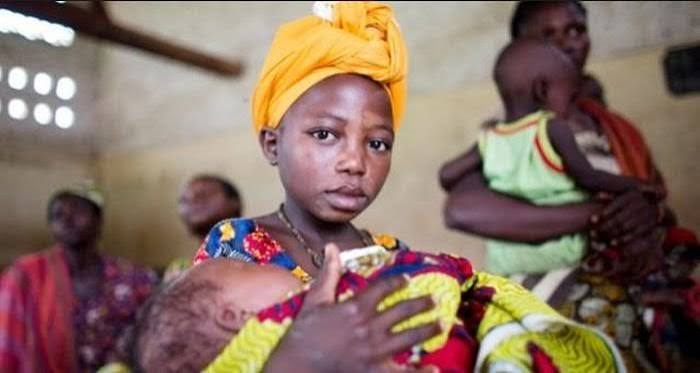
The Oluwakemi Olusola Girl Child Foundation, with two partner foundations, gave 100 girls in an underserved Ibadan community medical checks, school bags, food, hygiene kits and counselling, while calling on the Oyo government to intensify its fight against child marriage.
 Youth Empowerment
NNPC, Eni Award Postgraduate Scholarships to 30 Nigerian Graduates
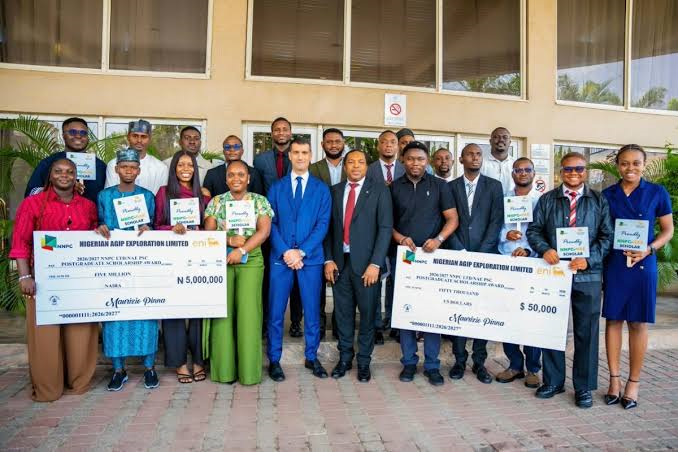
The NNPC/Eni Joint Venture has awarded postgraduate scholarships to 30 Nigerian graduates for the 2026/2027 academic session, selecting the beneficiaries from over 3,000 applicants. Ten scholars will study at top universities abroad, including Imperial College London and the University of Aberdeen, while the remaining 20 will pursue degrees in Nigerian institutions across engineering, geosciences, renewable energy, and energy transition disciplines.
 Youth Empowerment
100,000 Pupils Get N20,000 Each Under N2bn Fund
First Lady Oluremi Tinubu has launched a N2 billion Learners Retention Support Programme that will provide N20,000 each to 100,000 pupils in its first phase, alongside the distribution of two million packs of sanitary towels and back-to-school materials to girls in public basic schools across Nigeria. The initiative, flagged off to mark the 2026 International Day of the Girl Child, is designed to remove the financial and hygiene barriers that force thousands of Nigerian girls out of the classroo
Comments (0)
Leave a comment
All comments are moderated before publishing. Your email is never published.