
FG Launches Free 100MB Daily Data for Public School Students from October 1
Nigerian students in public senior secondary schools and tertiary institutions will get 100MB of zero-rated daily data to access approved educational platforms starting October 1, under an NCC-led initiative involving MTN, Airtel, and Globacom.

Nigerian students in public senior secondary schools and tertiary institutions will begin receiving 100 megabytes (MB) of free daily data from October 1, 2026, to access approved educational websites and digital learning platforms, under a new Federal Government initiative aimed at closing the digital education access gap.
The programme is being implemented by the Nigerian Communications Commission (NCC) in partnership with telecommunications operators, the Association of Licensed Telecommunications Operators of Nigeria (ALTON), and the Federal Ministry of Education. Minister of Education, Dr Tunji Alausa, announced the commencement date on Thursday at the launch of the Initiative for Zero-Rated Access to Educational Platforms and Content in Nigeria, held in Abuja. "Let me let out the secret. This will be made available to Nigerian students from October 1st, 2026," Alausa said.
Under the framework, participating mobile network operators will provide eligible students with a daily zero-rated data allowance of 100MB, usable specifically to access educational websites and platforms approved by the NCC and the Federal Ministry of Education. Alausa said the initiative would initially target students in public senior secondary schools and tertiary institutions before being extended to other categories of learners. "Our ambition must be that, ultimately, no Nigerian learner should be denied access to quality educational content simply because he or she cannot afford data," he said.
The minister explained that the cost of internet data has remained a major barrier to digital education in Nigeria, particularly for students from low-income households. He said the zero-rated access model would allow mobile phones, tablets, and computers to function as genuine learning tools for students who might otherwise be unable to afford regular internet access.
Ayuba Shuaibu, Director of Policy, Competition and Economic Analysis at the NCC, explained that the commission and the Ministry of Education would jointly approve the specific educational platforms to be whitelisted under the programme. He said eligible platforms would include learning management systems, digital libraries, educational repositories, teacher development platforms, and technical and vocational training platforms. "The framework also adopts the operator's consult model for the initial rollout of the initiative. Under this model, a daily zero-rated data allowance of 100MB will be provided by the participating MNOs for usage on approved websites and platforms," Shuaibu said.
The scheme's approved data usage will not attract any charges for eligible students in public secondary schools and public tertiary institutions. The framework additionally requires participating operators and platforms to comply with existing telecommunications regulations covering cybersecurity, consumer protection, child protection, and data protection, while also incorporating provisions on net neutrality, fair competition, and inclusivity.
Speaking at the launch, Rimini Makama, NCC Executive Commissioner for Stakeholder Management, said millions of Nigerian students had been unable to use digital learning platforms because of the cost of internet access. "The Zero-Rated Access Initiative exists to erase that line. Its principle is simple: no learner should be shut out of educational content because of where they live or what their family earns," she said, adding that the NCC, mobile network operators under ALTON, the Federal Ministries of Communications and Education, and other partners had carried out research, benchmarking, testing, and consultations before finalising the framework.
Minister of Communications, Innovation and Digital Economy, Dr Bosun Tijani, represented by Adetunji Adeyemo, Director of the National Frequency Management Council Secretariat, described the programme as a step toward reducing the cost of digital education and expanding access, particularly for learners in underserved communities, pledging his ministry's continued support for initiatives aimed at improving digital inclusion, affordable connectivity, and access to knowledge.
Alausa also disclosed that government is working on separate measures to regulate internet access for children below the age of 16, with further details expected in due course. He stressed that educational content accessible to children must be "appropriate, credible, safe and aligned with our educational objectives and our curriculum."
The minister added that government is simultaneously expanding digitalisation across the education sector through the Nigeria Education Data Infrastructure, the Digital Nigeria Education Management Information System, and the Learner Identification Number. He disclosed that more than 240,000 schools have already been geo-mapped and geolocated nationwide, while government is digitising the Annual School Census to collect comprehensive data on enrolment, teachers, classrooms, laboratories, libraries, connectivity, and school safety.
Abraham Oshadami, NCC Executive Commissioner for Technical Services, identified MTN Nigeria, Airtel Nigeria, and Globacom among the major mobile network operators supporting the initiative's rollout.
Sponsored

Related stories
 Tech & Education
Slum2School’s Solar-Powered River School Wins Global Environmental Award
A charity-run kindergarten and primary school in Epe, Lagos, has done what no Nigerian school has done before: Slum2School Green Academy has won the Environmental Action prize at the 2026 World’s Best School Prizes, beating finalists from across the globe. Built from bamboo, powered by the sun, and serving 250 children from river communities, the school is now headed to London to present its model to policymakers,proof that Nigerian education can lead the world, not just follow it.
 Tech & Education
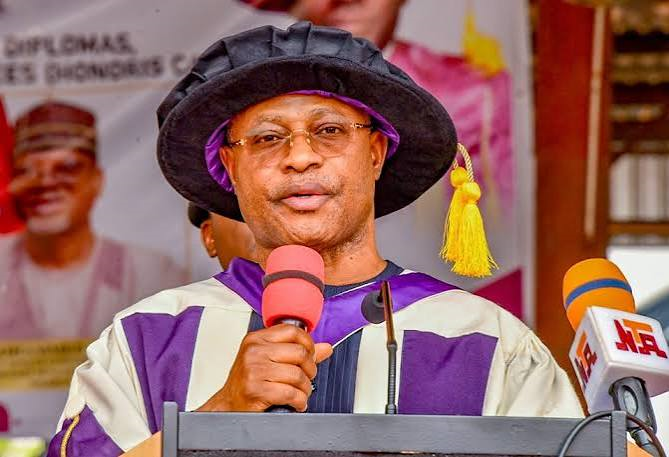
FUT Babura Appoints Agronomy Professor Hussaini as Vice-Chancellor
The Governing Council of the Federal University of Technology, Babura, has appointed Professor Muhammad Auwal Hussaini,a renowned agronomist and former Provost of Bilyaminu Usman College of Agriculture—as its new Vice-Chancellor, defeating six other professors in a fiercely contested selection. With a mandate to deliver science, technology, and practical skills education to a young university of 3,000 students, Hussaini’s tenure begins January 27, 2027. Pro-Chancellor Onimawo Ignatius Akhakhia i
 Tech & Education
ASUP Declares Indefinite Strike in South-West Polytechnics Over Unpaid Allowances
The Academic Staff Union of Polytechnics (ASUP), Zone C, has grounded academic activities in all state-owned polytechnics, colleges of technology, and monotechnics across Ogun, Oyo, Osun, and Ekiti states, declaring an indefinite strike over the non-implementation of the Consolidated Academic Tools Allowance (CATA) and Earned Academic Allowance (EAA). The strike, which began on Monday, November 16, 2026, follows the expiration of a 15-day ultimatum—and exposes a widening gulf between federal pol
 Tech & Education
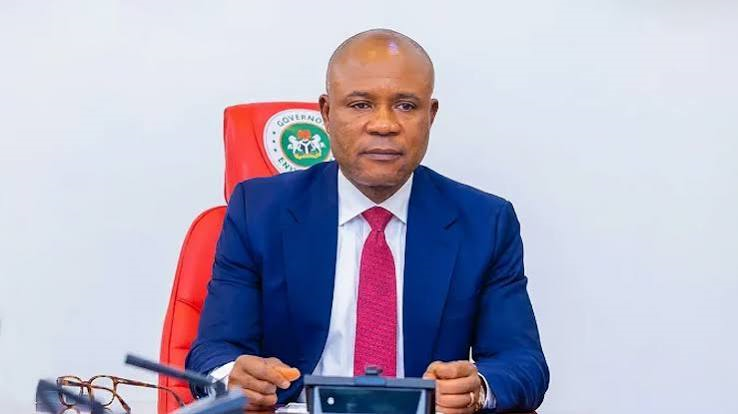
Mbah Proposes Renaming ESUT After Founder Jim Nwobodo
Governor Peter Mbah has set in motion the legal process to rename the Enugu State University of Science and Technology (ESUT) after its founder, Second Republic Governor Jim Nwobodo, as the institution marks 46 years since its establishment. The proposal, first pushed by the ESUT Alumni Association, requires approval from the Enugu State House of Assembly—but the announcement has already ignited a fierce debate about legacy, politics, and the price of honouring a founding father.
Comments (0)
Leave a comment
All comments are moderated before publishing. Your email is never published.