
FG Hands Over Yaba Properties to Biovaccines Nigeria, Cementing Local Vaccine Production Push
The Federal Government has formally transferred title documents for two Yaba properties to Biovaccines Nigeria Limited, fulfilling its 49% equity stake in the joint venture with May & Baker aimed at reviving domestic vaccine manufacturing.
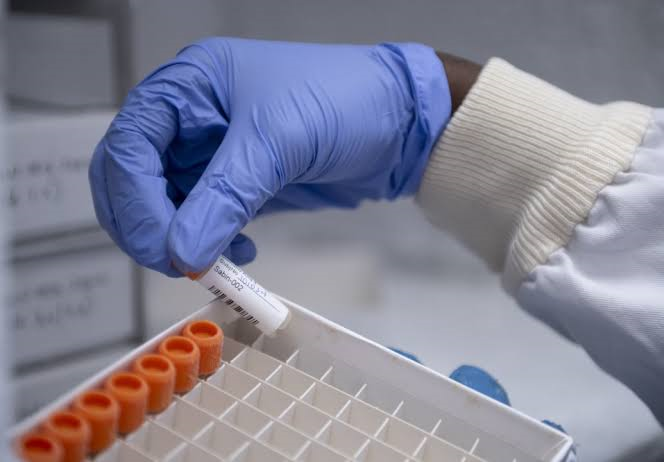
The Federal Government has formally handed over two original title documents for government properties in Yaba, Lagos, to Biovaccines Nigeria Limited (BVNL), marking a concrete step toward reviving domestic vaccine manufacturing in the country.
Minister of Housing and Urban Development, Engineer Muttaqha Rabe Darma, presented the documents, covering properties at No. 445 Herbert Macaulay Way and No. 1 University Road, both in Yaba, to BVNL through the Ministry of Finance Incorporated (MOFI), the trustee responsible for managing the Federal Government's equity interests in such ventures.
Speaking at the handover event, Darma explained that the transfer fulfils the Federal Government's equity commitment under its Joint Venture Agreement with May & Baker Nigeria Plc. "Recall that the Federal Government entered into a joint venture partnership with May & Baker to revive local production of vaccines. The partnership created Biovaccines Nigeria Limited as a Special Purpose Vehicle for mass production of vaccines for Nigeria and other West African countries," he stated.
Under the terms of the agreement, the Federal Government holds a 49 per cent equity stake in BVNL, while May & Baker holds the remaining 51 per cent. The government's contribution to the joint venture consists specifically of the two properties now formally transferred, positioning the Yaba sites as the physical foundation for the planned domestic vaccine manufacturing operation.
Darma stressed that localising vaccine production carries significance well beyond its economic dimensions. "The lessons of recent global health crises remain crystal clear. A nation that relies entirely on foreign supply chains for its critical vaccines remains fundamentally vulnerable. Localising vaccine production is not merely an economic ambition; it is a critical matter of national security," he said, framing the initiative as central to Nigeria's broader public health resilience rather than simply an industrial development project.
In a statement issued by the Director of Press and Public Relations at the Ministry of Housing and Urban Development, Badamasi Haiba, the minister urged the Board and Management of BVNL, led by Professor Oyewale Tomori, to translate the completed property transfer into immediate operational progress, signalling government's expectation that the handover should mark the beginning of active implementation rather than a symbolic milestone alone.
Responding to the handover, the Executive Officer of Biovaccines Nigeria Limited, Professor Oyewale Tomori, described himself as full of emotion at the moment, commending the Federal Government for providing tangible evidence of its equity commitment to the joint venture. He reaffirmed BVNL's commitment to working toward saving the lives of an estimated 7 to 8 million children who die annually, a figure reflecting the scale of preventable childhood mortality that expanded, reliable vaccine access is intended to help address, both within Nigeria and across the wider West African region the facility is designed to serve.
The BVNL initiative forms part of a broader push by Nigeria to reduce its historical dependence on imported vaccines, a vulnerability that was starkly exposed during recent global health crises when supply chain disruptions left import-dependent countries struggling to secure adequate vaccine stocks. By establishing a domestic manufacturing base through the May & Baker partnership, the Federal Government aims to build sustained local capacity capable of supplying not only Nigeria's own immunisation needs but also those of neighbouring West African countries, reducing the region's collective exposure to future global supply disruptions.
With the property handover now complete, attention will likely shift to how quickly BVNL can move from this foundational milestone toward actual production capacity, a process officials indicate will require sustained investment, technical development, and regulatory clearance before the facility can begin contributing meaningfully to Nigeria's vaccine self-sufficiency goals.
Sponsored
Related stories
 Health
Diri Orders Free Quarterly Health Checks for All Bayelsa Residents at Secondary Facilities
Governor Douye Diri has directed Bayelsa's Ministry of Health to begin free quarterly medical check-ups across all eight local government areas, aimed at helping residents who cannot afford routine screening and promoting early detection of diseases.
 Health
‘Priceless Gift of Sight’ Reaches 400,000 Beneficiaries
FCMB and the Tulsi Chanrai Foundation say their 15-year eye care partnership has reached over 400,000 Nigerians, as a World Sight Day roundtable in Abuja pushes for private-sector funding to sustain and expand care.
 Health
FUNAAB Launches Africa’s First AI Disease Surveillance System
Researchers at the Federal University of Agriculture, Abeokuta, have developed IDS-Master, a groundbreaking AI-powered surveillance system that detects infectious disease outbreaks in real time by analysing reports from community leaders, health agents, and ordinary residents. Described as Africa's first fully AI-driven event-based surveillance platform, the innovation promises to bridge critical gaps in outbreak detection across underserved rural communities where delays in reporting can cost l
 Health
NAFDAC Seeks Global Partners for Local Vaccine Production
The Director-General of the National Agency for Food and Drug Administration and Control (NAFDAC), Prof. Mojisola Adeyeye, has called on international partners to support the establishment of vaccine manufacturing facilities in Nigeria, saying local production is the missing link in the agency’s push to attain World Health Organisation Maturity Level 4 for vaccine lot release. She spoke at the 8th Nigeria Pharma Manufacturers’ Expo in Lagos, where she commended President Bola Tinubu’s Executive
Comments (0)
Leave a comment
All comments are moderated before publishing. Your email is never published.