
FG Declares Nigeria Ebola-Free, Raises Alarm Over Poor Health Reform Scores in 10 States
The Federal Government has officially declared Nigeria free of Ebola after more than 21 days without a new confirmed case, but the celebration came with a blunt admission: 10 states scored below 40 per cent in implementing National Council on Health resolutions, only 412 of 740 expected reports were received, and millions of Nigerians still cannot afford care. Permanent Secretary Daju Kachollom says a resolution that is never implemented is just another announcement.
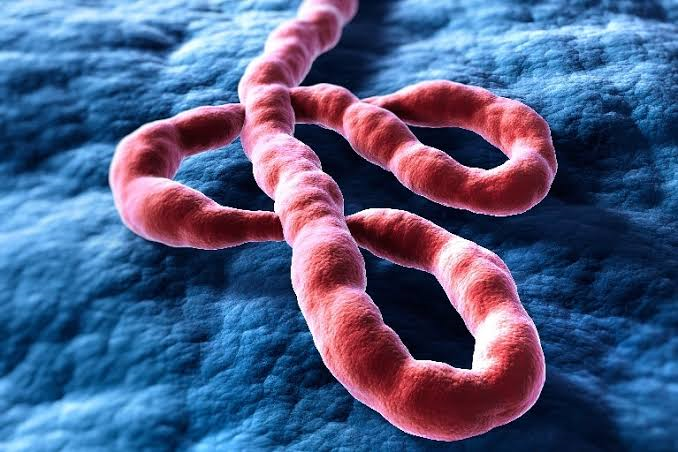
The Federal Government has officially declared Nigeria free of Ebola, ending a anxious chapter that began with an imported case and a nationwide scramble to prevent transmission. But the announcement, made on Thursday in Abuja, was paired with a far less comfortable verdict on the country's broader health system: policy is moving faster than delivery, and 10 states are falling dangerously behind.
The declaration came after Nigeria recorded no new confirmed Ebola cases for more than 21 days following the detection of an imported case. The Permanent Secretary of the Federal Ministry of Health and Social Welfare, Daju Kachollom, announced the milestone at the 10th Annual Conference of the Association of Nigerian Health Journalists in Abuja. She commended the media for its role in communicating public health information during the outbreak and said the ministry deliberately chose transparency over silence, quoting the Coordinating Minister of Health as insisting that government had a duty to tell Nigerians the truth.
But Kachollom did not allow the Ebola declaration to become a victory lap. In the same speech, she disclosed that 10 states scored below 40 per cent in implementing resolutions of the National Council on Health, the country's highest health policy advisory body. The ministry received only 412 of the 740 reports expected from states, leaving 328 outstanding. "A resolution that is never implemented is just another announcement," she said, a line that captured the central tension of Nigeria's health reform agenda.
The numbers she presented were a study in contradictions. On one side, the government says all 41 presidential health commitments under the Nigeria Health Sector Renewal Investment Initiative, launched in December 2023, have been achieved, and 12 of 13 tracked health indicators have improved. More than 3,500 primary healthcare centres have been revitalised, with another 900 undergoing rehabilitation. Skilled deliveries rose from 4.8 million in 2023 to 7.9 million by the middle of 2026, while maternal deaths fell by 17 per cent and newborn deaths by 12 per cent between 2023 and 2025 across 172 local government areas.
Health insurance enrolment climbed from about 16 million to nearly 24 million Nigerians, and combined state health budgets rose from ₦1.97 trillion in 2023 to more than ₦3.3 trillion in 2026. Ten factories and manufacturing lines were commissioned to expand local production of medicines, diagnostics, mosquito nets and medical oxygen. On paper, the architecture of reform is expanding.
Yet the same speech acknowledged that the system remains fragile in ways that no dashboard can disguise. Stunting affects about four in every 10 Nigerian children under five, a figure Kachollom described as unacceptably high. Only about one in 10 Nigerians has health insurance, meaning the financial protection that reform is supposed to deliver remains out of reach for the majority. Health workers are unevenly distributed, and healthcare costs continue to push families toward crisis.
The conference itself became a stage for accountability demands. The President of the Association of Nigerian Health Journalists, Joseph Kadiri, called for stronger oversight, insisting that reforms and public investments must be measured by reductions in maternal and child deaths, affordable medicines and functional primary healthcare facilities. Kachollom urged journalists to go beyond government announcements and visit facilities themselves. "When we announce a revitalised facility, go and see it," she said. "Ask what changed, for whom, and by how much. If the answer is nothing, tell Nigerians, and tell us".
For the Federal Government, the Ebola declaration is a genuine public health success. Nigeria detected an imported case, prevented onward transmission and exited the outbreak window without a domestic crisis. But the state-level implementation gap is the harder problem, because it is structural, political and expensive to fix. Ten states below 40 per cent is not a rounding error. It is a signal that the chain between Abuja's policy commitments and a patient's bedside is broken in too many places.
The message from Abuja is that Nigeria can contain an outbreak. The question is whether it can implement a reform. One requires a surge of attention. The other requires sustained pressure, transparent data and consequences for failure. The Ebola chapter is closed. The implementation chapter is still being written, and 10 states are already behind.
Sponsored

Related stories
 Health
FG Launches Free Maternal Health Insurance in Imo to Reduce Maternal Deaths
The Federal Government has launched a free maternal health insurance scheme in Imo State, covering pregnancy-related care, delivery and emergency services. Implemented through the NHIA in partnership with the state government, the initiative aims to reduce maternal deaths and financial burdens, with plans for nationwide expansion.
 Health
Bloom D³ Opens in New York to Advance Africa’s Drug Discovery Capacity
Bloom Public Health has launched Bloom Drug Discovery & Development (Bloom D³), a New York headquartered pharmaceutical research firm built to move Africa beyond drug consumption and local manufacturing into novel discovery, clinical testing, and commercialisation. With a pipeline focused on infectious diseases, oncology, and cardiometabolic conditions, and a strategy that mines the continent’s biodiversity, Bloom D³ is betting that Africa’s scientific expertise can compete globally if it is con
 Health
NBSA Opens Blood Centre in Kebbi, Declares Safe Blood a Right for All
The National Blood Service Agency has inaugurated a blood service centre in Kebbi State, with Director-General Prof. Saleh Yuguda declaring that every Nigerian, regardless of location or income, must have access to safe blood. The centre, unveiled alongside the Kebbi State Blood Transfusion Policy Implementation and Enforcement Committee, is part of a national push that already operates 17 centres, a digital blood management system, and a haemovigilance unit. But officials warned that policy is
 Health
FCT Activates Emergency Centre as Cholera Outbreak Claims Nine Lives Before Christmas
The Federal Capital Territory Administration has activated its Public Health Emergency Operations Centre to contain a cholera outbreak that has already killed at least nine people in Gwagwa community, Abuja, with residents still relying on river water despite the disease being linked to unsafe water sources. As the Christmas and New Year season approaches, health authorities are racing to strengthen surveillance, improve case management, and prevent the outbreak from spreading across the territo
Comments (0)
Leave a comment
All comments are moderated before publishing. Your email is never published.