
Enactus Nigeria Marks 25 Years, Says 20,000 Students Trained as National Finals Hold August 13
Enactus Nigeria says it has empowered over 20,000 tertiary students with entrepreneurial skills over 25 years, as the 2026 National Competition, themed "Re-Imagining Transformation," holds in Lagos this week.
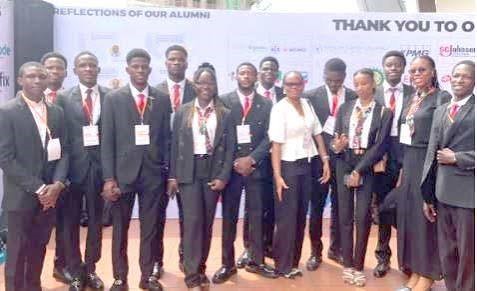
Enactus Nigeria has empowered more than 20,000 tertiary institution students over the past 25 years with entrepreneurial, leadership, and innovation skills aimed at helping them develop practical solutions to social and economic challenges facing their communities.
Country Director of Enactus Nigeria, Michael Ajayi, disclosed this in a statement issued amid growing debate among Nigerian youths over the relevance of formal education to wealth creation and career success, a conversation that has gained traction in recent years as social media increasingly amplifies stories of individuals who found financial success outside traditional academic pathways.
Ajayi cautioned that while entrepreneurial success can indeed be achieved through different pathways, the growing belief that formal education is no longer important, fuelled by a handful of exceptional success stories, risks undermining broader investment in human capital development. He argued that education remains critical to producing skilled professionals, entrepreneurs, and responsible leaders capable of contributing meaningfully to Nigeria's economy over the long term.
According to him, Enactus Nigeria's model is specifically designed to bridge that perceived gap by combining formal education with innovation, entrepreneurship, creativity, discipline, and structured problem-solving, equipping students with practical, hands-on skills needed to tackle social, economic, and environmental challenges rather than relying on theoretical knowledge alone.
He explained that through an experiential learning approach, Enactus students work in multidisciplinary teams to identify real challenges within their communities, develop innovative solutions, mobilise resources, and implement projects capable of generating measurable social and economic impact. This project-based methodology, Ajayi noted, mirrors the broader global Enactus model, which operates across dozens of countries and channels student energy into community-focused enterprise development.
A central pillar of the organisation's programme in Nigeria is its annual National Competition, where student teams from tertiary institutions across the country present and defend their community-based projects before a panel of business executives, industry experts, and development leaders. The 2026 edition of the competition, themed "Re-Imagining Transformation," is scheduled to hold on Thursday, August 13, 2026, at the Civic Centre, Victoria Island, Lagos.
Ajayi disclosed that the winning university team from this year's national competition would go on to represent Nigeria at the 2026 Enactus World Cup, an international showcase event scheduled to be hosted in Brazil, where Nigerian students will compete against their counterparts from other participating countries. He added that beyond the prestige of representing the country internationally, the competition also serves as a platform for identifying promising student innovations capable of attracting investment, scaling, and eventual commercialisation.
"Our long-term impact is in developing Nigerian students to become responsible future leaders," Ajayi said, stressing that outstanding student innovations should not simply end as competition entries but ought to be developed further into viable, sustainable businesses capable of creating jobs, generating wealth, and improving livelihoods within the communities they were designed to serve.
As preparations for the 2026 national competition gather momentum ahead of Thursday's event, Ajayi expressed appreciation to the various organisations that have supported Enactus Nigeria over the years through funding, mentorship, technical expertise, and strategic partnerships. He specifically called on investors, development finance institutions, corporate organisations, philanthropic foundations, and other strategic partners to continue supporting promising student innovations, arguing that such backing would help transform classroom ideas into sustainable enterprises capable of creating jobs, generating income, and improving livelihoods across Nigerian communities.
Ajayi acknowledged the contributions of a wide range of partners and sponsors who have backed the organisation's work over the years, including KPMG, SC Johnson, Chevron Nigeria, Schneider Electric, Sahara Group, Unilever, GTBank, FirstBank, First City Monument Bank, Sahara Foundation, LEKOIL, Coca-Cola Nigeria, the United States Embassy in Abuja, the United States Consulate General in Lagos, Sterling Bank, Interswitch, First E&P, Sovereign Trust, the Nigerian Society of Engineers, African Capital Alliance Foundation, Verve, the Nigerian Content Development and Monitoring Board, and Renaissance Africa Energy Company Limited, among several others.
Enactus, formerly known internationally as Students in Free Enterprise (SIFE), operates as a global non-profit organisation active on university campuses across more than 35 countries, using an experiential, project-based learning model to develop entrepreneurial leaders while addressing pressing social and economic challenges. In Nigeria, the organisation has positioned itself as a bridge between classroom learning and practical enterprise development, particularly as the country continues to grapple with youth unemployment and an ongoing national conversation about how best to prepare young people for an increasingly competitive and rapidly evolving job market.
Sponsored

Related stories
 Youth Empowerment
1,000 Tech Scholars to Benefit From Ekeh Foundation, NCS Partnership
The Leo Stan Ekeh Foundation has signed a Memorandum of Understanding with the Nigeria Computer Society to provide mentorship, technical training, and practical industry experience to 1,000 beneficiaries of its technology scholarship programme. The initiative will select students from all 36 states and the FCT, covering their education from first year through graduation while pairing each scholar with a dedicated industry mentor.
 Youth Empowerment
Ibadan NGO Empowers 100 Girls, Urges Oyo to Fight Child Marriage
The Oluwakemi Olusola Girl Child Foundation, with two partner foundations, gave 100 girls in an underserved Ibadan community medical checks, school bags, food, hygiene kits and counselling, while calling on the Oyo government to intensify its fight against child marriage.
 Youth Empowerment
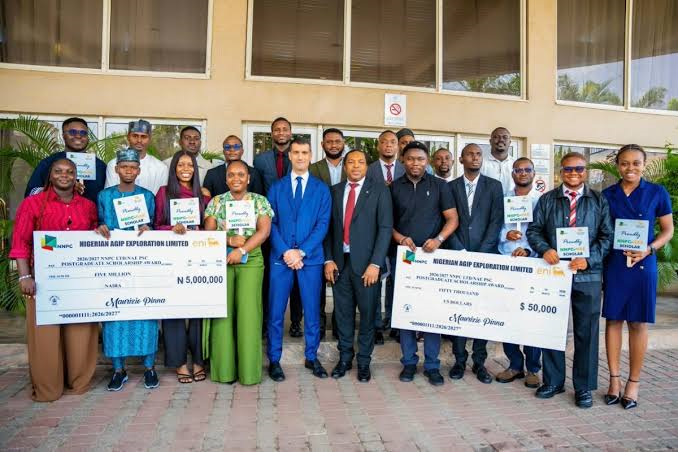
NNPC, Eni Award Postgraduate Scholarships to 30 Nigerian Graduates
The NNPC/Eni Joint Venture has awarded postgraduate scholarships to 30 Nigerian graduates for the 2026/2027 academic session, selecting the beneficiaries from over 3,000 applicants. Ten scholars will study at top universities abroad, including Imperial College London and the University of Aberdeen, while the remaining 20 will pursue degrees in Nigerian institutions across engineering, geosciences, renewable energy, and energy transition disciplines.
 Youth Empowerment
100,000 Pupils Get N20,000 Each Under N2bn Fund
First Lady Oluremi Tinubu has launched a N2 billion Learners Retention Support Programme that will provide N20,000 each to 100,000 pupils in its first phase, alongside the distribution of two million packs of sanitary towels and back-to-school materials to girls in public basic schools across Nigeria. The initiative, flagged off to mark the 2026 International Day of the Girl Child, is designed to remove the financial and hygiene barriers that force thousands of Nigerian girls out of the classroo
Comments (0)
Leave a comment
All comments are moderated before publishing. Your email is never published.