
Certified Citizen Reporters: The Missing Ingredient in Good Governance
Certified Citizen Reporters connect communities to governance through verified evidence, continuous monitoring and constructive engagement, helping leaders respond to real needs before challenges become crises.
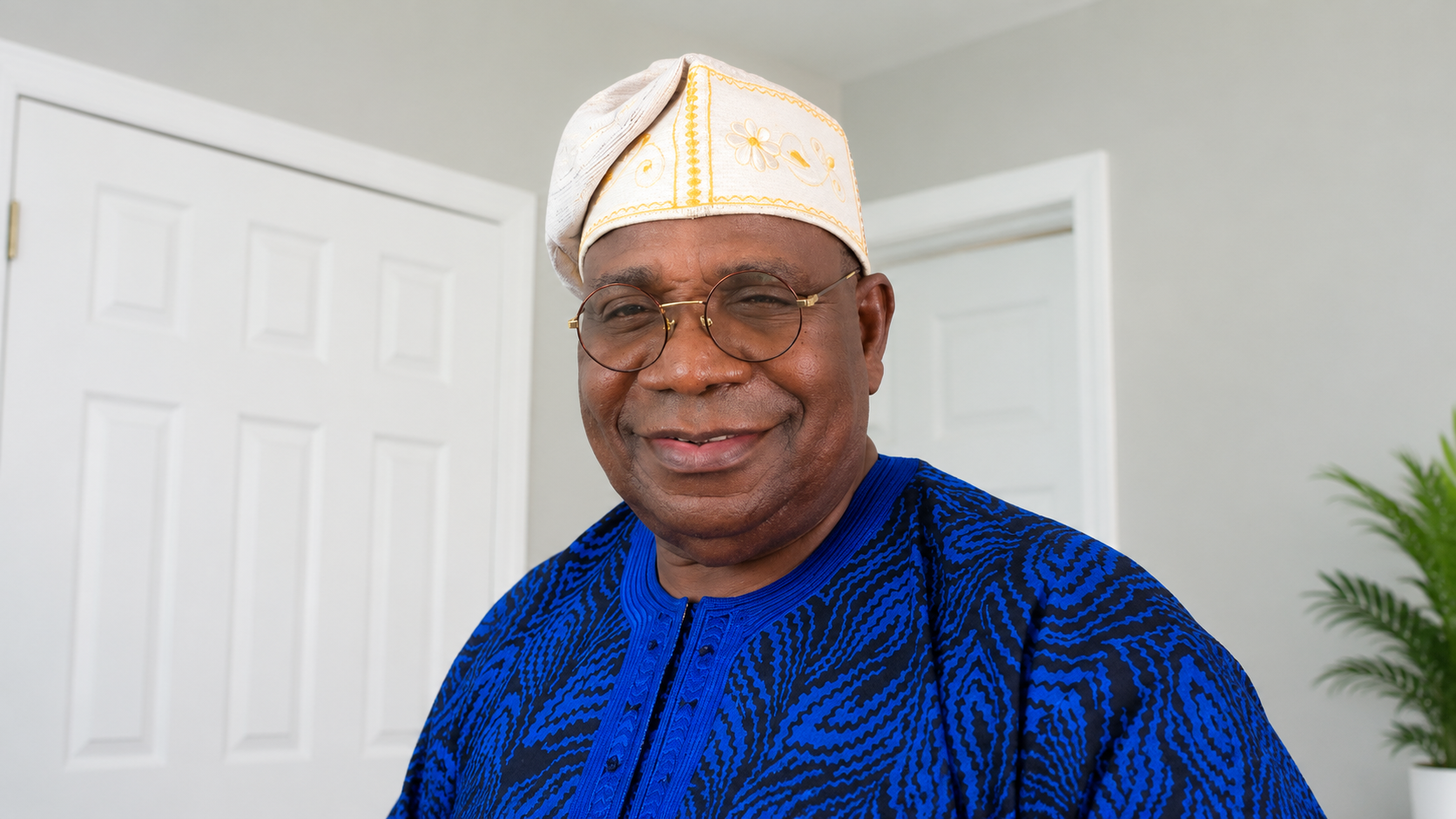
By GN Micheal Ojo
Introduction: A Costly Mistake
In many African countries, Nigeria included, we have come to believe that leadership alone produces good governance and that citizens are merely its recipients. So we fold our arms, wait, and grow disappointed. Then we conduct the post-mortem, criticising after the deed is done and crying after the milk has spilled.
But governance is not a one-man show. It is a partnership. A leader without the active support of the people is like a shepherd without watchmen: he cannot see everywhere, and he cannot be everywhere.
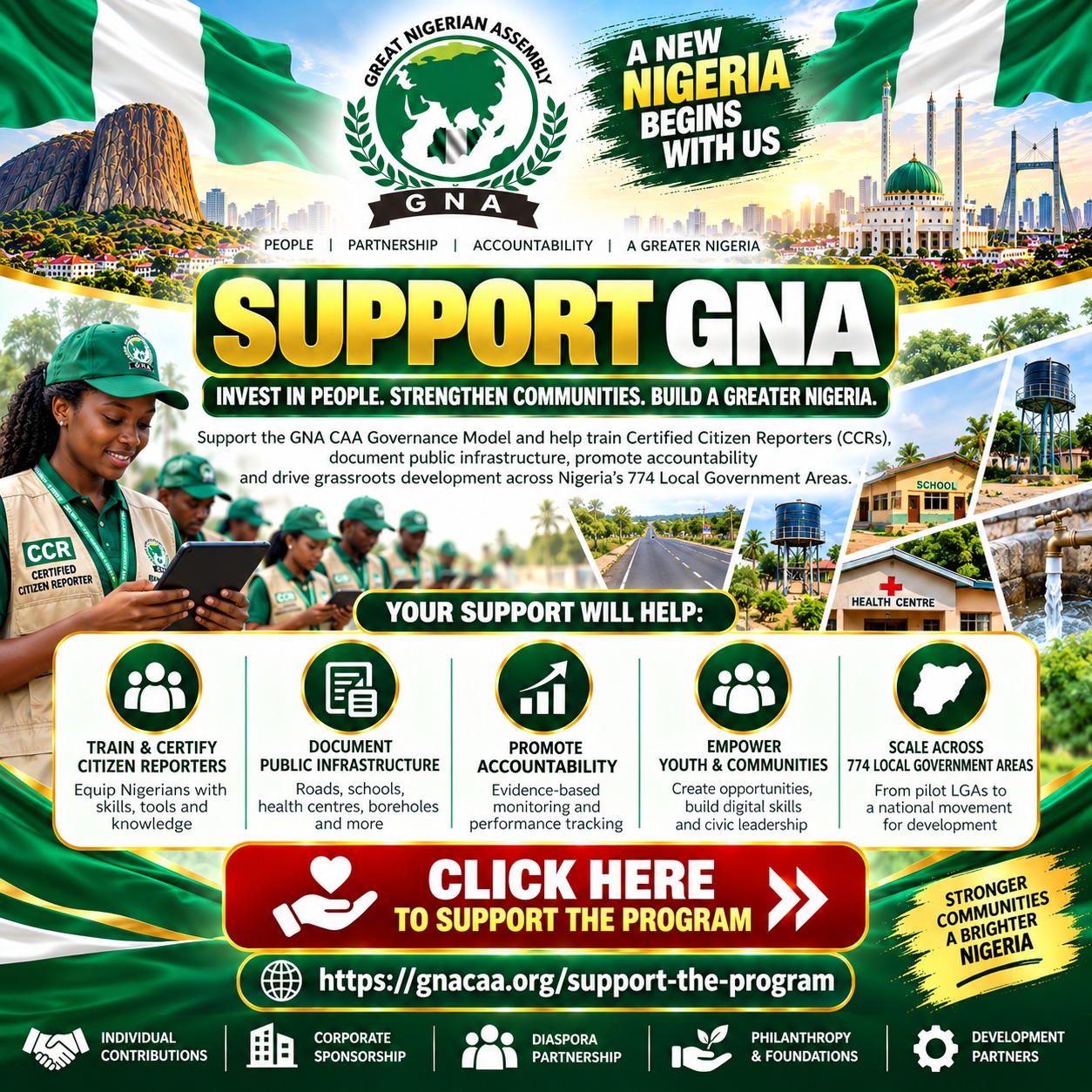
The Great Nigerian Assembly (GNA) built the GNA Coverage Area Administrator (CAA) Governance Model on this conviction. At the foundation of this model stands the Certified Citizen Reporter (CCR), the trained citizen through whom the model sees, hears, and engages every community.
Who Is a Certified Citizen Reporter?
Within the GNA CAA Governance Model, a Certified Citizen Reporter (CCR) is a trained and certified civic reporter who identifies, documents, and communicates community needs, infrastructure conditions, and development challenges to those with the capacity and responsibility to address them.
The CCR serves as a bridge between communities and public institutions, development partners, and other stakeholders with the authority or resources to respond.
The model is equally clear about what a CCR is not. A CCR is not a police officer, enforcement agent, judge, prosecutor, or political operative. A CCR does not arrest, adjudicate, or compel anyone to act. The CCR’s authority rests on the credibility, accuracy, and reliability of the information provided.
 The 30 Certified Citizen Reporters (CCRs) trained under the GNA CAA Governance Model, representing a growing network of citizens committed to credible community reporting, grassroots accountability, and sustainable development.
The CCR’s Place in Good Governance
No government can govern effectively in the dark. Decisions made without accurate information from the ground are little more than guesses. Under the GNA CAA Governance Model, the CCR is the watchman the shepherd needs, supplying timely and verified information so that leaders can act on evidence rather than assumptions.
The CCR also changes the timing of accountability. Instead of speaking only at the ballot box or after a crisis, the CCR provides information early and continuously, while decisions are still being made and leaders are still in office to respond.
Furthermore, development thrives where there is peace, and peace is strengthened when citizens are informed, vigilant, and constructively engaged. The CCR is therefore not merely a critic standing outside governance but an active partner contributing to better governance.
Core Responsibilities Under the GNA CAA Governance Model
1. Identify and Document Genuine Community Needs
A CCR observes roads, schools, health facilities, water points, drainage systems, and other public assets, recording their conditions factually with photographs, location details, and clear descriptions. Precision, not exaggeration, gives a report its value.
2. Communicate Through the Model’s Channels
Reports pass through the GNA CAA verification and approval processes before reaching relevant institutions and stakeholders. Communication remains constructive, with the objective of encouraging solutions rather than creating confrontation.
3. Monitor Development Projects
Where a contract has been awarded but work has stalled, the CCR documents what is visible and how long the project site has remained inactive. Questions concerning payments, funding, or possible financial misconduct are left to competent authorities.
Completed projects are documented just as faithfully. The objective is to maintain an accurate record of development activities and their outcomes.
4. Protect Public Safety and Shared Assets
CCRs report hazards, vandalism involving transformers, cables, railway lines, and water pipes, as well as information concerning scams and counterfeit food or drugs, to the appropriate security or regulatory authorities.
They do not confront suspects, conduct independent investigations, or publicly identify individuals based on suspicion. Their responsibility is to report credible observations through the appropriate channels.
5. Encourage Participation and Follow Up
CCRs encourage community members to participate in town hall meetings, engage with relevant stakeholders, and ask questions before decisions are made rather than waiting until problems arise.
They also return to document developments and report what happens next, completing the cycle of identifying, documenting, reporting, following up, and providing updates.
Credible Voices in an Age of Misinformation
Nigeria’s social media space is crowded with distortion, falsehood, and misinformation, particularly during election seasons. Much of this content is driven by the pursuit of views and engagement rather than a commitment to truth.
The CCR stands deliberately apart.
Under the GNA CAA Governance Model, reports are grounded in direct observation, supported by evidence, and subjected to verification before they are communicated.
While the content creator may measure success in clicks and engagement, the CCR measures success in accuracy, accountability, and improved community outcomes. While the race for online attention often rewards being first, the CCR’s responsibility is to be right.
In an increasingly polluted information environment, credibility is the CCR’s greatest asset. One false report can undermine the trust built through hundreds of accurate reports. This is why integrity, verification, and responsible communication must remain central to citizen reporting.
Ethics and Certification
Every CCR is expected to be truthful, fair, politically neutral, and respectful of privacy and human dignity, particularly where children, patients, and vulnerable persons are involved.
The CCR designation must never be used to intimidate anyone, demand payment, advance political interests, or falsely imply government authority.
Certification under the GNA CAA Governance Model does not confer legal or enforcement powers. Rather, it confirms that the holder has met the model’s training and assessment standards. Its value lies in demonstrated competence, responsible conduct, and a commitment to credible civic reporting.
The CCR’s place within the wider architecture of the GNA CAA Governance Model is explored in detail in the forthcoming book, Stop Waiting, Start Building: A Citizen’s Blueprint for Nigeria and the Rise of the Fourth Tier, by GN (Dr.) Kayode Elusoji, Executive Director of the Great Nigerian Assembly.
Readers seeking a deeper understanding of how citizen reporting fits into the model and its broader vision for participatory governance will find further insights in the forthcoming publication.
Conclusion: Before, Not After
The Scriptures remind us: “But take heed to yourselves” (Luke 21:34).
They also offer a powerful call to collective responsibility in 2 Chronicles 7:14:
“If my people, which are called by my name, shall humble themselves, and pray, and seek my face, and turn from their wicked ways; then will I hear from heaven, and will forgive their sin, and will heal their land.”
Let us stop being passive recipients and become active builders.
Good governance is not simply what leaders do for us. It is what leaders and citizens work together to achieve. Through its Certified Citizen Reporters, the GNA CAA Governance Model provides Nigerians with a practical opportunity to participate in identifying community needs, promoting accountability, and supporting sustainable development.
The time to act is now. Before, not after.
Become a Certified Citizen Reporter. Be a Voice for Your Community. Be a Great Nigerian.
• GN Micheal Ojo
Vice-Chairman, Ife LG CAA
Member, Global Professional Council of Initiatives for Good Governance
Sponsored
Related stories
 News
Otti Approves New Salary Structure for Abia Assembly Workers
Abia Governor Alex Otti has approved a 25 per cent CONLESS salary adjustment for eligible legislative workers, effective January 2027.
 News
DR Congo Ebola Outbreak Exceeds 11,000 Cases, Death Toll Rises to 5,387
The Democratic Republic of the Congo has recorded 11,042 confirmed Ebola cases and 5,387 deaths, making the outbreak the country’s deadliest.
 News
Ebola: 28 Contacts Still Under Surveillance, 34 Cleared — NCDC
The NCDC says 28 people linked to Nigeria’s imported Ebola case remain under monitoring, while 34 have completed their 21-day follow-up.
 News
Court Remands FIJ Journalist Daniel Ojukwu Over Reports on Presidential Aide
A Federal High Court has remanded investigative journalist Daniel Ojukwu in Kuje prison over 12 charges linked to reports about a former presidential aide.
Comments (0)
Leave a comment
All comments are moderated before publishing. Your email is never published.