
Cash-Only Scandal: FCT Hospital Patients Allege Illegal Payments, Missing Receipts Despite Cashless Policy Push
A News Agency of Nigeria survey has uncovered widespread allegations of persistent cash-only payment demands at public hospitals in Abuja's satellite towns, with patients claiming they were directed to PoS operators or private accounts and denied official receipts. While hospital authorities have denied knowledge of any diversion schemes and challenged complainants to provide evidence, the revelations have raised serious concerns about financial transparency and accountability in government-owne
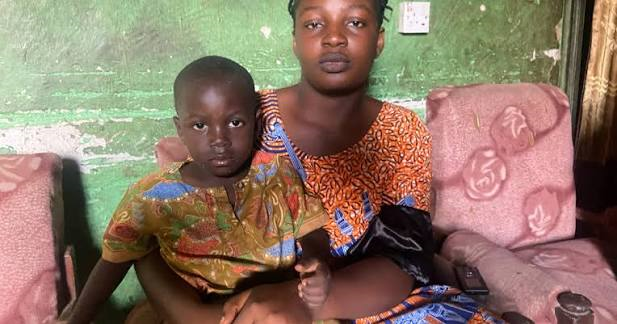
Residents seeking healthcare in public hospitals across satellite towns of the Federal Capital Territory have alleged persistent cash-only payment practices, despite the Federal Government's aggressive push for a cashless economy and increased adoption of electronic transaction platforms nationwide. A News Agency of Nigeria (NAN) survey found that some patients and caregivers at government-owned hospitals claimed they were required to pay cash for services, with some alleging that receipts were not issued afterward.
The allegations, which emerged following a survey of hospitals in Kubwa, Bwari, Karu, Nyanya and other areas, include demands for cash for hospital cards, laboratory tests, drugs and admissions. Some respondents further alleged that when cash was unavailable, they were directed to nearby Point-of-Sale (PoS) operators or given private account details for transfers, raising serious concerns about accountability and transparency.
At Kubwa General Hospital, Mrs Halima Bature alleged that her relative's emergency admission exposed the family to repeated cash demands. "All the staff we encountered that night insisted on cash payments. Even to obtain the hospital card, we paid cash," she alleged. "When we got to the lab to conduct tests, we paid cash; at the ward, before we were allocated a bed, we paid cash". Bature further claimed that after the family exhausted its cash, they were provided with a PoS machine for payment but discovered that the account details were not linked to the hospital. "When we complained, we were told that it was the only way to make payment if we wanted to be treated," she said. She also alleged that receipts were not issued for any of the payments made during the admission process.
At the Nigeria Customs Service (NCS) Hospital in Karu, Mrs Odunayo Adebanji alleged that she spent about N66,000 during her son's two-day admission, with all payments made in cash. She claimed that no official receipts were issued despite the amount spent. Another caregiver, Mr Tayo Akinyemi, alleged that he paid cash for an ear swab before giving N10,000 directly to a doctor for ear flushing. "I was shocked that a hospital this big and which belongs to a reputable organisation like Customs would be operating like this," he said. Akinyemi said he was asked to withdraw cash from PoS operators operating around the hospital. "I was told everything has to be in cash. It is totally unfair because it negates what the government is preaching about a cashless economy," he said.
The persistence of cash demands in government-owned hospitals raises profound questions regarding institutional accountability and financial transparency. Under Nigeria's Treasury Single Account policy, all government revenues are strictly mandated to be channelled through digital platforms directly into the Consolidated Revenue Fund. Collecting physical cash on hospital wards effectively bypasses this digital audit trail. The development has inadvertently transformed hospital perimeters into bustling hubs for PoS operators, as families scramble to obtain the cash needed for treatment. NAN observed significant activity among PoS operators near hospitals in Nyanya, Kubwa, Karu, Kuje and Bwari, with some operators attributing increased business to patients and caregivers seeking cash for medical expenses.
At Bwari General Hospital, Mrs Vera Yunana alleged that she repeatedly resisted demands for cash payments while her sister-in-law received maternity care. She claimed that hospital personnel initially requested N14,000 in cash and wrote the amount and purpose on a piece of carton. After doctors recommended a Caesarean section, the family was told to pay an additional N78,000 in cash. Yunana said she insisted on obtaining an account number before making the payment and alleged that a nurse and a doctor eventually supplied a private account number which, she believed, was not linked to the hospital. She also alleged that nurses subsequently demanded between N1,000 and N3,000 in cash for drugs following the surgery, with no written prescriptions or official receipts provided.
However, not all patients interviewed by NAN reported similar experiences. Mrs Glory Yamput, who received treatment at the NCS Hospital, said she made payments through approved channels and received receipts for all transactions. Several other users of Bwari General Hospital told NAN they had never experienced demands to pay into private accounts. Mr Nurudeen Balogun, who was receiving treatment for tooth pain, said he had visited the hospital several times without encountering such issues. Imam Mufutau Adewale said an emergency patient he brought to the hospital was treated without any payment being demanded beforehand.
Hospital authorities have denied knowledge of any payment diversion schemes and challenged complainants to provide evidence. Dr Ibrahim Mijinyawa, Medical Director of Bwari General Hospital, represented by Dr Kayode Oshodi, said, "If there are people that have experienced such, they can come forward and we will investigate the allegation". At Kubwa General Hospital, Medical Director Dr Emmanuel Musa similarly challenged complainants to provide verifiable evidence, saying the facility had complaint mechanisms and notices warning patients not to pay into private accounts. The NCS Hospital has also stated that it is strengthening its electronic payment systems to prevent such occurrences.
The allegations raise serious concerns about payment transparency, traceability of hospital revenue and patients' ability to access treatment without first obtaining cash. The situation has also deepened the financial burden on vulnerable households, with patients subjected to PoS withdrawal charges that add unbudgeted premiums to their healthcare costs. As the Federal Government continues its push for a cashless economy, the revelations expose a glaring disconnect between policy aspirations and operational realities within public healthcare institutions across the Federal Capital Territory.
Sponsored

Related stories
 Health
Diri Orders Free Quarterly Health Checks for All Bayelsa Residents at Secondary Facilities
Governor Douye Diri has directed Bayelsa's Ministry of Health to begin free quarterly medical check-ups across all eight local government areas, aimed at helping residents who cannot afford routine screening and promoting early detection of diseases.
 Health
‘Priceless Gift of Sight’ Reaches 400,000 Beneficiaries
FCMB and the Tulsi Chanrai Foundation say their 15-year eye care partnership has reached over 400,000 Nigerians, as a World Sight Day roundtable in Abuja pushes for private-sector funding to sustain and expand care.
 Health
FUNAAB Launches Africa’s First AI Disease Surveillance System
Researchers at the Federal University of Agriculture, Abeokuta, have developed IDS-Master, a groundbreaking AI-powered surveillance system that detects infectious disease outbreaks in real time by analysing reports from community leaders, health agents, and ordinary residents. Described as Africa's first fully AI-driven event-based surveillance platform, the innovation promises to bridge critical gaps in outbreak detection across underserved rural communities where delays in reporting can cost l
 Health
NAFDAC Seeks Global Partners for Local Vaccine Production
The Director-General of the National Agency for Food and Drug Administration and Control (NAFDAC), Prof. Mojisola Adeyeye, has called on international partners to support the establishment of vaccine manufacturing facilities in Nigeria, saying local production is the missing link in the agency’s push to attain World Health Organisation Maturity Level 4 for vaccine lot release. She spoke at the 8th Nigeria Pharma Manufacturers’ Expo in Lagos, where she commended President Bola Tinubu’s Executive
Comments (0)
Leave a comment
All comments are moderated before publishing. Your email is never published.