
Cardoso, Oyedele Sign Monetary-Fiscal Policy Coordination MOU
CBN and Finance Ministry sign MoU to strengthen fiscal-monetary coordination and improve Nigeria’s economic policy.
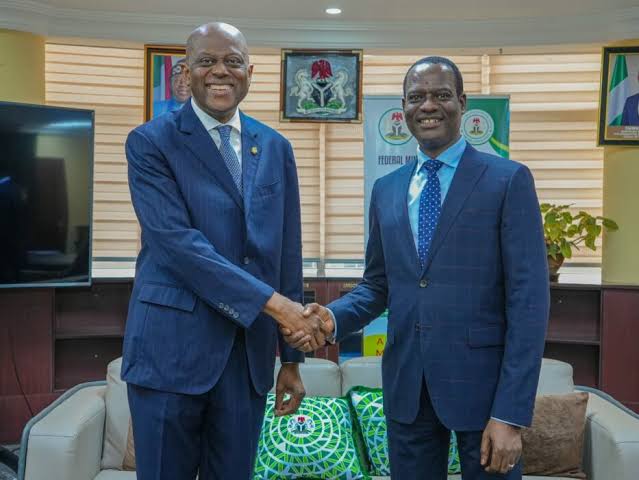
The Central Bank of Nigeria and the Federal Ministry of Finance have signed a Memorandum of Understanding to strengthen coordination between monetary and fiscal policies.
The agreement was signed in Abuja by CBN Governor Olayemi Cardoso and Minister of Finance and Coordinating Minister of the Economy Taiwo Oyedele.
The framework is designed to institutionalise regular consultation, information sharing and policy coordination between the two institutions as Nigeria works to improve macroeconomic stability.
Speaking at the signing ceremony, Cardoso said the agreement represented a shared commitment to stronger macroeconomic management, lasting economic stability and sustainable prosperity.
He explained that fiscal policy influences economic activity through government spending, taxation and borrowing, while monetary policy promotes price stability and financial system soundness through liquidity, interest rates and broader monetary conditions.
Under the framework, the CBN and Finance Ministry will strengthen cooperation in government cash management, debt issuance planning, liquidity forecasting, macroeconomic analysis and periodic policy consultations.
Cardoso said the arrangement would improve policy coherence, reduce uncertainty and strengthen the authorities’ capacity to respond to emerging economic challenges.
He added that the timing was important as the CBN advances its transition towards an inflation-targeting framework, which requires a supportive fiscal environment to succeed.
Oyedele said the MoU would ensure that coordination between fiscal and monetary authorities was not dependent on the personalities occupying public offices.
He stressed that both institutions had distinct mandates but shared responsibility for managing the same economy.
According to him, government borrowing affects liquidity, interest rates and financing costs, while monetary policy decisions also affect government finances.
Oyedele said the framework would strengthen information sharing, align macroeconomic assumptions and forecasts, and provide clearer mechanisms for resolving areas where fiscal and monetary policies could conflict.
He, however, stressed that closer coordination would not compromise the operational independence of the CBN, saying coordination must not become fiscal dominance.
The minister also said the government was targeting a sustainable reduction of inflation to single digits, noting that monetary policy alone could not achieve that objective.
He said fiscal policy would contribute through disciplined spending, improved cash and liquidity management and more efficient financing that would avoid crowding out private-sector credit.
The agreement is expected to provide a more structured basis for cooperation as Nigeria manages inflation, public borrowing, liquidity, foreign exchange pressures and wider economic risks.
Both institutions are expected to use the framework to improve policy consistency and strengthen preparedness for domestic and external economic shocks going forward.
Sponsored

Related stories
 News
News
Police Secure Conviction of 19 for Terrorism, Others in Kebbi
Kebbi Police say 19 people were convicted for terrorism, illegal firearms possession and vandalism after 17 months of investigation.
 News
News
Lagos to Demolish GNI Building 10 Months After Fire
Lagos began controlled demolition of the fire-ravaged GNI building after structural checks found the 25-storey structure unsafe.
 News
News
Air Peace Cries Out as Fraudster Impersonates Staff to Dupe Passengers
Air Peace Cries Out as Fraudster Impersonates Staff to Dupe Passengers
 News
News
Dangote to Prioritise Investors with N50,000 or Below in Refinery IPO
Aliko Dangote says small investors subscribing with ₦50,000 or less will receive priority as the refinery seeks wider public ownership.
Comments (0)
Leave a comment
All comments are moderated before publishing. Your email is never published.