
Alausa Disputes Nigeria's 15m Out-of-School Children Figure, Says Real Number Nearer 7-8m
Education Minister Tunji Alausa says Nigeria's widely quoted 15-17.5 million out-of-school children figure is significantly overstated, unveiling plans for a nationwide household survey with the NBS to establish verifiable data.
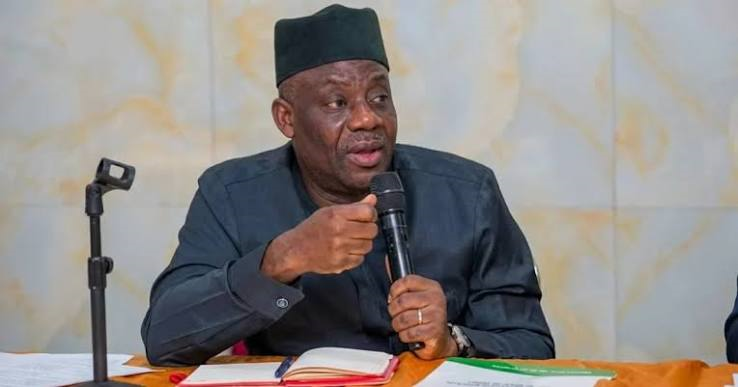
The Federal Government has commenced moves to conduct a nationwide, grid-based household survey to establish the actual number and locations of out-of-school children across Nigeria, with the Minister of Education, Dr Tunji Alausa, disputing the widely quoted figure of between 15 million and 17.5 million as potentially significantly overstated.
Alausa disclosed the plans during an interview on the Afropolitan Podcast, revealing that the government was preparing to sign a Memorandum of Understanding (MoU) with the National Bureau of Statistics (NBS) to conduct the household survey across all 36 states of the federation and the Federal Capital Territory.
According to the minister, preliminary information already available to the ministry suggests the final, verified figure may not exceed 7 million to 8 million out-of-school children, roughly half the commonly cited estimate. He stressed that even at that lower figure, the number would remain unacceptably high.
The proposed exercise, expected to take around eight months to complete, is designed to provide government with verifiable data on the number of children genuinely out of school, along with details of their households and precise locations. "We do not have 15 million out-of-school children, and we're going to prove it. We're working on clear data to do this. Our out-of-school population, by the time we complete a full count, will be about 7 million to 8 million. But it's still too many. It's still too many. We want the international community to know that we don't have that number. UNESCO should not be giving us that data. UNICEF should not be giving us that data. We should be telling the world our own data, very good data that is verifiable," Alausa said.
The minister argued that the figures currently used to estimate Nigeria's out-of-school population are substantially based on projected population figures rather than an actual count of children and their educational status. He noted that Nigeria has not conducted a national population census in decades, making population-projection-based estimates potentially unreliable for educational planning purposes.
While acknowledging that a full national census remains the gold standard for establishing the country's population, Alausa explained that a grid-based General Household Survey represents the closest available alternative for determining the actual number of out-of-school children and, crucially, identifying the specific households where those children live.
Citing results from similar exercises already conducted in some states, Alausa said the differences between projected estimates and actual household-based counts have been striking. He pointed to Kaduna State, where the estimated number of out-of-school children stood at about 585,000 before a household survey was conducted, but reportedly dropped to around 190,000 following the exercise. He said Kano State recorded a similarly significant gap between its estimated figure and the number produced after its own household survey, while Zamfara and Sokoto states had also conducted comparable counts yielding results that differed substantially from previous projections.
Beyond the out-of-school children data dispute, Alausa disclosed that the Federal Government is working with the National Assembly to finalise legislation empowering polytechnics to award Bachelor of Technology (B.Tech) degrees in engineering and science-related disciplines. He said the bill had been expected to reach President Bola Tinubu for assent but was returned to the National Assembly for amendments, expressing optimism that the legislative process would conclude before the end of the year.
According to Alausa, the proposed reform forms part of efforts to restore parity among universities, polytechnics, and colleges of education, while making tertiary education more practical and skills-oriented. He explained that government had resisted the longstanding practice of converting polytechnics into full universities, since such conversions reinforce the perception that polytechnics are inferior institutions, opting instead to create a continuum allowing students to progress from technical education to higher qualifications without abandoning their vocational or technological training. He cited the dual-mandate policy already in place at colleges of education, under which qualifying students can progress from the Nigeria Certificate in Education (NCE) to a Bachelor of Education (B.Ed) degree within the same institution, as a model that has helped increase enrolment and reduce pressure for such institutions to be converted into universities.
Alausa lamented that technical education had historically been portrayed as an option for academically weaker students, a perception he said has contributed directly to Nigeria's shortage of skilled artisans, with consequences now visible in the construction industry, where the country has been forced to rely on foreign artisans for specialised work.
On the broader performance of Nigerian universities, Alausa said government interventions were beginning to show measurable impact, particularly in stabilising academic calendars, which he described as central to restoring parental and student confidence in the public university system. He said students were increasingly returning to public universities as calendars became more predictable, pointing to the University of Lagos among institutions seeing renewed demand. He added that Nigeria's showing in the Times Higher Education global university rankings had also improved, with 24 Nigerian universities now featuring among the world's top 1,000 to 1,200 institutions in 2026, up from 21 previously, 17 of them public institutions.
On healthcare training capacity, Alausa disclosed that government invested about ₦120 billion in 2025 to expand and upgrade 18 medical schools, with a further ₦52 billion being spent in 2026 on nearly 25 additional medical schools, aimed at expanding capacity for training doctors, dentists, pharmacists, and nurses. He confirmed that annual medical school admissions have risen from around 5,000 to approximately 12,000 students, with government targeting 20,000 annual admissions within two years, while cautioning that the increase would take five to six years to translate into a larger pool of practising doctors given the length of medical training. He added that the government is similarly expanding nursing education, with more than 140,000 nurses now being trained annually.
Beyond medical and health-related education, Alausa said the Federal Government is investing about ₦110 billion in rehabilitating and modernising engineering faculties, including workshops and equipment, across conventional universities, federal universities of technology, and polytechnics, alongside a further ₦250 billion being invested in new student accommodation across tertiary institutions nationwide.
Sponsored

Related stories
 Tech & Education
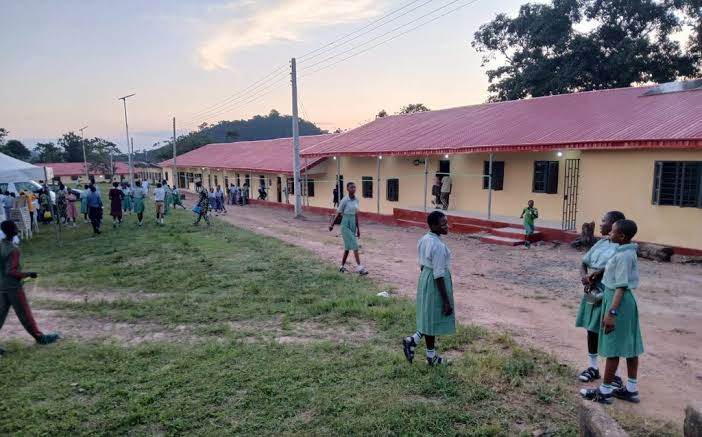
Bamidele Unveils N200m Renovated Science College
Senate Leader Opeyemi Bamidele has commissioned the renovated Government Science College, Iyin-Ekiti, personally funded at over N200 million, donating buses to the school and nearby FUTESI while promising a second phase of upgrades.
 Tech & Education
Abia Students Crowned Global Debate Champions
Students from public schools in Abia State, representing Nigeria, have emerged overall champions at the 2026 International Schools Debate Championship in Doha, Qatar, winning four major trophies and 12 laurels after defeating teams from Jordan, India, Qatar, the Philippines, Kenya and others. The historic victory has been hailed as proof that Governor Alex Otti's education reforms are producing world-class scholars.
 Tech & Education
WAEC Appoints Suleiman Kum as New Head of Nigeria National Office
The West African Examinations Council has appointed 56-year-old Suleiman Danlami Kum as the new Head of the Nigeria National Office, succeeding Dr Amos Josiah Dangut, who has assumed office as the council’s Registrar and Chief Executive Officer. A seasoned test developer, administrator and executive with 28 years of service, Kum is expected to drive technological innovation and examination security across Nigeria’s foremost examinations body.
 Tech & Education
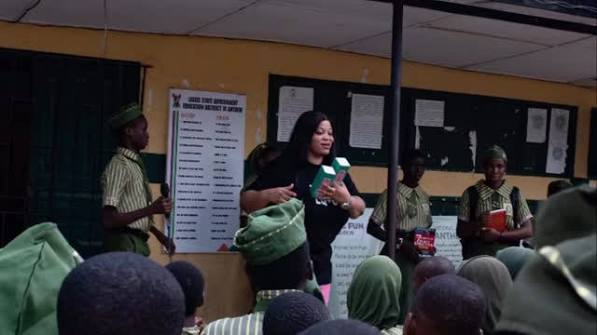
Emmanuel College ’88 Set Renovates Classrooms, Pays Exam Fees
The Progressives of the Unique 1988 Set of Emmanuel College Owerri have unveiled a renovated five-classroom block and paid NECO and WAEC fees for financially disadvantaged students at their alma mater.
Comments (0)
Leave a comment
All comments are moderated before publishing. Your email is never published.