
50 Abuja IDP Youths Complete Digital and Business Skills Programme
Fifty young people from New Kuchingoro and Kuje IDP camps in Abuja have completed a 10‑week social entrepreneurship and digital‑skills programme organised by Initiatives for Social Inclusion and Grassroots Literacy in partnership with Amala Education, equipping them with tools to build sustainable livelihoods beyond displacement.
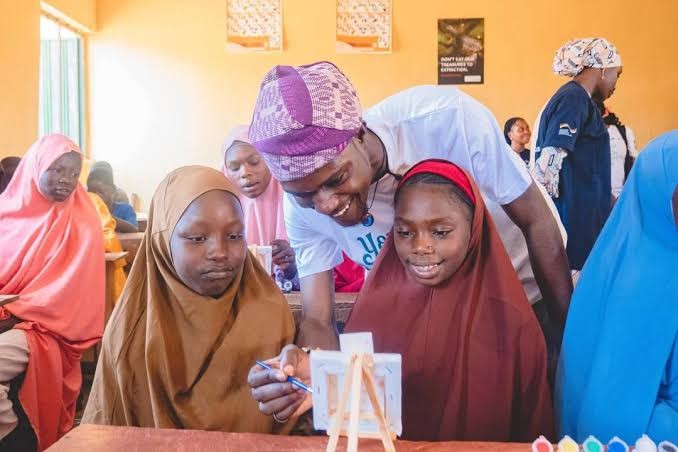
Fifty internally displaced youths living in Abuja have just taken an important step toward rebuilding their lives by completing a structured digital‑ and business‑skills training. The participants,25 from New Kuchingoro IDP camp and 25 from Kuje camp,went through a 10‑week social entrepreneurship programme specifically designed for young people whose education and economic plans have been disrupted by conflict and displacement. Graduation ceremonies for the two cohorts were held on July 17 and 18, marking a formal conclusion to the intensive training phase and the beginning of a new phase where they are expected to apply what they’ve learned.
The programme was organised by the Initiatives for Social Inclusion and Grassroots Literacy (ISIGL) in partnership with Amala Education, an organisation known for running learning programmes for displaced and marginalised young people. Together, they built a curriculum that blends entrepreneurship, digital literacy and leadership development, reflecting the reality that IDP youths need both technical skills and confidence to navigate a fast‑changing, tech‑driven economy. The training ran from May to mid‑July, giving participants enough time to move from basic concepts to more applied, project‑based work.
Content‑wise, the youths were exposed to a wide range of topics aimed at turning ideas into viable livelihood paths. Sessions covered entrepreneurship fundamentals, opportunity identification, innovation, and how to turn everyday problems into business solutions. Trainers introduced “waste‑to‑wealth” and recycling concepts, teaching participants how discarded materials can be converted into products or services,an approach that is particularly relevant in low‑income and camp settings where formal resources are limited but waste streams are abundant.
Digital literacy formed another core pillar of the programme. Participants learned practical computer and online skills that can support everything from small business promotion to remote work. This included basic digital tools, using social platforms responsibly, and understanding how the internet can be leveraged for learning, marketing and networking. In addition, they were taught financial management and business planning, helping them understand how to budget, price products or services, keep simple records and think through the steps needed to launch or grow a micro‑enterprise.
The organisers also built in strong leadership and life‑skills components. Beyond teaching students how to start businesses, the programme aimed to develop their capacity to lead initiatives in their communities, work in teams and make informed decisions. Drug‑abuse prevention was woven into the curriculum, recognising the vulnerability of displaced youths to negative coping mechanisms when opportunities are scarce. Through mentorship and enterprise simulations, participants were able to practice pitching ideas, collaborating and handling basic challenges that arise in the real world of work and entrepreneurship.
For IDP youths, the significance of such training goes beyond certificates. Many have had their schooling interrupted, lost homes and networks, and live in camps where access to formal jobs or higher education is limited. A programme that combines business, digital and leadership skills gives them a pathway to create their own livelihoods,whether by starting small ventures, freelancing online, or taking on roles in local organisations. It also builds their sense of agency: instead of seeing themselves only as recipients of aid, they are encouraged to see themselves as entrepreneurs, innovators and community leaders.
This initiative also sits within a wider push in Nigeria to close the digital‑skills gap and deliberately include vulnerable groups,IDPs, girls and young women, persons with disabilities,in the country’s growing digital economy. National and international programmes in recent years have targeted camps and underserved communities with digital literacy, coding, content creation and online‑safety training, often pairing skills with devices or starter packs. The Abuja IDP digital‑skills programme contributes to this ecosystem by focusing expressly on social entrepreneurship: teaching displaced youths not only how to use technology, but how to combine it with business thinking and community problem‑solving.
In practical terms, the completion of the programme is just the beginning. The real test will be whether participants receive ongoing mentoring, access to basic tools (like smartphones, laptops or small seed capital), and links to markets or employers who value their new skills. However, by successfully graduating 50 young people from New Kuchingoro and Kuje camps, ISIGL and Amala Education have shown that with the right curriculum and support, IDP youths can be prepared to enter Nigeria’s evolving economy as capable digital workers and social entrepreneurs rather than being permanently left behind.
Sponsored

Related stories
 Youth Empowerment
TAFTA Trains 150 Female Creators to Build Sustainable Careers
, tools, and industry connections through its maiden Creator HQ programme, a three-day immersive training focused on content creation, intellectual property protection, and monetisation. Supported by the Mastercard Foundation, the initiative is designed to help women turn their creative talents into sustainable businesses and long-term careers.
 Youth Empowerment
Dangote Foundation Gives Students Free Shares
The Aliko Dangote Foundation has launched a Student Share Grant Initiative that will fund an additional 10 shares in the Dangote Petroleum Refinery IPO for eligible tertiary students who subscribe for a minimum of 10 shares in their own names. Chairman Aliko Dangote says the programme is about developing a mindset — equipping young Nigerians with the knowledge and opportunity to understand how economic value is created and how they can participate in it.
 Youth Empowerment
FG Empowers 70 Media Managers With Tablets
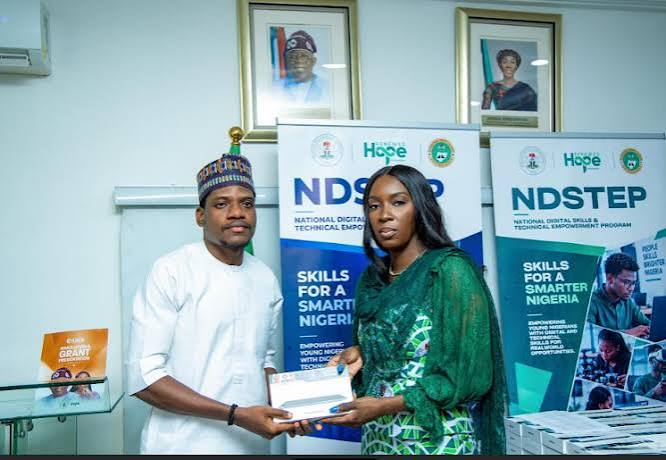
The Office of the Senior Special Assistant to the President on TVEE has given tablets to 70 digital media personnel to strengthen awareness of government vocational and entrepreneurship programmes ahead of the NPRGS Oyo State rollout.
 Youth Empowerment
MSS Academy Graduates 56 Youths in Event Technology
The Mobile Screen and Sound (MSS) Limited Technical Academy has graduated 56 students from its 10-week training programme in sound engineering, lighting design, and stage production, as part of efforts to equip young Nigerians with employable skills and reduce youth idleness. The academy has also promised automatic employment for the best five graduating students, underscoring its commitment to bridging the gap between training and industry placement.
Comments (0)
Leave a comment
All comments are moderated before publishing. Your email is never published.