
UNGA: Tinubu Links Foreign Policy to Nigeria’s Economic Reforms
Tinubu links Nigeria’s foreign policy to economic reforms, stressing institutions, investment and private-sector growth.
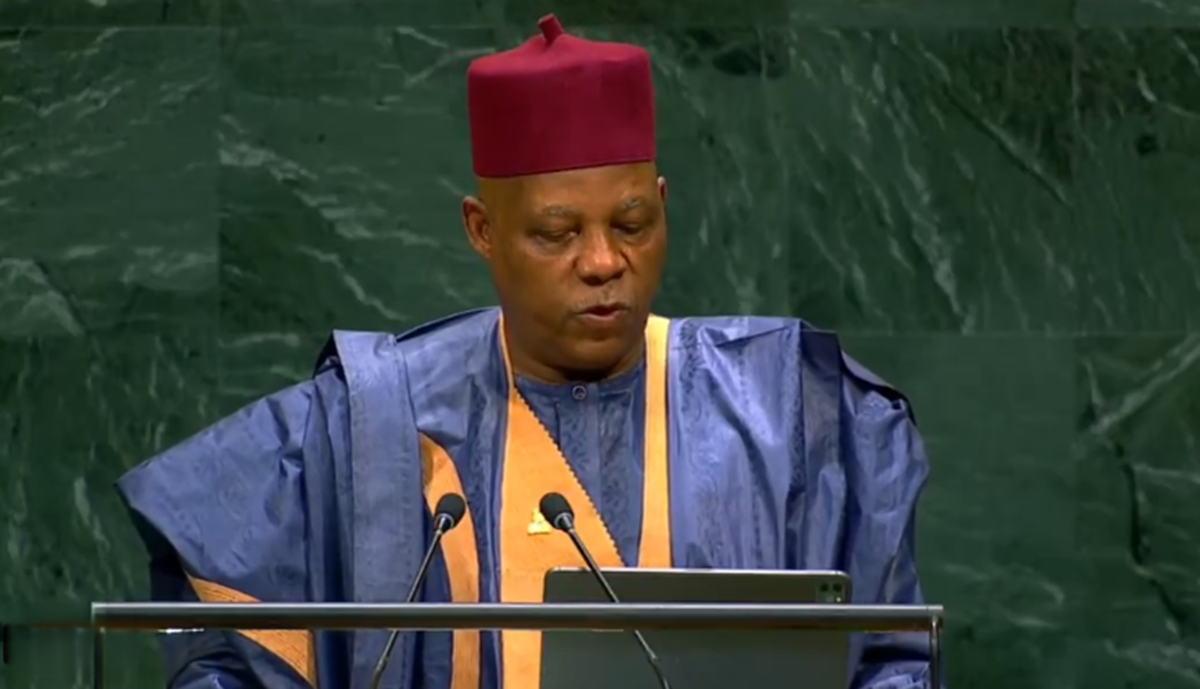
President Bola Tinubu has linked Nigeria’s foreign policy to the country’s domestic economic reforms, saying sound economic management and strategic investment are essential to achieving sustainable development.
Tinubu made the position known in Nigeria’s national statement at the 81st United Nations General Assembly in New York, delivered on his behalf by Vice President Kashim Shettima.
The President said Nigeria’s foreign policy was guided by the same principles underpinning its economic reform programme. He identified sound macroeconomic management, stronger institutions, private-sector development and strategic public investment as key elements of the country’s approach to sustainable growth.
According to Tinubu, Nigeria’s domestic progress is closely connected to its responsibilities within Africa and the wider international community. He said the country’s national advancement must contribute to a peaceful, equitable and prosperous world.
He also stressed the importance of governments and multilateral institutions earning public trust by ensuring that their decisions produce tangible improvements in people’s lives.
The President’s comments came as he outlined Nigeria’s broader position on international cooperation, development financing, climate action, technology and security.
On the economic front, Tinubu called for reforms to the international financial architecture and greater access to concessional financing for developing countries. He also supported debt sustainability frameworks that take development needs into account.
Nigeria, he said, would continue to pursue innovative financing through private capital, blended finance, South-South cooperation and strategic partnerships to support sustainable development, climate adaptation and resilient infrastructure.
Tinubu also highlighted the African Continental Free Trade Area as an opportunity to strengthen regional value chains, expand intra-African trade, promote industrialisation and attract investment.
He called for Africa to move beyond dependence on exporting raw materials by increasing local value addition, manufacturing, technological innovation and knowledge-driven growth.
The President further connected economic development with Nigeria’s security responsibilities, noting that terrorism, organised crime, cyberattacks and illicit finance increasingly operate across national borders.
He said Nigeria’s experience fighting terrorism had demonstrated the importance of combining security measures with education, economic opportunity, accountable governance and protection of communities.
Tinubu maintained that Nigeria’s foreign policy would continue to support regional cooperation while advancing the country’s economic interests and development priorities.
He said the approach reflected Nigeria’s broader objective of building stronger institutions, attracting investment and creating conditions for sustainable economic growth.
Sponsored

Related stories
 News
News
EU Backs FG’s Broadband Expansion with €14m Grant
The European Union and EBRD are supporting Nigeria’s planned 90,000-kilometre fibre-optic network to expand affordable broadband access nationwide.
 News
News
Tinubu Seeks Senate Nod to Replace ASCON With National School of Government
President Bola Tinubu has asked the Senate to approve a bill seeking to repeal the law establishing the Administrative Staff College of Nigeria and replace it with a National School of Government focused on leadership development and public-sector capacity building.
 News
News
Adeleke Dances With Tinubu at APC Campaign Council Inauguration
Osun State Governor Ademola Adeleke joined President Bola Tinubu at the inauguration of the APC’s 2027 Presidential Campaign Council in Abuja, drawing attention to their political collaboration ahead of the general election.
 News
News
Tinubu Seeks Repeal of Indian Hemp Act in Drug Law Overhaul
President Bola Tinubu has asked the Senate to repeal the Indian Hemp Act as part of a proposed overhaul of Nigeria’s drug enforcement laws, aimed at consolidating the legal framework for combating illicit drugs.
Comments (0)
Leave a comment
All comments are moderated before publishing. Your email is never published.