
UNGA: Nigeria Rejects False Choice Between Development, Climate Action
Nigeria says developing countries can pursue industrialisation and energy access while taking meaningful climate action.
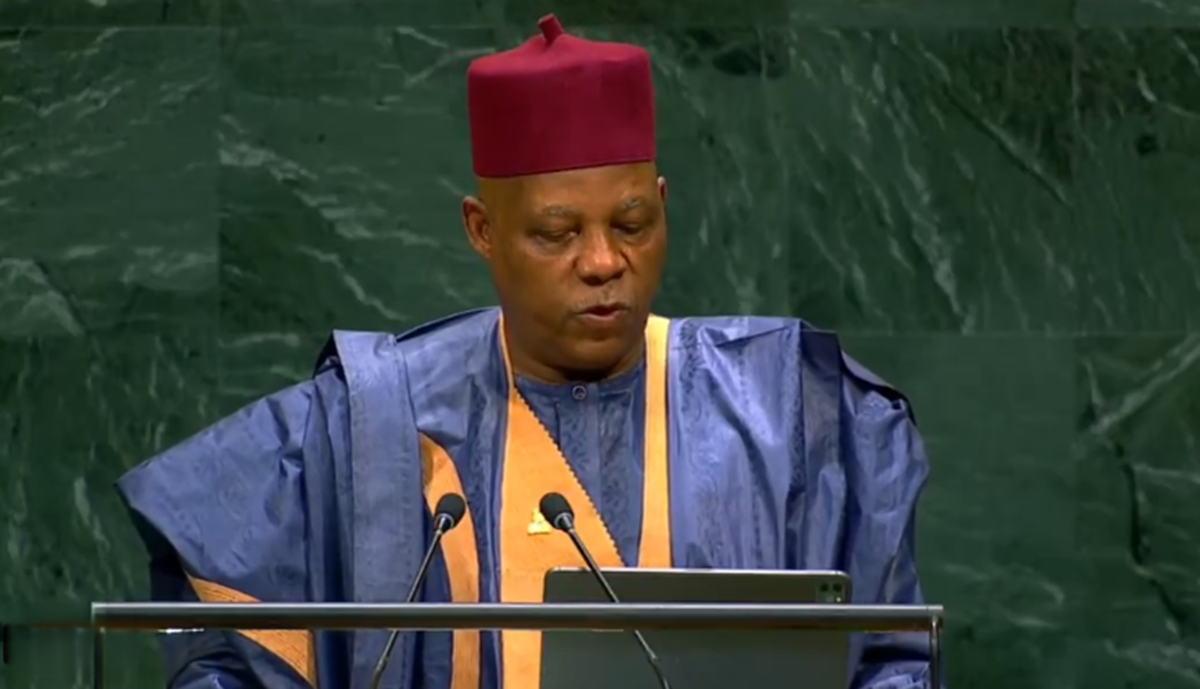
Nigeria has rejected what it described as a false choice between economic development and climate action, saying developing countries must be able to industrialise, reduce poverty and expand access to energy while pursuing lower-carbon growth.
President Bola Tinubu stated this in Nigeria’s national address at the 81st United Nations General Assembly in New York, delivered on his behalf by Vice President Kashim Shettima.
Tinubu said developing countries should be supported to pursue industrialisation and poverty reduction through low-carbon pathways backed by technology transfer, capacity building and climate finance.
He argued that climate policies should recognise the different circumstances and development needs of countries, particularly nations that still face significant gaps in energy access and infrastructure.
The President noted that Africa contributes less than four per cent of global greenhouse gas emissions but faces disproportionate consequences from climate change.
He reaffirmed Nigeria’s commitment to the Paris Agreement and an equitable energy transition that takes into account historical responsibility and national capacity while protecting the right to development.
Nigeria’s Energy Transition Plan targets net-zero emissions by 2060 while also seeking to expand access to affordable, reliable and sustainable energy.
Tinubu said the strategy combines renewable energy, clean cooking and natural gas as a transitional fuel, alongside climate-smart agriculture and nature-based solutions.
He also called for greater international financing to help developing countries pursue climate action without sacrificing their development objectives.
According to the President, climate finance should be based on equity and shared responsibility rather than charity. He urged international commitments to be translated into accessible, predictable and adequately funded mechanisms.
The Nigerian position also highlighted the need for technology transfer and capacity building, which the government considers essential for developing countries to adopt cleaner technologies while expanding their productive capacity.
Tinubu’s comments place climate action within Nigeria’s broader development agenda, which includes industrialisation, energy security, investment and poverty reduction.
He said developing countries should be treated as important partners in addressing global challenges, rather than being expected to pursue climate commitments without adequate financial and technological support.
Nigeria’s position at the UNGA reflects its call for an approach to climate policy that combines environmental responsibility with economic development and expanded opportunities for its population.
Sponsored

Related stories
 News
News
EU Backs FG’s Broadband Expansion with €14m Grant
The European Union and EBRD are supporting Nigeria’s planned 90,000-kilometre fibre-optic network to expand affordable broadband access nationwide.
 News
News
Tinubu Seeks Senate Nod to Replace ASCON With National School of Government
President Bola Tinubu has asked the Senate to approve a bill seeking to repeal the law establishing the Administrative Staff College of Nigeria and replace it with a National School of Government focused on leadership development and public-sector capacity building.
 News
News
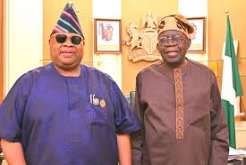
Adeleke Dances With Tinubu at APC Campaign Council Inauguration
Osun State Governor Ademola Adeleke joined President Bola Tinubu at the inauguration of the APC’s 2027 Presidential Campaign Council in Abuja, drawing attention to their political collaboration ahead of the general election.
 News
News
Tinubu Seeks Repeal of Indian Hemp Act in Drug Law Overhaul
President Bola Tinubu has asked the Senate to repeal the Indian Hemp Act as part of a proposed overhaul of Nigeria’s drug enforcement laws, aimed at consolidating the legal framework for combating illicit drugs.
Comments (0)
Leave a comment
All comments are moderated before publishing. Your email is never published.