
UK Government Says Working Adults, Tenants can Become Foster Carers
The UK Government has clarified that people in employment and those living in rented accommodation can become foster carers in England, provided they meet the required assessments and can offer children a safe, stable environment.
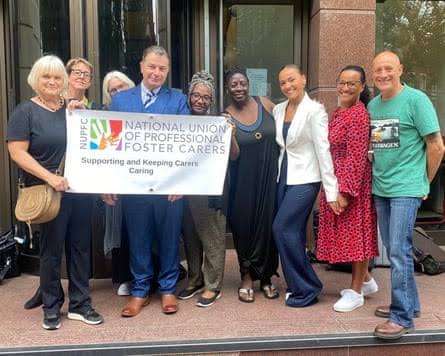
The United Kingdom Government has clarified that working adults and people living in rented accommodation are eligible to become foster carers in England, dismissing common misconceptions about the requirements for taking children into their care.
The clarification was contained in updated guidance published on the government’s official website on Friday, outlining the eligibility criteria and application process for prospective foster carers.
According to the guidance, applicants must have the right to work in the UK and demonstrate the ability to care for a child or young person.
Prospective foster carers must be at least 18 years old, although most fostering services require applicants to be 21 or older.
The government also stated that applicants do not need to own a property to qualify, but will generally be required to provide a spare bedroom for the child.
People in paid employment can also apply, provided their work arrangements allow them to meet the needs of the child and satisfy the requirements of the fostering service.
Fostering services are provided through local councils, regional recruitment hubs and independent fostering agencies.
The application process begins with an application to a local council, regional recruitment hub or independent fostering agency and may take up to eight months to complete.
Applicants can only submit an application through one fostering service at a time.
As part of the assessment, prospective carers may be required to attend a preparation course to understand the responsibilities involved in fostering.
They and every adult living in their household must also undergo an enhanced Disclosure and Barring Service check, including checks against the barred lists.
A social worker will subsequently assess the applicant and their family to determine their suitability to provide a safe and supportive environment for a child.
Applicants will also be asked to indicate their preferences regarding the type of fostering arrangement they wish to undertake and the age or gender of children they are prepared to care for.
However, the government clarified that prospective carers cannot select a particular child from a group or receive a trial period before a placement is made.
The fostering service will review the assessment before the applicant meets its panel, which makes a recommendation ahead of the final decision.
The guidance explained that foster carers are expected to work with local authorities, schools, healthcare professionals and the child's birth family to support the child's welfare and development.
Their responsibilities include maintaining records, preparing reports, attending meetings, advocating for the child, supporting their emotional and behavioural needs, and participating in relevant training.
Fostering arrangements can last from a single night to several years, including placements that continue until a young person reaches adulthood.
On employment, the government said foster carers could retain their jobs, but their ability to do so would depend on the circumstances of the child and the requirements of the fostering service.
Although employers may grant time off to support fostering responsibilities, there is no statutory entitlement to leave for ordinary fostering arrangements.
However, individuals fostering a child for adoption may qualify for adoption pay and leave from the time the child moves into their home.
People seeking further information or assistance can contact Fosterline for free advice on 0800 040 7675, from Monday to Friday, between 9am and 5pm, excluding bank holidays.
The guidance applies specifically to England, while Scotland, Wales and Northern Ireland operate separate fostering arrangements.
Sponsored

Related stories
 News
Federal Character Commission Drags Customs CG to Court Over Recruitment
The Federal Character Commission has filed a four-count criminal charge against the Nigeria Customs Service and its Comptroller-General, Bashir Adeniyi, over alleged violations of federal character requirements in the 2025/2026 recruitment exercise.
 News
DBN Unveils $275m Climate Finance Fund for MSMEs
The Development Bank of Nigeria has launched a $275m climate finance programme to help small businesses invest in renewable energy, climate-resilient agriculture and low-carbon operations, with an expected reach of 1.3 million people.
 News
Davido Partners PUBG Mobile as Flash Version Launches Worldwide
Afrobeats star Davido has joined PUBG Mobile as the face of its new FLASH campaign across Africa, coinciding with the worldwide launch of the game's lighter version, designed to make mobile gaming accessible to users with less powerful smartphones.
 News
Ondo APC Chairman Denies Party Division, Assures Members of Unity
Ondo APC Chairman Babatunde Kolawole has dismissed reports of a leadership crisis within the party, saying reconciliation efforts are progressing ahead of the 2027 general elections.
Comments (0)
Leave a comment
All comments are moderated before publishing. Your email is never published.