
TUC Rejects FG’s ₦70,000 Transport Allowance, Demands Salary Increase
The Trade Union Congress of Nigeria (TUC) has rejected the Federal Government’s proposed ₦70,000 transport allowance, demanding an immediate salary increase, a review of workers’ earnings and the implementation of outstanding agreements with health workers.

The Trade Union Congress of Nigeria (TUC) has rejected the Federal Government’s proposed ₦70,000 transport allowance for workers, insisting that a direct salary increase would provide more sustainable relief amid rising living costs.
The congress also demanded the implementation of outstanding agreements with the Joint Health Sector Unions (JOHESU), accusing the government of failing to fulfil previous commitments to workers.
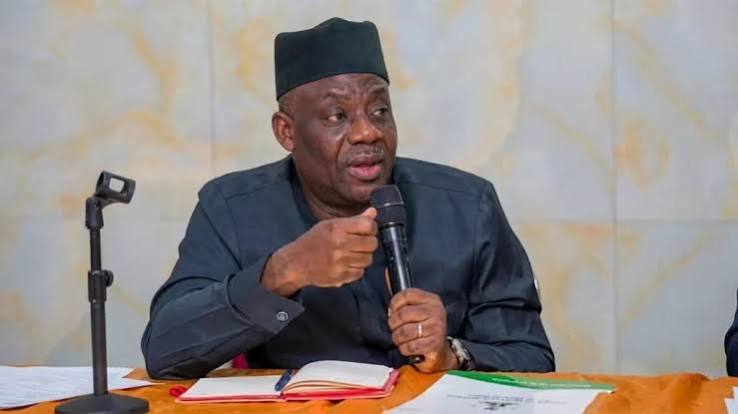
The position was contained in a statement issued on Wednesday by the TUC President, Festus Osifo, and Secretary-General, N.A. Toro, following a meeting of its National Administrative Council held in Abuja on October 8, 2026.
The labour organisation said it had formally written to the Federal Government through the Office of the Secretary to the Government of the Federation, calling for an immediate review of workers’ salaries.
According to the congress, temporary wage awards would not adequately address the economic difficulties confronting workers, particularly where previous interventions had not been implemented consistently.
The TUC maintained that the government could increase salaries without waiting for negotiations on a new national minimum wage, arguing that no law prescribed a maximum wage that prevented employers from raising workers’ earnings.
It proposed increasing the salary of the lowest-paid federal worker from the current ₦70,000 to ₦300,000, alongside appropriate adjustments across other salary grades.
The congress said some states had already raised their minimum wages above ₦100,000, arguing that the Federal Government could adopt a similar approach to improve the purchasing power of public servants.
It also questioned the proposed transport allowance, recalling that a previous ₦40,000 wage award agreed upon by the government and organised labour in October 2023 had not benefited all eligible workers.
The TUC alleged that some workers were left with outstanding payments, while others received no benefits under the arrangement. It further claimed that payments to some beneficiaries were irregular and often required repeated demands.
The congress argued that these shortcomings raised concerns about the effectiveness of introducing another temporary wage intervention without first addressing outstanding obligations.
It insisted that negotiations on a new national minimum wage should not be used to delay an immediate review of salaries.
Beyond salary increases, the TUC urged the Federal, state and local governments to introduce practical measures to reduce the cost of essential goods and services.
It called for the timely payment of salaries and pensions, protection of existing jobs, action against exploitative labour practices and renewed investment in productive sectors to create decent employment opportunities.
The congress said such measures should be inclusive, adequately funded and supported by clear implementation timelines to ensure that workers experienced tangible improvements in their living conditions.
On the dispute involving JOHESU, the TUC accused the Federal Government of failing to implement an agreement on the adjustment of the Consolidated Health Salary Structure (CONHESS), seven months after the unions suspended their industrial action.
According to the congress, the agreement followed negotiations involving organised labour and government representatives to resolve the health workers’ grievances.
It said the continued delay undermined collective bargaining and weakened workers’ confidence in agreements reached with the government.
The TUC therefore demanded the immediate implementation of the CONHESS adjustment, a clear timetable for resolving outstanding issues and the provision of the necessary budgetary allocations.
It also called for further consultations with the affected unions, warning that health workers should not be expected to continue providing essential services while agreed commitments remained unfulfilled.
The rejection came after the Federal Government approved a ₦70,000 monthly transport allowance for public servants for six months, beginning in November 2026, following discussions with the Nigeria Labour Congress (NLC).
The agreement also provided for the payment of outstanding peculiar allowance arrears in three equal monthly instalments beginning in November, while negotiations on the effective date of a new national minimum wage remained unresolved.
The TUC said it was awaiting the outcome of its scheduled meeting with the Federal Government before determining its next course of action.
It maintained that workers’ welfare required lasting improvements in wages, respect for collective agreements and effective measures to ease the cost of living.
Sponsored

Related stories
 News
Delta Governor Backs CAN Prayer Retreat Centre Project
Delta State Governor Sheriff Oborevwori has pledged government support for the proposed Christian Association of Nigeria (CAN) Prayer Retreat Centre, promising to work with the Christian community to secure suitable land for the project.
 News
Nigeria Cannot Afford to Ignore Technology in Education, Says Minister
Minister of Education, Tunji Alausa, has urged Nigeria to embrace technology in education, warning that the country cannot continue relying on manual teaching and learning methods amid widespread learning difficulties and inadequate access to qualified teachers.
 News
Tinubu Approves Take-Off of Kebbi Inland Dry Port
President Bola Tinubu has approved the establishment of an inland dry port in Kebbi State to strengthen trade, improve cargo handling and stimulate economic activities across the North-West region.
 News
NDC Urges Opposition Parties, Nigerians to Scrutinise INEC Voter Register
The Nigeria Democratic Congress (NDC) has urged opposition parties, civil society organisations and Nigerians to scrutinise the Independent National Electoral Commission's preliminary voter register ahead of the 2027 general elections, citing unexplained increases in registered voters in parts of the country.
Comments (0)
Leave a comment
All comments are moderated before publishing. Your email is never published.