
Stop Waiting for Politicians: Good Governance Is Every Citizen’s Responsibility
How the Great Nigerian Assembly (GNA) CAA Governance Model Is Empowering Citizens to Build a New Nigeria, One Local Government at a Time

By Dr. Kayode Elusoji
Executive Director, Great Nigerian Assembly (GNA)
Democracy Must Go Beyond Elections
One of Nigeria’s governance challenges is the limited opportunity for citizens to participate meaningfully in public affairs between elections. While elections allow citizens to choose their representatives, democracy must also provide opportunities for continuous engagement, public accountability, and community development.
Elected officials operate within complex political and administrative environments. However, citizens must be able to assess public performance, communicate community needs, and monitor development initiatives regardless of the political circumstances.
This raises an important question: What happens to the needs of the people during the four years between elections?
Who monitors abandoned projects? Who documents deteriorating roads, poorly equipped healthcare facilities, neglected schools, and communities without access to clean water? Who consistently engages public officials with verified information about the needs of their constituencies?
Nigeria’s development cannot depend solely on election campaigns, political promises, public complaints, or occasional protests. Democracy must become a continuous relationship between citizens and the institutions entrusted with public responsibility.
From Complaining to Constructive Engagement
For decades, Nigerians have expressed concerns about inadequate infrastructure, unemployment, insecurity, and the slow pace of development. Yet complaints alone cannot repair roads, equip hospitals, improve schools, or create sustainable employment opportunities.
Citizens need an organised, credible, non-partisan mechanism through which they can identify community priorities, document infrastructure conditions, engage relevant authorities, monitor interventions, and recognise measurable achievements.
This is the thinking behind the Great Nigerian Assembly (GNA) Coverage Area Administrator (CAA) Governance Model.
Its central principle is straightforward: citizens must move beyond waiting for good governance and become active participants in promoting it.
The GNA CAA Governance Model: A Framework for Citizen Participation
The GNA CAA Governance Model is an AI-enabled, citizen-driven governance and development framework designed to strengthen constructive engagement between communities and public officeholders.
The initiative is non-governmental, non-political, non-religious, and non-partisan. Rather than competing with elected officials or replacing government institutions, it seeks to provide a structured platform for collaboration, transparency, accountability, and measurable community development.
The implementation framework is designed to cover Nigeria’s 774 Local Government Areas across the 36 states and the Federal Capital Territory.
At the local government level, the model brings together CAA Committees, Advisory Councils, Special Development Committees, trained Certified Citizen Reporters, professional experts, and other community stakeholders.
These structures are intended to identify development priorities, verify reports on public infrastructure, facilitate engagement with responsible authorities, and document outcomes.
The objective is not to antagonise political officeholders. It is to establish a framework in which citizens and public officials can work together through evidence-based engagement, transparent processes, and clearly defined responsibilities.
Technology, Verified Information, and Public Accountability
A key feature of the CAA Governance Model is its use of technology to support informed citizen participation in community development.
Through the GNA digital governance platform, infrastructure conditions can be documented using photographs, videos, geographical information, and structured assessments.
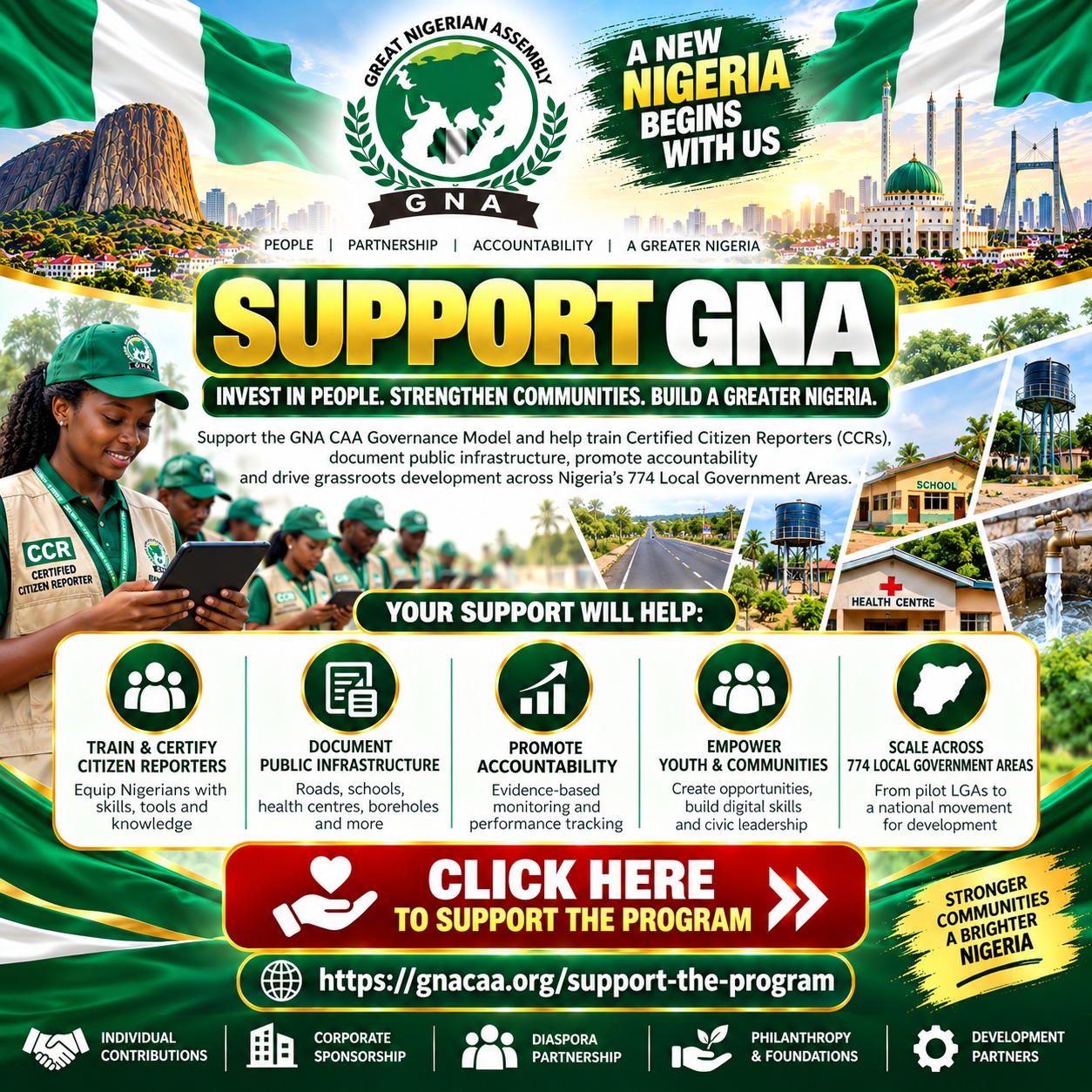
Trained Certified Citizen Reporters (CCRs) help collect and verify information, providing a more reliable basis for engagement with government agencies, public institutions, and political representatives.
The model also incorporates two accountability instruments: the Record of Performance (RoP) and the People’s Accountability Index (PAI).
The Record of Performance documents the number of verified, completed projects and interventions facilitated by each responsible party, including relevant political officeholders. Where no completed intervention has been verified, the numerical RoP remains zero.
The People’s Accountability Index provides a structured assessment of local development conditions and verified responses to community needs.
Together, these instruments are intended to encourage evidence-based accountability rather than political sentiment, propaganda, or unverified accusations.
The message is clear: let performance speak, let evidence guide engagement, and let citizens participate.
One Million Young Nigerians: Building the Next Generation of Nation Builders
Beyond governance monitoring, GNA has established a ten-year strategic goal of training one million Certified Citizen Reporters across Nigeria’s 774 Local Government Areas.
The initiative is designed to extend beyond citizen reporting into youth empowerment, digital skills development, civic education, and nation-building.
Under the proposed youth development pathway, participants are expected to undertake Certified Citizen Reporter training as a foundation in civic responsibility, ethical reporting, digital documentation, and community engagement.
From this foundation, participants may progress into professional development pathways, including digital journalism, artificial intelligence, data engineering, agriculture, healthcare, and other emerging fields.
The objective is to help young Nigerians develop the knowledge, practical skills, discipline, and professional capacity to contribute meaningfully to national development.
Nigeria needs a generation that understands governance, embraces civic responsibility, and possesses the skills to help address the country’s challenges.
The Journey Begins in Ile-Ife
The inauguration of the GNA CAA Governance Model implementation structures for the Ife Local Government Areas on October 24, 2026, marked an important milestone in this vision.
The pioneering training of 30 Certified Citizen Reporters and the establishment of local governance structures created an initial platform for demonstrating how organised citizen participation can support community development.
The next phase is to translate these structures into measurable outcomes: verified infrastructure assessments, meaningful stakeholder engagement, documented interventions, youth empowerment, and stronger community participation.
Success must not be measured merely by the number of committees inaugurated or members registered. It must also be assessed through the communities served, the young people empowered, the concerns addressed, and the improvements achieved.
Ile-Ife therefore represents an important starting point for testing, refining, and demonstrating the practical value of the model as its implementation expands.
Political Officeholders Are Partners in Development, Not Enemies
An important distinction must be maintained: the GNA CAA Governance Model is not designed to undermine legitimate government authority or antagonise political officeholders.
Public officials who contribute to community development should have opportunities to document their achievements, respond to verified concerns, and receive appropriate recognition for completed interventions.
Equally, citizens must be able to raise legitimate concerns without intimidation, political discrimination, or partisan manipulation.
Constructive engagement should replace unnecessary hostility. Evidence should replace rumours. Collaboration should replace endless confrontation. Measurable performance should become an important component of public accountability.
This approach creates room for citizens to participate responsibly while enabling public officials to demonstrate their contributions through verifiable results.
A New Nigeria Starts With YOU!
Building a better Nigeria cannot rest on the shoulders of political officeholders alone. Government has constitutional and statutory responsibilities that must be fulfilled, while citizens have an essential role in shaping public priorities, monitoring performance, and participating in community development.
The task before Nigerians is to move beyond waiting for elections or expecting others to solve every problem. Citizens must organise, engage, document, monitor, collaborate, and hold public institutions accountable through lawful, constructive, and evidence-based participation.
This is the vision of the Great Nigerian Assembly.
This is the purpose of the CAA Governance Model.
And this is why GNA is working to build a nationwide movement of informed, empowered, and responsible citizens, beginning at the grassroots.
The future of Nigeria must not depend solely on who wins the next election. It must also depend on what citizens are prepared to do between elections.
Good governance is a shared responsibility. A new Nigeria begins when citizens move from passive observation to organised, responsible participation.
• GN (Dr.) Kayode Elusoji
Executive Director, Great Nigerian Assembly (GNA)
Chairman, GNA TV & News · GNA Weekly · GNA
Global Pacesetter
Sponsored
Related stories
 News
N’Assembly Lacks Power to Regulate Telecom Operators — Lawyer
Lawyer Sesan Bankole argues that regulating and sanctioning telecommunications operators falls under the Nigerian Communications Commission’s statutory mandate.
 News
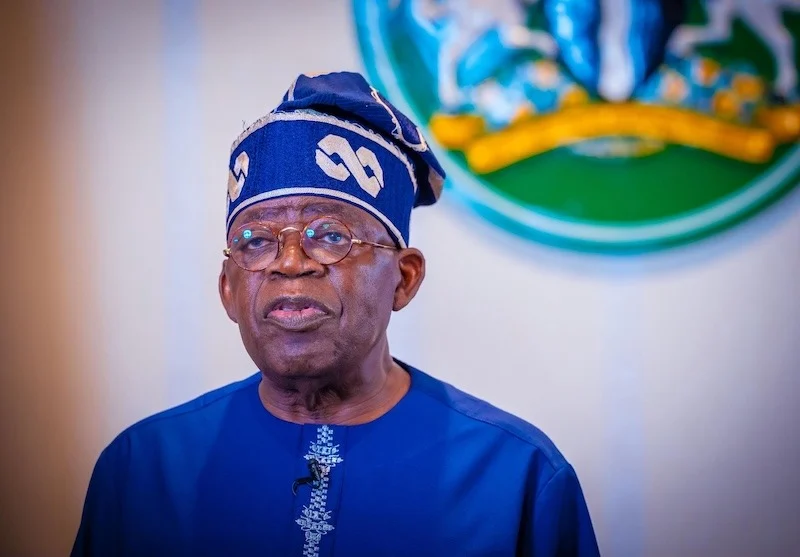
Insecurity: Tinubu to Boost Air Force with Five New Helicopters
President Bola Tinubu is expected to induct five new helicopters into the Nigerian Air Force fleet to strengthen operations against terrorism, kidnapping and banditry.
 News
Ebola: WHO Says No Public Gathering Restrictions Advised for Nigeria
The World Health Organisation says it has not advised Nigeria to restrict public gatherings following an imported Ebola case, as health authorities continue monitoring 53 contacts.
 News
North-West terrorism now driven by economic interests — FG
The Federal Government says terrorism in Nigeria’s North-West is increasingly motivated by economic interests, including criminal revenue, and requires security operations alongside wider interventions.
Comments (0)
Leave a comment
All comments are moderated before publishing. Your email is never published.