
Senate Sends State Police Bill to Tinubu, Demands Operational Guidelines
The Senate has approved the transmission of the constitutional amendment establishing state police to President Bola Tinubu for assent, while calling for a separate National Policing Bill to define operational procedures and prevent possible abuse.
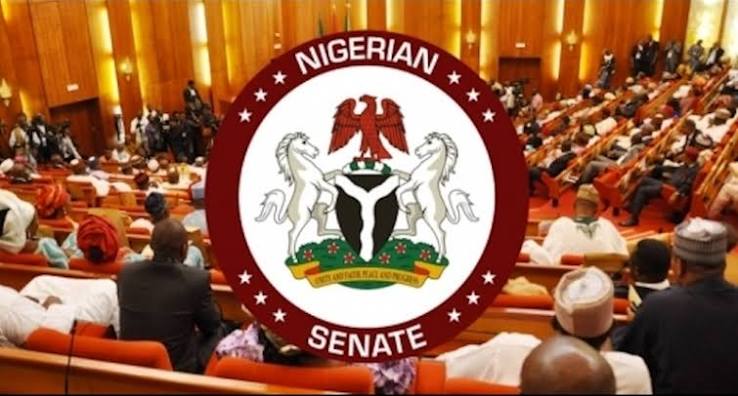
The Senate has directed the Clerk to the National Assembly, Kamoru Ogunlana, to transmit the Constitution of the Federal Republic of Nigeria (Sixth Alteration) Bill, 2026, providing for the establishment of State Police Services, to President Bola Tinubu for assent.
The decision followed the approval of the proposed constitutional amendment by all 36 State Houses of Assembly, fulfilling the requirements for constitutional alteration under Section 9(2) of the 1999 Constitution.
The upper chamber, however, urged the President to forward the proposed National Policing Bill to the National Assembly for consideration and passage to establish operational guidelines for the new policing structure.
The proposed legislation is expected to define the responsibilities and relationship between federal and state police authorities, establish clear jurisdictional boundaries and provide safeguards against possible abuse.
The resolution followed a motion sponsored by Senate Leader, Senator Opeyemi Bamidele, who recalled that the Senate approved the constitutional amendment on June 24, 2026, while the House of Representatives passed it on July 23, 2026, with the required two-thirds majority.
Bamidele said the 36 state legislatures had subsequently transmitted their resolutions approving the amendment to the National Assembly, completing the constitutional requirements for its passage.
Seconding the motion, Senate Minority Leader, Senator Abba Moro, described the establishment of state police as necessary amid Nigeria's persistent security challenges.
He said the proposed arrangement would complement existing security agencies and strengthen the capacity of governments to respond to threats within their jurisdictions.
Deputy Senate President, Senator Barau Jibrin, who chairs the Senate Committee on Constitution Review, described the development as a significant achievement of the Tinubu administration and the 10th National Assembly.
He said successive administrations had considered decentralising the country's policing system but had been unable to translate the proposal into reality.
Senate President Godswill Akpabio also described the constitutional amendment as a major legislative achievement, expressing optimism that state police could address up to 70 per cent of Nigeria's security challenges.
He, however, stressed that the next phase must establish a clear operational framework to prevent conflicts between federal and state police authorities.
Former Edo State Governor, Senator Adams Oshiomhole, cautioned against the possibility of governors using state police to intimidate political opponents or pursue personal interests.
He argued that concerns about potential abuse should not prevent the country from adopting a decentralised policing system but insisted that comprehensive safeguards must accompany its implementation.
Oshiomhole called for legislation defining the operational limits of state police and regulating their relationship with the federal police, warning that overlapping responsibilities could create institutional conflicts.
Former Senate Leader, Senator Adamu Aliero, also supported the amendment, suggesting that Nigeria could eventually consider introducing local government policing alongside federal and state police.
Similarly, Senator Ekon Sampson emphasised the need for judicial oversight and accountability mechanisms to prevent possible abuses.
The Senate subsequently adopted the motion, approving the transmission of the constitutional amendment to Tinubu, commending his support for the initiative and requesting the submission of the National Policing Bill.
Akpabio said the executive was expected to forward the implementation framework to the National Assembly without delay, adding that lawmakers could initiate the necessary legislation if the executive failed to act within a reasonable period.
The proposed constitutional framework will pave the way for Federal Police and State Police Services to operate within Nigeria's policing architecture, with the subsequent legislation expected to determine their powers, funding, accountability and operational coordination.
Sponsored

Related stories
 News
Putin’s Nuclear Briefcase Spotted During China Visit
Russian President Vladimir Putin’s nuclear briefcase was captured on camera during his visit to China for the Asia-Pacific Economic Cooperation summit, with a naval officer confirming its identity in a rare televised exchange.
 News
Tinubu Expands 2027 Campaign Itinerary to 19 States
President Bola Tinubu has expanded his planned appearances at APC presidential campaign rallies from 12 to 19 states and the Federal Capital Territory, with 20 rallies scheduled between October 2026 and January 2027.
 News
Westland University Student Stabbed to Death Near Hostel in Osun
A 21-year-old student of Westland University, Iwo, Monica Mary, has been stabbed to death near her off-campus accommodation, prompting police investigations and concern among students and residents.
 News
Lawyer Urges IGP to Curb Election-Related Violence Ahead of 2027 Polls
Lagos-based lawyer Emmanuel Umohinyang has urged the Inspector-General of Police, Olatunji Disu, to strengthen security measures and prevent attacks on political activities ahead of the 2027 general elections.
Comments (0)
Leave a comment
All comments are moderated before publishing. Your email is never published.