
Reps Probe ₦2.23tn Ransom Economy Fueling Terrorism, Kidnapping
House of Representatives seeks urgent action against Nigeria’s ₦2.23 trillion ransom economy, targeting financial networks allegedly sustaining terrorism, banditry and kidnapping nationwide.
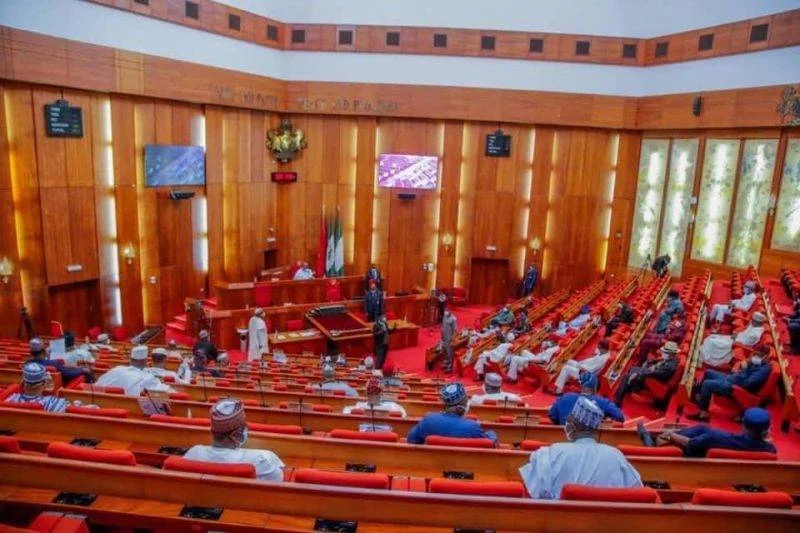
The House of Representatives has launched moves to tackle the financial networks sustaining kidnapping, banditry and terrorism, calling for coordinated executive action to dismantle what lawmakers described as Nigeria’s growing ransom economy.
The resolution followed the adoption of a motion sponsored by the member representing Kosofe Federal Constituency, Lagos State, Ademorin Kuye, during plenary on Wednesday.
Leading the debate, Kuye expressed concern over the increasing use of ransom payments to finance organised criminal activities, citing reports indicating that Nigerians paid an estimated ₦2.23 trillion to kidnappers between January 2021 and June 2025.
He said existing laws, including the Money Laundering (Prevention and Prohibition) Act, 2022, and the Terrorism (Prevention and Prohibition) Act, 2022, already empower relevant institutions to identify, monitor and prevent financial transactions linked to terrorism financing, money laundering and ransom payments.
According to the lawmaker, intelligence reports have shown that some Point of Sale operators, Bureau De Change operators and other financial intermediaries have been exploited to facilitate ransom payments and conceal financial trails, making investigations more difficult.
He also warned that criminal groups increasingly rely on formal and informal financial systems, including cryptocurrency platforms, hawala networks, livestock transactions and trade based money laundering schemes, to legitimise proceeds of crime.
Following deliberations, the House urged President Bola Tinubu to establish an inter agency framework that would strengthen collaboration among security agencies, financial regulators and intelligence institutions to disrupt ransom financing across the country.
Lawmakers further called on the Federal Ministry of Finance to provide adequate funding for financial intelligence infrastructure and directed the Central Bank of Nigeria, the Nigeria Financial Intelligence Unit and other regulatory bodies to conduct comprehensive audits of suspicious financial transactions, particularly in high risk locations.
The House also urged the Attorney General of the Federation and relevant law enforcement agencies to investigate and prosecute individuals or organisations involved in facilitating ransom payments.
Contributing to the debate, Yusuf Gagdi argued that continuous payment of ransom encourages criminal activities and called for stronger measures against bandits instead of rehabilitation.
However, Ahmed Jaha maintained that families of kidnap victims often have no choice but to pay ransom, urging the Federal Government to prioritise the rehabilitation and support of rescued victims while intensifying efforts to dismantle criminal financing networks.
Related stories
 News
News
N1.3bn Fraud: Ex-Port Harcourt Refinery MD Gets N150m Bail
A Federal High Court in Abuja granted former Port Harcourt Refinery Managing Director Ahmed Dikko N150 million bail after his arraignment over alleged money laundering.
 News
News
COAS Passes Out 3,000 Army Recruits to Strengthen National Defence
Chief of Army Staff graduates over 3,000 recruits in Ebonyi, reinforcing Nigeria’s military capacity to tackle security challenges through expanded manpower nationwide.
 News
News
NCC, Stakeholders Move to End Repeated Road Excavation for Fibre Deployment
NCC and industry stakeholders are developing a pricing framework for shared telecom ducts to curb repeated road excavation and accelerate broadband infrastructure deployment nationwide.
 News
News
Army Chief Warns New Soldiers Against Leaking Military Operations on Social Media
Army Chief Lt. Gen. Waidi Shaibu warned newly enlisted soldiers that leaking operational information on social media could result in dismissal from military service.
Comments (0)
Leave a comment
All comments are moderated before publishing. Your email is never published.