
Reps Pass Bill to Limit FCT Advance Rent Payments to 12 Months
The House of Representatives has passed a bill for second reading seeking to prohibit landlords in the Federal Capital Territory from compelling tenants to pay more than 12 months’ rent in advance, while introducing measures to regulate estate agency practices and protect tenants.
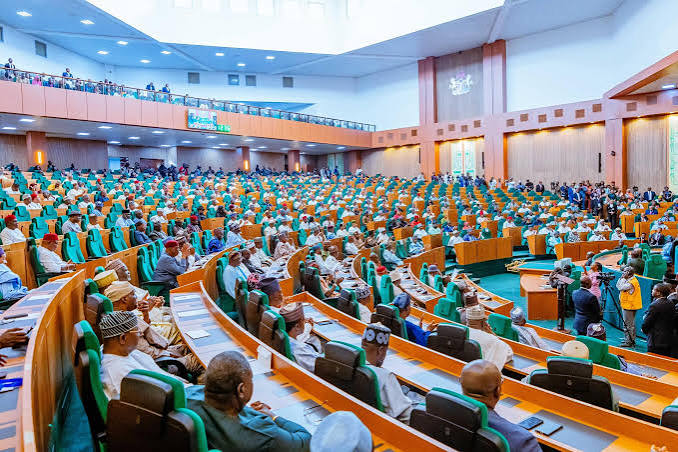
The House of Representatives has passed for second reading a bill seeking to regulate rental payments and prohibit landlords in the Federal Capital Territory (FCT) from demanding more than 12 months’ rent in advance as a condition for granting or renewing tenancy agreements.
The proposed legislation, sponsored by Paul Sunday Nnamchi, seeks to establish a regulatory framework for rental transactions, protect tenants against exploitative practices and improve accountability in the housing sector.
The bill also proposes regulating estate agency fees, establishing a unified digital register for housing agents and introducing safeguards for both landlords and tenants.
Leading the debate, Nnamchi said excessive advance rent demands had placed considerable financial pressure on residents, affecting household savings, small businesses and employment opportunities.
He explained that the proposed legislation was designed to promote transparency and fairness in rental transactions without undermining property ownership or discouraging investment in the housing sector.
Under its provisions, landlords, estate agents and property managers would be prohibited from compelling tenants to pay more than one year's rent upfront. However, tenants would retain the option of voluntarily paying for longer periods, provided such arrangements were initiated without coercion and documented in writing.
The bill also seeks to prevent landlords and agents from circumventing the proposed restriction through compulsory service charges, separate agreements and other additional payments designed to extract more than 12 months' rent.
Contributing to the debate, several lawmakers expressed support for the proposed regulation, citing the increasing difficulty residents face in securing accommodation in Abuja.
Chinedu Ogah, representing Ikwo/Ezza South Federal Constituency of Ebonyi State, said high rents and agency charges were making it difficult for businesses to establish offices in the FCT.
He cited the cost of renting a three-bedroom office in Wuse, Abuja, which he said could range between ₦25 million and ₦30 million annually, excluding additional agency charges.
Similarly, Ayodeji Alao-Akala, representing Ogbomoso North/South/Orire Federal Constituency of Oyo State, argued that requiring young couples and other prospective tenants to pay two years' rent upfront placed an unreasonable financial burden on them.
However, some lawmakers raised concerns about the proposed restrictions, calling for further examination of their implications for property owners and the housing market.
Leko Jafaru Gambo, representing Bogoro/Dass/Tafawa Balewa Federal Constituency of Bauchi State, suggested replacing the word "prohibit" in the bill's title with "regulate", arguing that the legislation should focus on establishing appropriate conditions for rental transactions.
Ibe Okwara Osonwa, representing Arochukwu/Ohafia Federal Constituency of Abia State, also cautioned against a blanket prohibition on multi-year rent arrangements, noting that certain circumstances could justify such agreements.
Patrick Umoh further raised concerns about the constitutional implications of the proposed legislation, particularly regarding property rights and freedom of trade, and called for wider consultations before its passage.
Supporting the bill, Minority Leader Frederick Agbedi said rising accommodation costs were forcing residents into overcrowded and unsuitable living conditions, particularly in communities outside Abuja's city centre.
House Leader Julius Ihonvbere also backed the proposal, highlighting the need to address exploitative practices and the activities of unregistered estate agents.
Deputy Speaker Benjamin Kalu, who presided over the plenary, referred to the constitutional responsibility of government to promote citizens' welfare and access to adequate shelter.
He argued that housing, as a fundamental human need, required appropriate regulation to protect the interests of the public.
The proposed legislation also seeks to establish the Federal Capital Territory Rent Regulation and Tenants' Protection Authority, which would investigate complaints, monitor compliance, facilitate dispute resolution and order refunds of unlawfully collected rent.
It further proposes fines ranging from ₦500,000 to ₦5 million for individuals who knowingly violate the advance rent restrictions, while corporate offenders could face penalties of between ₦5 million and ₦20 million.
The bill will proceed to committee consideration, where its provisions are expected to undergo further scrutiny and stakeholder consultations before subsequent legislative stages.
Sponsored

Related stories
 News
Nigerian Midfielder Quadri Liameed Hospitalised After Head Injury In Spain
Nigerian midfielder Quadri Liameed was taken to hospital after losing consciousness following a kick to the head during Sabadell's Spanish second-division match against Albacete. He was later discharged after medical examinations found no further complications.
 News
Army Chief Lists 28,000 Recruitment, 12 Divisions Among First-Year Achievements
Chief of Army Staff, Lieutenant General Waidi Shaibu, has highlighted the expansion of the Nigerian Army from eight to 12 divisions, approval for the recruitment of 28,000 personnel and delivery of 681 housing units as major achievements recorded in his first year in office.
 News
Tinubu Concludes Saudi Arabia Visit After Performing Umrah
President Bola Tinubu has concluded his visit to Saudi Arabia after performing the Umrah pilgrimage and praying inside the Holy Kaaba, expressing gratitude to the Saudi leadership for granting him and members of his delegation the rare privilege.
 News
Reps Propose Licence Revocation For Hospitals Denying Emergency Care
The House of Representatives has proposed stricter penalties for hospitals and healthcare professionals who refuse or delay emergency medical treatment, including financial sanctions, suspension or revocation of operating licences and possible closure of repeat-offending facilities.
Comments (0)
Leave a comment
All comments are moderated before publishing. Your email is never published.