
Presidency Seeks Private Sector Funding for Proposed State Police
Femi Gbajabiamila has urged business groups to develop funding proposals for state police, stressing accountability, financial sustainability and safeguards against abuse.
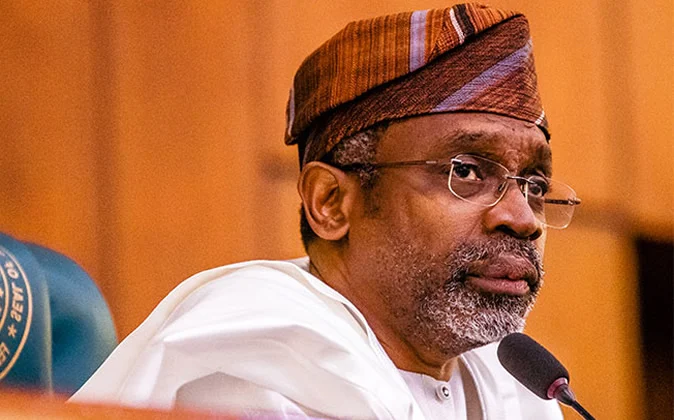
The Presidency has called on Nigeria’s organised private sector to develop a financing and implementation plan for the proposed state police system, as efforts to establish decentralised policing advance.
Chief of Staff to President Bola Tinubu, Femi Gbajabiamila, made the appeal on Monday during a session on security, stability and economic resilience at the 32nd Nigerian Economic Summit in Abuja.
Gbajabiamila, who chairs the Presidential Working Group on the National Policing Bill, urged the Nigerian Economic Summit Group, chambers of commerce and business associations to develop practical proposals for funding state police and supporting their implementation.
He said insecurity was imposing significant costs on businesses through disrupted supply chains, increased spending on private security, delayed investments and lost commercial opportunities.
According to him, businesses have a direct interest in effective policing because commercial activities cannot thrive where workers, suppliers and customers face persistent security threats.
Gbajabiamila stressed, however, that states seeking to establish their own police services must demonstrate the financial capacity to sustain them beyond the initial purchase of vehicles, uniforms and equipment.
He said reliable funding must cover regular salaries, continuous training and operational expenses, warning that poorly funded police institutions could become vulnerable to private influence and unlawful demands.
The Chief of Staff also cautioned that private-sector contributions must not compromise police independence or allow donors to influence investigations or obtain preferential treatment. He called for transparent accounting and independent scrutiny of any funding arrangements.
Providing an update on the proposed reform, Gbajabiamila said 24 State Houses of Assembly had approved the constitutional amendment providing for state police as of October 23, meeting the required two-thirds threshold.
He disclosed that the Presidential Working Group had submitted the draft National Policing Bill and 29 consequential amendment bills to the Federal Ministry of Justice on October 19 for review and validation.
The proposals are expected to undergo further consideration before being presented to President Tinubu and subsequently transmitted to the National Assembly.
The proposed framework is intended to allow willing and financially capable states to assume greater responsibility for local security while retaining a federal police service for national and interstate crimes.
Gbajabiamila acknowledged concerns that state police could be abused against political opponents or vulnerable communities. He said the proposed framework would include national professional standards, independent oversight and enforceable safeguards against misuse of police powers.
He added that federal policing would continue in states that were not financially or institutionally prepared to establish their own services.
The proposal forms part of the Federal Government’s wider security reform agenda. Its implementation will depend on the completion of the constitutional process, the passage of relevant legislation and the establishment of sustainable funding and accountability arrangements.
Sponsored

Related stories
 News
FG Unveils Free Digital Procurement Training for MSMEs
The Federal Government has launched free online procurement training to help Nigerian small businesses understand bidding procedures and access public contracts.
 News
Atiku Asks N’Assembly to Suspend Tinubu’s $20.52bn Loan Request
Former Vice-President Atiku Abubakar wants lawmakers to withhold approval until the government discloses project details, costs and repayment terms.
 News
Oyo Ranks Third in Ease of Doing Business in Nigeria — Makinde
Governor Seyi Makinde says Oyo State’s third-place ranking reflects reforms and infrastructure investments aimed at improving the business environment.
 News
PTDF Seeks UK Intervention Over Rising Tuition, Visa Delays
The Petroleum Technology Development Fund wants Britain to address rising university costs and visa difficulties affecting Nigerian scholarship beneficiaries.
Comments (0)
Leave a comment
All comments are moderated before publishing. Your email is never published.