
Oyebanji Unveils Industrialisation Blueprint to Transform Ekiti’s Economy
Ekiti State Governor Biodun Oyebanji has outlined an industrialisation strategy for his second term, focusing on agro-processing, small business financing, private investment and improved transport infrastructure to create jobs and strengthen the state’s economy.
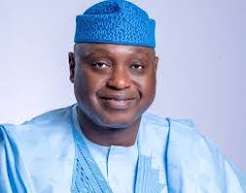
Ekiti State Governor Biodun Oyebanji has unveiled an economic transformation blueprint centred on industrialisation, local manufacturing, agricultural processing and small business development, as his administration seeks to convert infrastructure investments into sustainable economic growth.
Oyebanji said the next phase of his administration would prioritise productivity, job creation and private-sector investment, building on road construction, electricity expansion and agricultural interventions undertaken during his first term.
He explained that the government’s objective was to ensure that infrastructure projects generated tangible economic benefits by supporting businesses, expanding production and improving household incomes.
“Our next major focus, therefore, is industrialisation and support for small businesses. That is the only way we can deepen our shared prosperity agenda,” the governor said.
A key component of the plan is to process more agricultural produce within Ekiti rather than sell it in raw form. The strategy is expected to strengthen local supply chains, increase the value of agricultural commodities and create employment opportunities across farming, manufacturing, transportation and related businesses.
Oyebanji stressed the need to help farmers increase production while connecting them with reliable off-takers and processing companies capable of purchasing their produce and converting it into finished goods.
The state has already attracted investments into its Special Agro-Industrial Processing Zone, where agribusinesses, including Arog Agro-Allied and Agbeyewa Farms, are contributing to the development of agricultural production and processing. The governor also cited Ekiti’s selection under the African Development Bank’s Special Agro-Industrial Processing Zone Programme as an opportunity to expand agricultural investment and irrigation.
He said the government would continue improving the business environment through streamlined approval procedures, land administration reforms, more efficient taxation and a proposed one-stop investment centre to ease the process of establishing businesses in the state.
According to him, government’s primary responsibility is to provide the infrastructure, security and policies required to attract investors, rather than necessarily establish industries itself.
The industrialisation agenda also includes improved access to affordable financing for small-scale entrepreneurs, including welders, tailors, hairdressers, barbers and other artisans. Oyebanji said supporting these businesses would enable them to expand their operations, create jobs and contribute more significantly to the local economy.
He added that infrastructure development would continue alongside the new economic priorities. The administration expects to have constructed close to 400 kilometres of roads by the end of 2026, including township and farm roads intended to improve connectivity and facilitate the movement of agricultural produce.
The governor also highlighted plans to strengthen the Ekiti Agro-Allied International Cargo Airport as part of the state’s investment and export strategy.
He said an Instrument Landing System had been installed and was undergoing assessment, while plans were progressing for airport lighting to support night operations. A privately developed aviation fuel depot is also expected to improve aircraft refuelling and operational capacity.
Oyebanji further disclosed plans to introduce compressed natural gas-powered and electric vehicles to improve transportation and reduce operating costs. He said the initiative would be developed with consideration for existing transport operators to avoid disrupting their businesses.
The governor maintained that the various interventions were intended to work together, linking agricultural production with processing facilities, improving access to markets and helping small businesses expand.
He said the industrialisation drive would feature prominently in the state’s 2027 budget, adding that the administration’s central objective was to build a more productive economy capable of generating sustainable employment and improving residents’ livelihoods.
Sponsored

Related stories
 News
Veteran Nollywood Actor Francis Duru Dies at 57 After Brief Illness
Veteran Nollywood actor Francis Duru has died at 57 after a brief illness, his family and the Actors Guild of Nigeria confirmed.
 News
Covenant Varsity Is God’s Own New-Generation Harvard, Says Oyedepo
Covenant University Chancellor David Oyedepo has expressed confidence that the institution will attain global recognition comparable to Harvard University, citing its growth, academic development and commitment to producing leaders with strong character.
 News
Afenifere Leader Fasoranti for Burial on December 17
The family of late Afenifere leader Pa Reuben Fasoranti has announced December 17, 2026, for his burial in Akure, Ondo State, following his death at the age of 100.
 News
Kaduna Assembly Approves Constitutional Amendment for State Police
The Kaduna State House of Assembly has unanimously approved a proposed constitutional amendment to establish state police services, citing the need to improve community security, protect lives and property, and strengthen responses to local crimes.
Comments (0)
Leave a comment
All comments are moderated before publishing. Your email is never published.