
Over 150 UK Flights Cancelled After Air Traffic Glitch
More than 150 flights were cancelled across UK airports after an air traffic control glitch disrupted operations and stranded passengers.
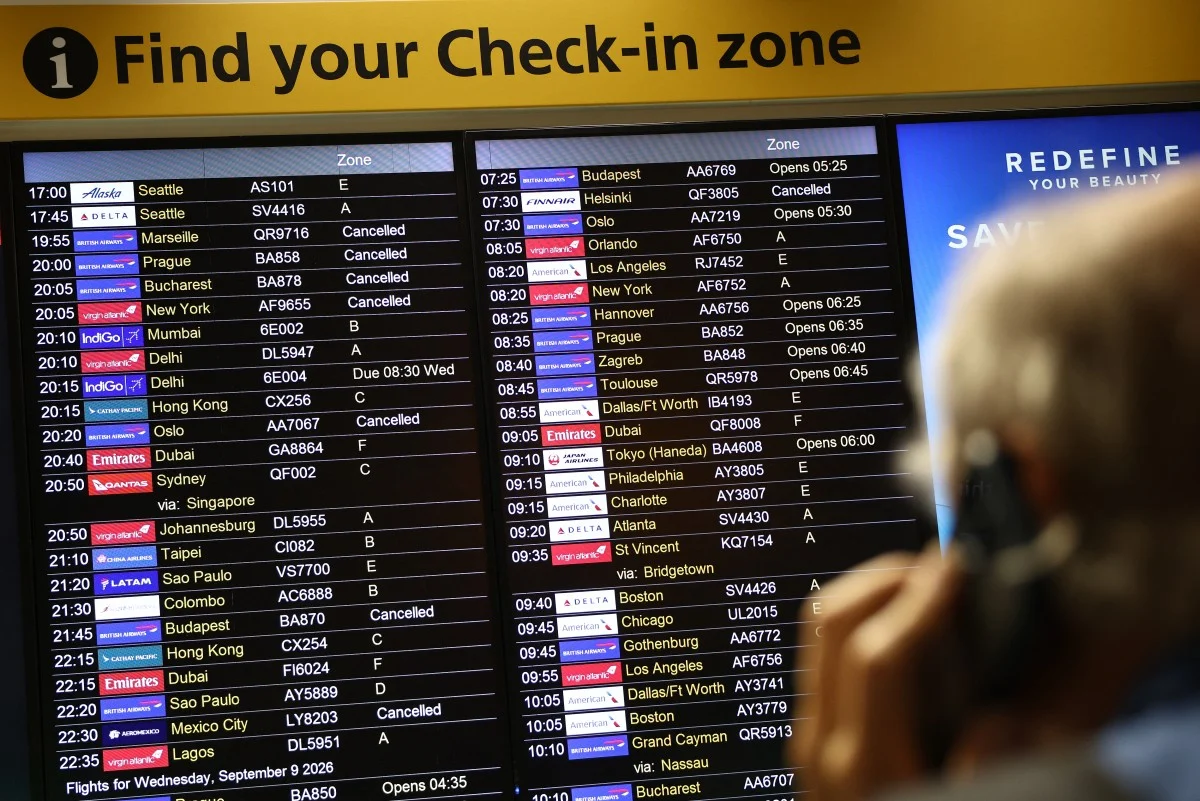
More than 150 flights have been cancelled across the United Kingdom following an air traffic control glitch that disrupted operations at several airports.
The disruption caused widespread delays and cancellations, affecting thousands of passengers travelling within the UK and to international destinations.
Airlines were forced to adjust their schedules as the technical problem affected the management of aircraft movements through the country’s airspace. The disruption also created knock-on effects, with delayed flights and aircraft being left out of position for subsequent journeys.
Passengers at affected airports were advised to check directly with their airlines for the latest information before travelling, as flight schedules could change at short notice.
The incident has renewed concerns about the vulnerability of aviation systems to technical failures, particularly during busy travel periods when airports and air traffic networks are operating close to capacity.
Air traffic control systems are responsible for safely coordinating aircraft movements and maintaining appropriate separation between planes. Any significant disruption can therefore require flights to be delayed, diverted or cancelled until normal operations can safely resume.
The cancellations have created difficulties for passengers with connecting flights, business appointments and holiday plans. Some travellers have also faced uncertainty over alternative flights and accommodation arrangements.
Airlines are expected to work through the backlog created by the disruption as services gradually return to normal. However, further delays could occur as carriers attempt to reposition aircraft and crew affected by the cancellations.
Passengers whose flights have been cancelled or significantly delayed may be entitled to assistance or compensation depending on the circumstances and applicable aviation regulations.
The disruption also highlights the importance of resilient air traffic infrastructure as passenger numbers continue to increase and the aviation industry becomes increasingly dependent on sophisticated computerised systems.
Authorities and aviation operators are expected to examine the cause of the glitch and assess whether additional measures are required to reduce the likelihood of similar incidents in the future.
For travellers, the immediate priority remains confirming flight status before heading to the airport and allowing additional time for possible delays.
The incident demonstrates how a technical problem affecting air traffic management can quickly spread across the aviation network, producing cancellations and delays far beyond the location where the initial fault occurred.
Sponsored

Related stories
 News
No Nigerian Should Be Poor Amid Abundant Mineral Resources — Adebayo
SDP presidential candidate Adewole Adebayo says Nigeria’s vast mineral and petroleum resources should translate into prosperity, better living conditions and poverty reduction.
 News
‘Don’t Give America Our Blood Samples’ — Shehu Sani Warns Tinubu
Former senator Shehu Sani urges Tinubu’s government not to share Nigerians’ biological samples with America, citing concerns over health data sovereignty.
 News
Babcock Targets 24-Hour Power Supply With Solar, Gas Investments
Babcock University plans to expand solar installations and gas-powered generation, targeting five megawatts to guarantee uninterrupted electricity across its campuses.
 News
2027: Lagos Voters Hail INEC Mock Election, Demand Hitch-Free Polls
Lagos voters commend INEC’s mock election exercise, praising BVAS performance and early officials’ arrival while demanding reliable systems for 2027 polls.
Comments (0)
Leave a comment
All comments are moderated before publishing. Your email is never published.