
North-West terrorism now driven by economic interests — FG
The Federal Government says terrorism in Nigeria’s North-West is increasingly motivated by economic interests, including criminal revenue, and requires security operations alongside wider interventions.
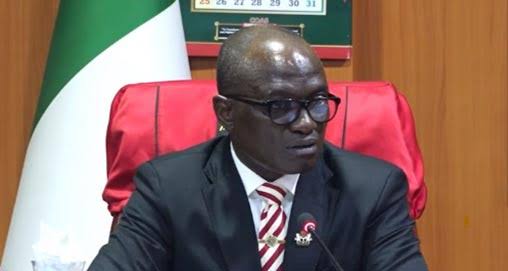
The Federal Government has said terrorism in Nigeria’s North-West is increasingly driven by economic interests rather than ideology, warning that efforts to address insecurity must respond to the financial motives sustaining violent groups.
The National Coordinator of the National Counter-Terrorism Centre, Major General Adamu Laka, made the assessment at a policy roundtable in Abuja on Wednesday, October 28. The meeting focused on limiting the spread of insurgencies across the North-West and North-Central regions.
Laka said the motivations behind some violent activities had evolved, with financial gain playing a growing role in the operations of armed groups.
“We keep on talking of ideology, ideology. What we have today is no more ideological terrorism; it’s more of economic terrorism. What is happening in the North-West is more economic than ideological,” he said.
The remarks highlight the government’s concern that kidnapping for ransom, extortion, illegal economic activity and other sources of revenue may help sustain armed violence in affected communities.
Laka stressed that military operations alone would not resolve the security crisis. He called for a combination of military action and non-kinetic measures involving government agencies and other stakeholders.
Such an approach can include intelligence gathering, disruption of financial networks, community engagement, improved governance and efforts to reduce the conditions that allow criminal groups to recruit and operate.
The North-West has experienced persistent insecurity, including mass kidnappings, attacks on rural settlements, killings and displacement. The violence has disrupted farming, trade, education and other economic activities in several communities.
The region’s security challenges have also complicated efforts to protect residents, restore livelihoods and maintain access to public services.
Laka’s comments suggest that authorities are seeking to understand the economic incentives behind armed violence as they develop responses to the threat. Identifying how groups obtain money, supplies and local support may help security agencies target the systems that sustain their activities.
However, describing terrorism as increasingly economically motivated does not mean that ideological, political or communal factors have disappeared. The motivations of armed groups can differ across locations and organisations.
The government’s proposed combination of military and non-military measures reflects the complexity of the challenge. Sustained progress would also depend on effective coordination among security agencies, local authorities and affected communities.
The roundtable provided an opportunity for officials and other stakeholders to discuss strategies for containing violence and preventing armed groups from expanding their activities into additional areas.
No single measure is likely to resolve the crisis, and the implementation and impact of proposed interventions will remain important to assessing progress in the region.
Sponsored

Related stories
 News
N’Assembly Lacks Power to Regulate Telecom Operators — Lawyer
Lawyer Sesan Bankole argues that regulating and sanctioning telecommunications operators falls under the Nigerian Communications Commission’s statutory mandate.
 News
Insecurity: Tinubu to Boost Air Force with Five New Helicopters
President Bola Tinubu is expected to induct five new helicopters into the Nigerian Air Force fleet to strengthen operations against terrorism, kidnapping and banditry.
 News
Ebola: WHO Says No Public Gathering Restrictions Advised for Nigeria
The World Health Organisation says it has not advised Nigeria to restrict public gatherings following an imported Ebola case, as health authorities continue monitoring 53 contacts.
 News
Kano Governor’s Aide Appoints Son as Chief of Staff
Ahmad Aruwa, Kano Governor Abba Kabir Yusuf’s publicity adviser, has appointed his son, Aliyu Ahmed, as Chief of Staff among five aides announced for his office.
Comments (0)
Leave a comment
All comments are moderated before publishing. Your email is never published.