
Nigerian-Made Bionic Arm Named Among TIME’s Best Inventions of 2026
The Ubokobong Bionic Arm, developed by Nigerian brothers, has earned global recognition for its lifelike design and muscle-controlled movement.
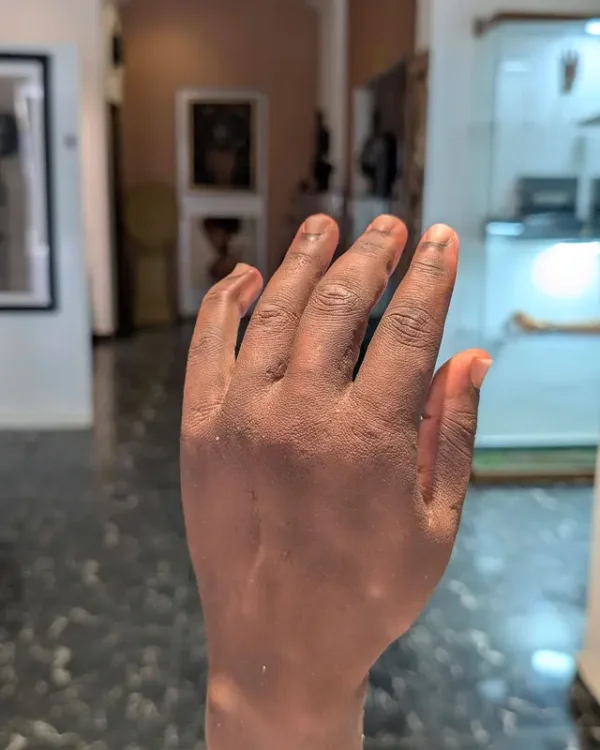
A Nigerian-made prosthetic known as the Ubokobong Bionic Arm has been named among TIME magazine’s Best Inventions of 2026, earning international recognition for its innovation in accessibility.
Developed by Immortal Cosmetic Art, a prosthetics company based in Uyo, Akwa Ibom State, the bionic arm was included in the accessibility category of the magazine’s annual list, published on October 15.
According to TIME, the device uses myoelectric technology, which enables movement to be controlled through electrical signals generated by muscles. The technology combines functional movement with a realistic appearance designed to match the skin tones of Black amputees.
The innovation grew out of a personal experience involving brothers Ubokobong and John Amanam. On New Year’s Day in 2019, Ubokobong lost his fingers in a fireworks accident and struggled to find a prosthetic that matched his dark skin tone.
His brother John, a special-effects artist, initially created a realistic artificial hand to address the problem. The brothers later established Immortal Cosmetic Art to develop lifelike prosthetics for other amputees.
Ubokobong subsequently applied his technology and electronics knowledge to help develop a functional bionic version, combining realistic appearance with muscle-controlled movement.
“We try to restore comfort and confidence to the amputee,” Ubokobong told TIME.
The magazine reported that the arm was being used by clients in 56 countries, reflecting the company’s international reach.
A Reuters report published in August 2025 said the company had received orders from countries including the United States, the United Kingdom, Australia and Ghana. The report also highlighted the challenge of making advanced prosthetics affordable for ordinary Nigerians.
The brothers’ work addresses a gap in prosthetic care, where devices can be expensive, difficult to access and poorly matched to the appearance of users with darker skin tones.
The recognition by TIME places the Nigerian-developed device among the inventions highlighted by the magazine for their contribution to innovation and accessibility.
Sponsored

Related stories
 News
Farage Vows to Scrap UK Graduate Visa Route Used by Over 20,000 Nigerians
Reform UK leader Nigel Farage has pledged to abolish the United Kingdom’s Graduate visa route if his party wins power, a proposal that could affect thousands of Nigerian graduates. Home Office figures show that 20,478 Nigerians received grants under the scheme in the year ending September 2026.
 News
Primate Ayodele Warns of Possible Crisis, Cancellation of 2027 Elections
Leader of INRI Evangelical Spiritual Church, Primate Elijah Ayodele, has warned of possible political violence and widespread tension during the 2027 general elections, saying the polls could be cancelled or postponed if the situation is not properly managed. He urged INEC and security agencies to strengthen preparations against electoral violence.
 News
Court Reserves Judgment in Alleged N3.1bn Fraud Case Against Suswam
The Federal High Court in Abuja has reserved judgment in the alleged N3.1 billion money laundering case involving former Benue State Governor Gabriel Suswam and his former Finance Commissioner, Omodachi Okolobia, following the adoption of final written addresses by their lawyers and the EFCC.
 News
Olofu Urges Benue South Voters to Participate in INEC Mock Accreditation Exercise
Benue South senatorial aspirant, David Olofu, has urged eligible voters in the district to participate in the Independent National Electoral Commission’s mock accreditation exercise scheduled for November 28, 2026, describing it as an opportunity to test electoral technology ahead of the 2027 general elections.
Comments (0)
Leave a comment
All comments are moderated before publishing. Your email is never published.