
Nigeria Needs Risk-Sharing Fund for Primary Healthcare Investment — Reps
Reps call for a risk-sharing fund to attract private investment and strengthen Nigeria’s primary healthcare system nationwide.
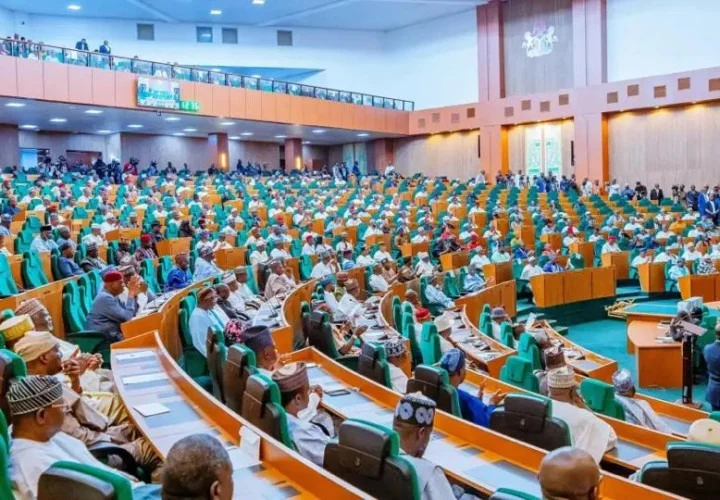
The House of Representatives has called for the establishment of a risk-sharing fund to encourage greater private-sector investment in Nigeria’s primary healthcare system.
The call was made during a legislative engagement on healthcare financing and investment, where lawmakers highlighted the need for innovative funding mechanisms to address persistent challenges affecting primary healthcare delivery across the country.
The lawmakers said Nigeria’s primary healthcare centres require substantial investment in infrastructure, equipment, personnel and essential services to effectively serve communities, particularly in rural and underserved areas.
According to the representatives, government resources alone may not be sufficient to meet the country’s growing healthcare investment requirements, making private-sector participation increasingly important.
They proposed a risk-sharing mechanism that would reduce some of the financial risks associated with investing in primary healthcare facilities and services.
The lawmakers explained that such a fund could provide guarantees or other forms of support that would make healthcare investments more attractive to private investors and financial institutions.
They noted that investors often face challenges associated with long payback periods, limited purchasing power in rural communities and uncertainties surrounding healthcare revenue streams.
A risk-sharing fund, they argued, could help bridge the gap by absorbing part of the risks while allowing private investors to participate in expanding healthcare infrastructure and services.
The initiative is also expected to support the Federal Government’s efforts to improve access to quality healthcare and reduce pressure on secondary and tertiary health facilities.
Primary healthcare remains the first point of contact for many Nigerians seeking medical attention, but several facilities across the country continue to face challenges including inadequate infrastructure, shortages of medical personnel, unreliable power supply and insufficient equipment.
The lawmakers said addressing these challenges would require stronger collaboration between federal and state governments, development partners, private investors and communities.
They also stressed the importance of ensuring that any financing mechanism is transparent, properly regulated and designed to deliver measurable improvements in healthcare outcomes.
The proposed fund could support projects involving the construction, rehabilitation and equipping of primary healthcare centres, as well as investments in technology, diagnostics, renewable energy and other essential services.
Lawmakers further emphasised the need for policies that would create a predictable investment environment and give private-sector participants greater confidence in long-term healthcare projects.
They said improved financing for primary healthcare would contribute to early disease detection, preventive care and reduced healthcare costs for vulnerable populations.
The House is expected to continue discussions with relevant government agencies and stakeholders on mechanisms for mobilising additional resources for the sector.
The proposal forms part of broader efforts to explore alternative financing models that can complement government funding and improve the sustainability of Nigeria’s primary healthcare system.
The lawmakers maintained that attracting private capital, while protecting public interest, would be essential to expanding access to quality primary healthcare services nationwide.
Sponsored

Related stories
 News
Nigerian Midfielder Quadri Liameed Hospitalised After Head Injury In Spain
Nigerian midfielder Quadri Liameed was taken to hospital after losing consciousness following a kick to the head during Sabadell's Spanish second-division match against Albacete. He was later discharged after medical examinations found no further complications.
 News
Army Chief Lists 28,000 Recruitment, 12 Divisions Among First-Year Achievements
Chief of Army Staff, Lieutenant General Waidi Shaibu, has highlighted the expansion of the Nigerian Army from eight to 12 divisions, approval for the recruitment of 28,000 personnel and delivery of 681 housing units as major achievements recorded in his first year in office.
 News
Tinubu Concludes Saudi Arabia Visit After Performing Umrah
President Bola Tinubu has concluded his visit to Saudi Arabia after performing the Umrah pilgrimage and praying inside the Holy Kaaba, expressing gratitude to the Saudi leadership for granting him and members of his delegation the rare privilege.
 News
Reps Propose Licence Revocation For Hospitals Denying Emergency Care
The House of Representatives has proposed stricter penalties for hospitals and healthcare professionals who refuse or delay emergency medical treatment, including financial sanctions, suspension or revocation of operating licences and possible closure of repeat-offending facilities.
Comments (0)
Leave a comment
All comments are moderated before publishing. Your email is never published.