
Nigeria Must Regulate AI Before It’s Too Late, LASU Don Warns
LASU professor urges Nigeria to urgently regulate AI, warning technology could outpace governance and deepen inequality.
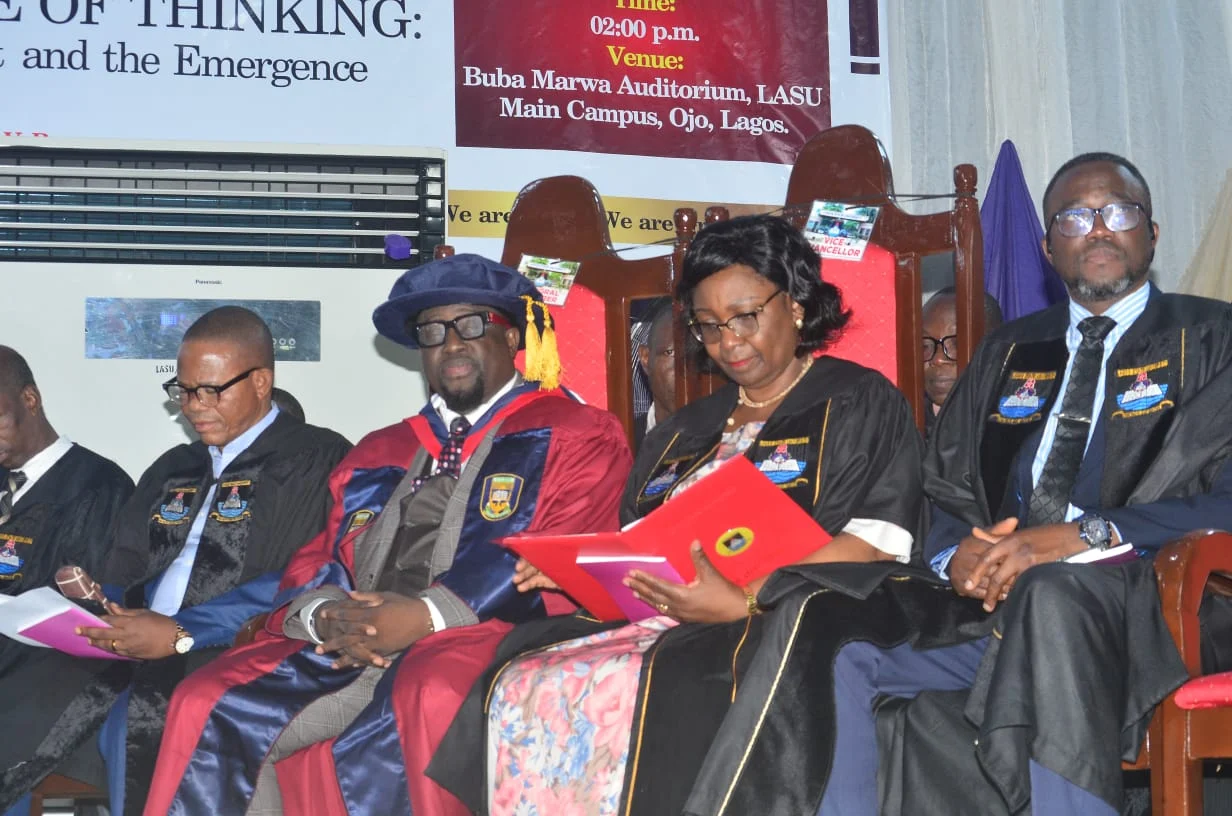
A Professor of Computer Science at Lagos State University, Prof. Oluwatoyin Enikuomehin, has urged Nigeria to urgently establish a comprehensive legal framework for Artificial Intelligence, warning that technological development could outpace effective governance.
Enikuomehin gave the warning on Tuesday while delivering LASU’s 127th Inaugural Lecture, titled, “Thinking Machines and the Future of Thinking: Cyberphysicalism, the Transformation of Human Thought and the Emergence of an Artificial Intelligence Driven Algorithmic Society.”
The don said the central concern surrounding AI was no longer whether machines were intelligent, but how increasingly widespread interaction with AI was changing the way humans think, remember and make decisions.
He noted that many people now begin their day by interacting with smartphones and AI-powered systems, describing the development as a shift towards “thinking with machines”.
According to him, AI has become a powerful extension of human cognition, making effective governance essential to prevent biased, opaque and potentially harmful systems.
To address the challenge, Enikuomehin proposed an “AI Governance Stack”, a seven-layer framework covering infrastructure security, data governance, algorithmic accountability, explainability, ethical oversight, regulatory compliance and societal impact assessment.
He stressed that weaknesses at any level could undermine the effectiveness of the entire governance system.
The professor called for the enactment of a National AI Act that would clearly define governance mechanisms and responsibilities across the different layers of AI deployment.
He also proposed the establishment of an independent National AI Research and Governance Council to evaluate the social impact of AI, advise government on policy and represent Nigeria in international AI governance discussions.
Beyond regulation, Enikuomehin warned that poor digital infrastructure could worsen inequality. He called for universal broadband access, affordable digital devices and reliable electricity to ensure AI benefits Nigerians across socioeconomic groups.
The don also urged citizens to use AI responsibly without surrendering independent thought. He encouraged Nigerians to question and verify AI-generated information, practise ethical judgment and protect their digital identities.
He described personal data as a “cognitive shadow” and said digital privacy should be treated as an aspect of human dignity.
The Vice-Chancellor of LASU, Prof. Ibiyemi Olatunji-Bello, praised the lecture as stimulating and insightful, saying it examined how AI and cyber-physical systems are reshaping human cognition.
She also announced that Enikuomehin would become the first inaugural lecturer to receive the university’s newly introduced commemorative certificate.
Sponsored

Related stories
 News
Global Warming Indicators Hit Record Levels as COP31 Calls for Urgent Action
The World Meteorological Organization says rising global temperatures, ocean heat and greenhouse gases underscore the urgent need for stronger climate action.
 News
Vulnerable Island Nations Demand More Climate Finance at COP31
Small island nations at COP31 have called for stronger climate financing, warning that storms, floods and rising seas threaten livelihoods and development.
 News
War, Conflicts Must Not Distract World From Climate Action — Leaders Warn at COP31
Brazil and Türkiye have urged world leaders to maintain climate commitments despite wars, trade disputes and competing global political and economic crises.
 News
COP31: Energy Transition Takes Centre Stage as Countries Map Path Beyond Fossil Fuels
Countries at COP31 are pushing for faster electrification, renewable energy investment and practical roadmaps to reduce dependence on fossil fuels.
Comments (0)
Leave a comment
All comments are moderated before publishing. Your email is never published.