
Nigeria Cannot Afford Atiku’s Tertiary Education Privatisation Plan — Oshiomhole
Adams Oshiomhole criticises Atiku Abubakar’s education privatisation proposal, arguing that public investment remains essential to expanding access for disadvantaged Nigerians.
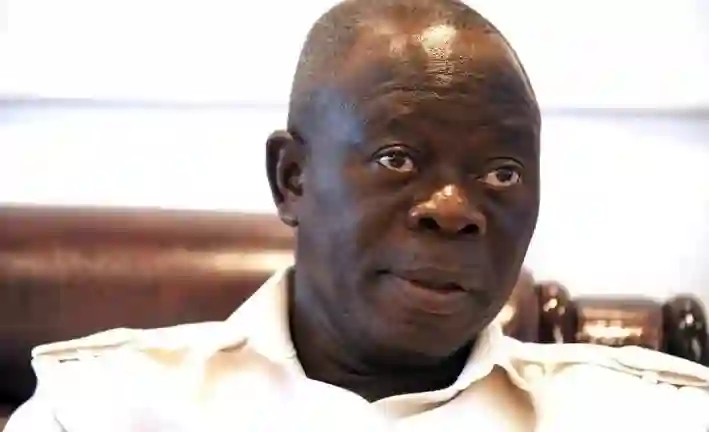
Senator Adams Oshiomhole has criticised former Vice-President Atiku Abubakar’s advocacy for greater private-sector participation in tertiary education, saying Nigeria cannot afford such an approach while millions of children remain out of school.
Oshiomhole made the remarks on Monday, November 16, 2026, in Abuja during the unveiling of the Federal Government’s Renewed Hope Education A-Z Scorecard by the Minister of Education, Dr Tunji Alausa.
The former Edo State governor questioned Atiku’s position on education, recalling that the former vice-president had advocated privatisation and greater private-sector involvement in the sector while serving in government.
He argued that making tertiary education increasingly dependent on private investment could create further barriers for children from low-income families, particularly in a country still struggling to provide basic education for millions.
Oshiomhole also referenced the establishment of the American University of Nigeria in Adamawa State during Atiku’s tenure as vice-president, using it to question his approach to public education.
He said the Nigerian Education Loan Fund (NELFUND), introduced by President Bola Tinubu’s administration, was providing opportunities for students whose families could not afford the cost of tertiary education.
The senator further challenged Atiku and former Anambra State Governor Peter Obi to explain whether they would retain or discontinue the current administration’s education policies if elected president.
He maintained that public resources should be prioritised for student support and education programmes rather than being diverted to benefit politically connected individuals.
“If the money he wishes to use to enrich his friends is not diverted to paying student grants, remember that resources are limited at any point in time. That is why economics is about priorities,” Oshiomhole said.
Atiku had previously defended his position on education, arguing that the Federal Government lacked the resources to fund all universities and that state governments and private investors should play a greater role in the sector.
In 2022, he said he would transfer federal universities to state governments if elected president, while also advocating an enabling environment for local and foreign investors to participate in education.
The debate comes amid continuing concerns over inadequate infrastructure, teacher shortages and the high number of out-of-school children in Nigeria.
The Federal Government has defended its education reforms, including NELFUND, which provides loans for eligible students attending tertiary institutions.
Sponsored

Related stories
 News
Only 14 Nigerian States Pay Pensions Regularly — PenCom Discloses
PenCom says only 14 of Nigeria’s 36 states meet regular pension payment obligations, raising concerns over retirees’ welfare and outstanding benefits.
 News
Nigeria’s Inflation Rate Drops to 14.06% in October — NBS
Nigeria’s headline inflation eased to 14.06 per cent in October from 14.63 per cent in September, as food inflation also declined.
 News
UniAbuja Land Reduction Approved by Wike’s Predecessor — FCTA
FCTA says former minister Mohammed Bello approved the recommendation to reduce UniAbuja’s land, insisting Wike implemented an earlier decision.
 News
Two Killed, 30 Inmates Escape in Chad Prison Break
Two people have been killed and three seriously injured after 30 inmates escaped from a prison in Mongo, central Chad, amid widespread destruction.
Comments (0)
Leave a comment
All comments are moderated before publishing. Your email is never published.