
Need to Move from Small-Scale to Large-Scale Commercial Agriculture in Nigeria
Stakeholders say Nigeria must scale up from subsistence farming to commercial agriculture to boost food production, improve efficiency, and reduce reliance on imports. They argue that larger, mechanised farms could attract investment, strengthen value chains, and create more structured jobs, but stress that land access, infrastructure, and financing remain major barriers.
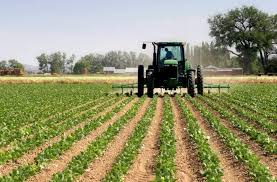
Stakeholders in Nigeria’s agricultural sector have called for a decisive shift from small-scale subsistence farming to large-scale commercial agriculture as part of efforts to strengthen food security and boost economic growth.
They argue that while smallholder farmers remain the backbone of food production in the country, their output is not sufficient to meet the demands of Nigeria’s rapidly growing population, leading to continued reliance on food imports.
Experts say the transition to commercial-scale agriculture would improve productivity through mechanisation, better access to inputs, and more efficient land use systems that support higher yields per hectare.
They also note that large-scale farming can attract private sector investment, improve value-chain development, and create more structured employment opportunities across production, processing, and distribution.
However, concerns remain around land access, financing constraints, and weak infrastructure, which continue to limit the expansion of commercial farming in many parts of the country.
Agricultural analysts further stress that policy consistency, improved rural infrastructure, and stronger support systems for farmers will be essential in successfully driving the sector’s transformation.
Overall, the call reflects ongoing efforts to modernise Nigeria’s agricultural sector and reduce dependence on smallholder output as the primary source of national food supply.
Sponsored

Related stories
 Tech & Education
AI Era: Experts Warn Nigerian Graduates Face Skills Gap
Education experts have warned that Nigerian universities risk producing graduates who are ill-prepared for an AI-driven global job market unless curricula are urgently overhauled. At the StudyIn Global Study Conference 2026 in Lagos, stakeholders called for proactive curriculum reform, ethical AI adoption, and a shift from producing AI users to nurturing AI innovators who can solve real-world problems.
 Tech & Education
YABATECH, Threatremeter Launch Filmmaking Centre
Yaba College of Technology has signed a partnership with Threatremeter Nigeria Limited to establish a Centre for Filmmaking and Production, offering certified training in acting, directing and film production for students and the public.
 Tech & Education
Trinity University Yaba Graduates 323, 79 First Class
Trinity University, Yaba, will confer degrees on 323 graduands at its fifth convocation on October 16, with 79 earning First Class honours and two finishing with a perfect 5.00 CGPA.
 Tech & Education
UK Visa Crackdown Hits Nigerian Students
Nigerian students are being forced to abandon their dreams of studying in the United Kingdom after universities began withdrawing admission offers en masse to avoid breaching a strict new 5 per cent visa refusal threshold. With study visa withdrawals among Nigerian applicants skyrocketing from 4.5 per cent to 22.7 per cent in the first half of 2026, thousands of prospective students now face an uncertain future—and some may be forced to leave the UK altogether.
Comments (0)
Leave a comment
All comments are moderated before publishing. Your email is never published.