
Naira Depreciates to N1,470/$ at Parallel Market, Weakest Performance Since January
The naira weakened to N1,470 per dollar at the parallel market, its lowest level since January 28, amid pressure across Nigeria’s foreign exchange markets.
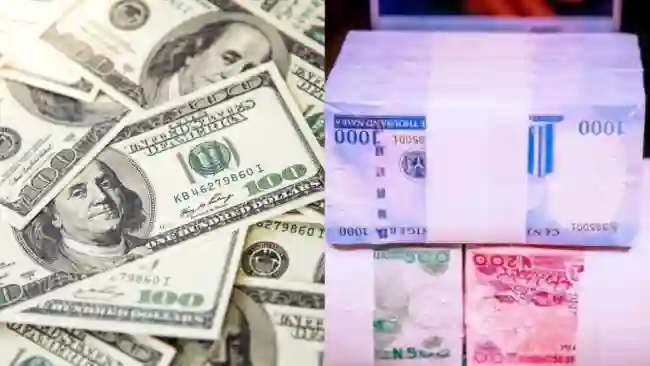
The Nigerian naira depreciated to N1,470 per dollar at the parallel foreign exchange market on Wednesday, November 18, 2026, recording its weakest performance since January 28.
The latest exchange rate represented a decline of N25, or 1.73 per cent, compared with the N1,445 per dollar recorded on Tuesday.
Currency traders, popularly known as Bureau De Change (BDC) operators, in Lagos quoted the buying rate at N1,450 per dollar and the selling rate at N1,470.
The latest decline extended the currency’s recent losses. The naira had traded at N1,430 per dollar on Monday, compared with N1,390 on November 13, representing a depreciation of N40, or 2.88 per cent, within the period.
The currency also weakened at the official foreign exchange market, where it depreciated to N1,363.23 per dollar at the Nigerian Foreign Exchange Market (NFEM).
Data from the official market showed that the naira lost N7.43, or 0.55 per cent, compared with the N1,355.80 recorded on Tuesday.
The latest movement highlights continuing pressure on the local currency across both the official and parallel foreign exchange markets.
Meanwhile, Nigeria’s external reserves stood at $43.64 billion as of November 14, according to data from the Central Bank of Nigeria (CBN).
The figure represents a decline of $1.92 billion, or 4.21 per cent, from the $45.56 billion recorded on January 2, 2026.
In a related development, the CBN and the Nigerian National Petroleum Company Limited (NNPC) signed a Memorandum of Understanding on Wednesday to strengthen foreign exchange inflows, energy financing and macroeconomic stability.
The agreement is expected to support efforts to improve foreign currency earnings and strengthen the country’s economic position.
The naira’s performance remains a major concern for businesses and individuals, particularly those dependent on imported goods and services, as further depreciation could increase foreign exchange costs and contribute to higher prices.
Sponsored

Related stories
 News
‘My Visit Was About Nigeria’s Development’ — Obi Debunks US Congress Endorsement Claims
Peter Obi says his Washington engagements focused on Nigeria’s development and democracy, insisting he neither sought nor claimed an American endorsement.
 News
NLC, TUC Reconcile, Resolve to Cooperate for Workers’ Welfare
Nigeria’s two major labour centres have ended their public disagreement, pledging renewed unity and cooperation to protect workers’ rights and welfare.
 News
ICPC Opposes PFIPC Adeyemi’s Bail, Says ‘Fraud Victims’ May Attack Him Outside Custody
The ICPC has urged an Abuja court to deny Adeniyi Adeyemi bail, arguing that alleged fraud victims could physically attack him if released.
 News
US Commends Nigeria for Rescuing 125 Kidnap Victims, Dismantling Terrorist Camps
The United States has praised Nigerian troops for rescuing 125 abducted persons, dismantling terrorist camps, recovering weapons and clearing explosives.
Comments (0)
Leave a comment
All comments are moderated before publishing. Your email is never published.