
Lagos Sinking by 5mm Annually, Faces Rising Flood Risk — Study
A new satellite-based study finds Lagos sinking five millimetres annually, warning that land subsidence and rising seas could expose millions to flooding.
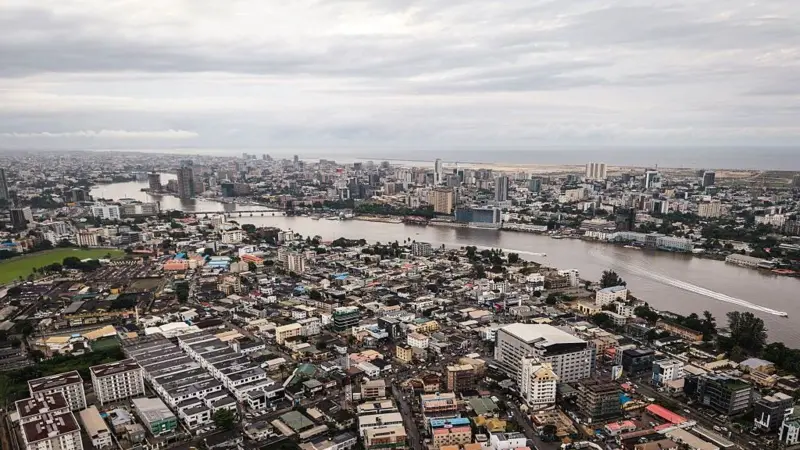
Lagos is sinking at an average rate of five millimetres annually, increasing the city’s vulnerability to coastal flooding as sea levels continue to rise, according to a new scientific study.
The research, titled Sinking Cities: Latent Flood Risk in Africa’s Coastal Megacities, was published on Friday, November 27, 2026, in the journal Science Advances.
The study examined land movement across 20 major African coastal cities using satellite radar observations from the European Space Agency’s Sentinel-1 missions.
Researchers found that Alexandria, Egypt, recorded the highest median subsidence rate of approximately six millimetres per year, followed by Lagos at five millimetres annually. Luanda, Angola, recorded a sinking rate of about 3.8 millimetres per year.
The findings indicate that the sinking rates in Lagos and Alexandria are substantially higher than those represented in the 2021 estimates of the United Nations Intergovernmental Panel on Climate Change.
The researchers warned that the combined effects of land subsidence and rising sea levels could expose more than seven million people, over one million buildings and approximately $180 billion in assets to extreme coastal flooding across the 20 cities by 2050.
Lagos emerged as one of the most vulnerable cities in terms of population exposure. The study estimated that approximately 2.59 million residents were exposed to potential flooding in 2020, with the figure projected to increase to 4.07 million by 2100 under the study’s scenarios.
The researchers also discovered significant differences in land movement within Lagos itself. While some central districts were relatively stable, rapidly urbanising areas on the eastern and western outskirts experienced faster subsidence.
They identified excessive groundwater extraction, the weight of buildings on loose alluvial sediments and the settlement of reclaimed land as possible contributors to the sinking.
Lead researcher Oluwaseyi Dasho explained that land subsidence often goes unnoticed in everyday life but can significantly increase flood exposure over several decades.
The study’s senior author, Manoochehr Shirzaei, said human-driven causes of subsidence could be addressed through better management of land and water resources.
The researchers recommended alternative water sources and measures to reduce excessive groundwater extraction. They also highlighted the importance of flood defences and relocating critical infrastructure to higher ground where necessary.
The findings underscore the need for coastal cities, particularly Lagos, to incorporate local land movement into flood-risk planning rather than relying solely on global sea-level projections.
Sponsored

Related stories
 News
No Nigerian Should Be Poor Amid Abundant Mineral Resources — Adebayo
SDP presidential candidate Adewole Adebayo says Nigeria’s vast mineral and petroleum resources should translate into prosperity, better living conditions and poverty reduction.
 News
‘Don’t Give America Our Blood Samples’ — Shehu Sani Warns Tinubu
Former senator Shehu Sani urges Tinubu’s government not to share Nigerians’ biological samples with America, citing concerns over health data sovereignty.
 News
Babcock Targets 24-Hour Power Supply With Solar, Gas Investments
Babcock University plans to expand solar installations and gas-powered generation, targeting five megawatts to guarantee uninterrupted electricity across its campuses.
 News
2027: Lagos Voters Hail INEC Mock Election, Demand Hitch-Free Polls
Lagos voters commend INEC’s mock election exercise, praising BVAS performance and early officials’ arrival while demanding reliable systems for 2027 polls.
Comments (0)
Leave a comment
All comments are moderated before publishing. Your email is never published.