
INEC Strengthens Defences Against AI-Driven Electoral Misinformation
The Independent National Electoral Commission has introduced automated verification tools and strengthened partnerships with fact-checkers, civil society organisations and government agencies to tackle AI-generated falsehoods ahead of the 2027 general elections.
Summary:
Abuja, November 27, 2026 (GNA) – The Independent National Electoral Commission (INEC) has strengthened measures to counter artificial intelligence-driven misinformation and digitally manipulated content ahead of Nigeria’s 2027 general elections.
INEC Chairman, Prof. Joash Ojo Amupitan, disclosed this on Wednesday in Abuja at a two-day International Multi-Stakeholder Forum on Disinformation in Electoral Contexts in West Africa.
Represented by his Chief Press Secretary, Dayo Oketola, Amupitan said the commission had introduced automated verification tools and was working with relevant institutions to prevent misleading information from undermining electoral credibility.
He said INEC was collaborating with the National Orientation Agency, civil society organisations and fact-checking groups to improve electoral information management and strengthen public confidence.
The forum was organised by Fundación para la Internacionalización de las Administraciones Públicas in collaboration with FactCheckAfrica, under the European Union Support to ECOWAS in Peace, Security and Governance Project.
It brought together journalists, fact-checkers, civil society organisations, electoral stakeholders and technology experts from Nigeria, The Gambia and Benin to examine emerging threats to electoral integrity.
Founder of FactCheckAfrica, Abideen Olasupo, warned that the use of indigenous languages to spread false information was creating new challenges for conventional fact-checking organisations.
He described the practice as “hyper-local manipulation”, noting that disinformation campaigns increasingly targeted communities with limited access to established verification services.
Olasupo said improving access to credible information in local languages was essential to protecting citizens from manipulation.
The Head of Cooperation at the European Union Delegation to Nigeria and ECOWAS, Massimo De Luca, called for stronger regional cooperation, noting that electoral misinformation could cross national borders and influence Nigerians living abroad.
He stressed the responsibility of governments and media organisations in addressing the spread of false information.
The Spanish Ambassador to Nigeria, Félix Costales, also emphasised the importance of fact-checking but cautioned that efforts to combat misinformation should not undermine media freedom or legitimate public debate.
“The fight against misinformation should not be a weapon against legitimate debates,” he said.
Similarly, the Deputy Head of Mission at the Danish Embassy, Julie Rosenkilde Hannibal, reaffirmed Denmark’s support for regional initiatives promoting peace, security and good governance.
Delivering a keynote address, Director of the International Media and Information Literacy Institute, Dr Sharon Omotoso, called for stronger media literacy programmes to complement fact-checking efforts.
She warned that women were particularly vulnerable to coordinated gender-based disinformation campaigns designed to damage their credibility and discourage political participation.
Omotoso also cautioned against the politicisation of fact-checking, urging media organisations to maintain editorial independence and carefully verify names and identifying details before publication.
The forum featured the launch of Elect Peace, a digital platform developed by Dataphyte Foundation to connect civil society organisations, fact-checkers, training resources and open-source verification tools across West Africa.
Participants also examined the risks associated with AI-generated content, synthetic media, manipulated broadcasts, cross-border disinformation and false narratives circulated through indigenous languages.
Working groups subsequently developed recommendations for a Regional Action Plan on Electoral Disinformation, covering cooperation among civil society networks, media organisations, electoral management bodies, regulators, technology platforms, academic institutions and international partners.
The proposed framework is expected to guide regional collaboration and strengthen responses to coordinated misinformation campaigns as countries, including Nigeria, prepare for upcoming elections.
Punch Newspapers+1
Sponsored

Related stories
 News
Farage Vows to Scrap UK Graduate Visa Route Used by Over 20,000 Nigerians
Reform UK leader Nigel Farage has pledged to abolish the United Kingdom’s Graduate visa route if his party wins power, a proposal that could affect thousands of Nigerian graduates. Home Office figures show that 20,478 Nigerians received grants under the scheme in the year ending September 2026.
 News
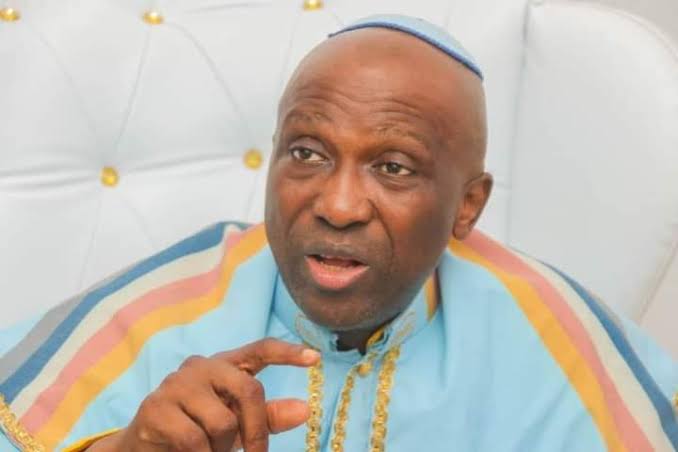
Primate Ayodele Warns of Possible Crisis, Cancellation of 2027 Elections
Leader of INRI Evangelical Spiritual Church, Primate Elijah Ayodele, has warned of possible political violence and widespread tension during the 2027 general elections, saying the polls could be cancelled or postponed if the situation is not properly managed. He urged INEC and security agencies to strengthen preparations against electoral violence.
 News
Court Reserves Judgment in Alleged N3.1bn Fraud Case Against Suswam
The Federal High Court in Abuja has reserved judgment in the alleged N3.1 billion money laundering case involving former Benue State Governor Gabriel Suswam and his former Finance Commissioner, Omodachi Okolobia, following the adoption of final written addresses by their lawyers and the EFCC.
 News
Olofu Urges Benue South Voters to Participate in INEC Mock Accreditation Exercise
Benue South senatorial aspirant, David Olofu, has urged eligible voters in the district to participate in the Independent National Electoral Commission’s mock accreditation exercise scheduled for November 28, 2026, describing it as an opportunity to test electoral technology ahead of the 2027 general elections.
Comments (0)
Leave a comment
All comments are moderated before publishing. Your email is never published.