
FG Turns to Bonds to Address ₦6 Trillion Power Sector Debt
The Federal Government has turned to the domestic bond market to address mounting debts owed to electricity generation companies, estimated at ₦6 trillion by the end of 2025. The move comes amid rising subsidy obligations, concerns over electricity supply and calls for stronger investment, regulatory enforcement and consumer protection.
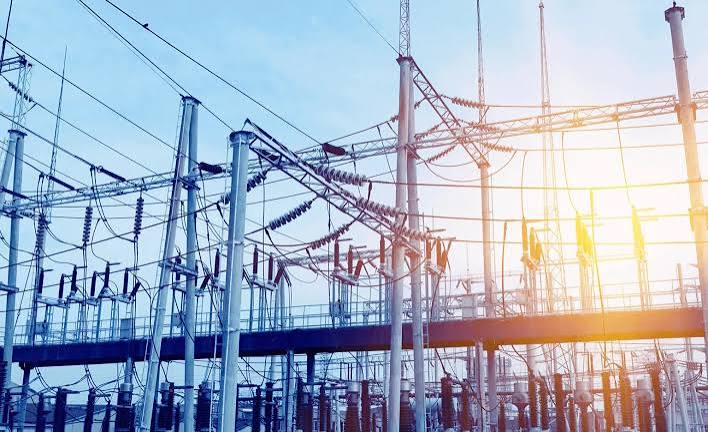
The Federal Government has turned to the bond market to raise funds to address outstanding debts owed to electricity generation companies, as its obligations in the power sector reached approximately ₦6 trillion at the end of 2025.
The borrowing initiative is intended to help settle verified legacy debts arising from electricity tariff subsidies that the government has been unable to fully finance through annual budgetary allocations.
According to the Nigerian Electricity Regulatory Commission’s (NERC) 2025 industry report, the Federal Government’s gross tariff subsidy obligation stood at ₦1.928 trillion last year, representing 57.44 per cent of the total invoice issued by the Nigerian Bulk Electricity Trading Plc (NBET).
The subsidy obligation averaged ₦160.69 billion monthly, with ₦536.40 billion recorded in the first quarter, ₦514.36 billion in the second, ₦458.76 billion in the third and ₦418.79 billion in the fourth quarter.
Although the figure was slightly lower than the ₦1.949 trillion recorded in 2024, the outstanding obligations have continued to place pressure on the electricity market.
In September 2026, the government signed a ₦728.979 billion Series 2 bond under its ₦4 trillion Power Sector Debt Reduction Programme to settle verified debts owed to generation companies and improve liquidity across the industry.
The transaction comprised ₦402 billion in cash bonds raised from the domestic capital market and ₦326.979 billion in non-cash bonds allotted to participating generation companies.
The Managing Director and Chief Executive Officer of NBET, Akinola Odeyemi, said the agency had commenced payments to participating generation companies and their associated gas suppliers following the successful issuance of the bonds.
He said the settlement was part of the Presidential Power Sector Debt Reduction Programme, designed to address historical financial obligations and restore confidence in the electricity market.
Despite the intervention, concerns remain over the industry's ability to translate available generation capacity into reliable electricity for consumers.
The Minister of Power, Joseph Tegbe, has maintained that electricity supply improved over the preceding three months, with generation and transmission reportedly exceeding 5,000 megawatts on several occasions, compared with levels of between 3,700MW and 4,700MW before June.
Tegbe acknowledged, however, that some parts of the country continued to experience inadequate supply. He said the government was working to stabilise the electricity value chain, restore market discipline and strengthen governance.
Among the interventions cited by the minister were the restoration of the 375MW Alaoji open-cycle power plant after three years offline and upgrades to transmission infrastructure.
New transformers commissioned at Apapa, Ijora, Alausa and Lekki in Lagos reportedly unlocked 672MW of transmission capacity, while a 300MVA transformer at Katampe in Abuja added another 240MW.
The government has also pursued renewable energy projects. The Rural Electrification Agency and its partners completed 62 solar and mini-grid installations across 30 states, representing approximately 43.6MW of installed solar capacity and 41,735 new electricity connections, with an estimated reach of more than 208,000 people.
Special Adviser to the President on Power and Chairman of the Presidential Task Force on Power Sector Reset and Restoration, Lanre Babalola, said Nigeria's electricity challenge extended beyond inadequate generation capacity.
He argued that the sector had yet to complete its transition to a competitive electricity market, despite the unbundling of the former vertically integrated utility, privatisation of generation and distribution assets and establishment of NBET as an intermediary.
Babalola said the transitional single-buyer model had become a structural constraint because the intended shift towards direct contracting among market participants had not been fully achieved.
Meanwhile, lawyer and power sector consultant Bode Fadipe questioned whether the increase in electricity revenue had translated into commensurate improvements in service delivery.
He identified insufficient infrastructure investment as a major obstacle and called on NERC to enforce its directives requiring distribution companies to retain part of their revenue for investment.
Fadipe also advocated forensic audits of distribution companies' infrastructure investments to establish whether funds allocated for improvements had been properly used.
Consumer rights advocate Princewill Okorie similarly called for stronger regulatory enforcement and improved protection for electricity users.
He raised concerns about estimated billing, infrastructure charges and reports that consumers in some communities had been required to contribute towards transformers and other distribution equipment.
Okorie urged authorities to strengthen consumer education and establish more effective mechanisms for investigating alleged regulatory violations.
The debt reduction programme is expected to ease some of the financial pressure on generation companies. However, the longer-term sustainability of the electricity market will depend on improved revenue collection, investment in infrastructure, effective regulation and more reliable power supply to consumers.
Sponsored

Related stories
 News
FG Disburses ₦658.9bn to 10.46 Million Vulnerable Households, World Bank Urges Wider Coverage
The Federal Government has disbursed ₦658.9 billion in cash transfers to 10.46 million poor and vulnerable households as of September 2026. The World Bank has called for wider coverage, adequate payments and a sustainable funding framework to strengthen social protection.
 News
SERAP Sues INEC Over Alleged ₦126.46bn Electoral Funds Irregularities
The Socio-Economic Rights and Accountability Project (SERAP) has sued the Independent National Electoral Commission (INEC), seeking a detailed account of more than ₦126.46 billion appropriated for electoral operations. The suit follows alleged procurement and payment irregularities identified in the Auditor-General’s report.
 News
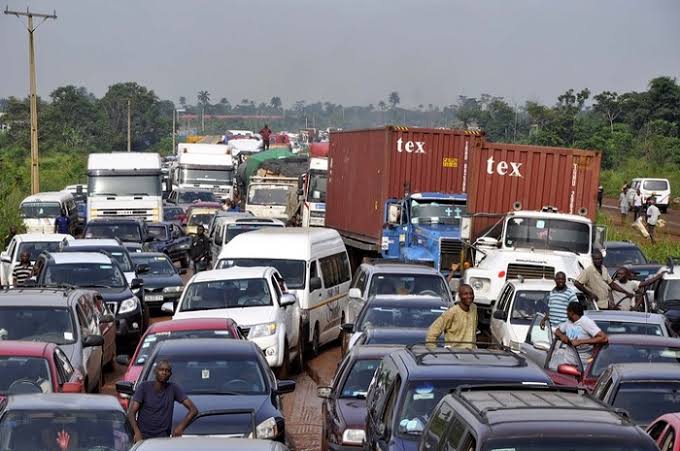
Motorists Spend Over Three Hours in Gridlock on Benin-Lagos Expressway
Motorists and commuters were stranded for more than three hours between Ovia Bridge and Okada Junction on the Benin-Lagos Expressway on Sunday. Vehicle breakdowns, an accident, roadside parking and impatient driving worsened the congestion, prompting calls for road repairs and stricter traffic enforcement.
 News
Uzodimma Reaffirms Tinubu’s Commitment to Local Government Autonomy
Imo State Governor Hope Uzodimma has reaffirmed President Bola Tinubu’s commitment to local government autonomy, institutional strengthening and financial independence. He gave the assurance at the 2026 General Assembly of the Association of Local Governments of Nigeria in Abuja.
Comments (0)
Leave a comment
All comments are moderated before publishing. Your email is never published.