
FG Begins ₦100,000 Family Grant Payments, Warns Beneficiaries Against Scams
The Federal Government has begun notifying beneficiaries of its ₦100,000 Nigeria Family Strengthening and Development Programme (NFSP) grant through SMS messages from designated payment providers. Recipients must follow the instructions and give consent before funds hit their bank accounts,but the programme’s management is warning Nigerians against paying agents, sharing PINs or OTPs, and falling for fake status-checker platforms as phased payments roll out across the six geopolitical zones.

The Federal Government has activated the notification and payment machinery for its ₦100,000 family support grant under the Nigeria Family Strengthening and Development Programme (NFSP), with selected beneficiaries now receiving SMS alerts from designated payment providers ahead of funds being credited to their bank accounts.
The programme, announced by the Federal Ministry of Youth Development on September 10, 2026, is a cash transfer initiative designed to cushion the impact of economic hardship, rising food costs, and the effects of subsidy removal on poor and vulnerable households. It is supported by the World Bank through the Hope for Indigenous Family Support Initiative and coordinated by the initiative’s coordinating office under the ministry’s mandate.
The payment process is notification-based. According to the programme’s management board, successful beneficiaries will receive text messages on the phone numbers contained in the records used during the selection process. The SMS will come from the beneficiary’s designated payment provider,not from the ministry, the World Bank, or any generic “grant office”,and will contain instructions that must be followed before payment is processed.
Crucially, receiving an SMS does not mean the money has arrived. The board explained that recipients must follow the instructions in the message and provide the required consent before the ₦100,000 is credited to the bank accounts they submitted during registration. The consent step is a verification mechanism, not a formality; without it, payment will not proceed.
The rollout is deliberately phased. Selection takes place across Nigeria’s six geopolitical zones, and the programme has a finite number of households for each phase. This means beneficiaries will not all receive notifications or payments at the same time. Nigerians who have not yet received an SMS should not assume they have been permanently excluded—their phase may simply not have been reached.
The programme’s management has also issued a blunt warning against fraud. There is no separate USSD code and no independent online beneficiary-status checker. Anyone promising instant confirmation, “fast-tracking” payments, or inclusion on the beneficiary list for a fee is lying. The board urged Nigerians not to pay agents to process or release the grant, and not to share bank PINs, passwords, or one-time passwords with anyone.
Eligibility remains tightly defined. Applicants must be Nigerian citizens by birth, aged 18 to 65 at the time of registration, and must possess a valid National Identification Number (NIN) verifiable through NIMC. Selection is based on poverty and vulnerability criteria applied through the National Social Safety Net System, with NIN records used to verify identity, reduce duplication, and improve the accuracy of household data. The official registration portal is nfsp.ng/signup, though registration alone does not guarantee selection or payment.
For beneficiaries, the immediate task is vigilance. The SMS is the first and only legitimate notification channel. It will come from a designated payment provider, on the number submitted during registration, and it will require a consent action before payment. Anything outside that sequence,a random WhatsApp message, a phone call demanding payment, a website asking for bank details, or a “facilitator” offering to speed up the process,should be treated as fraud.
For the government, the NFSP is a test of delivery at scale. The programme’s success depends not only on the ₦100,000 reaching the right bank accounts, but on whether the notification and payment system can resist the predators that inevitably gather around cash transfer schemes. The board has drawn the lines clearly: no agents, no fees, no PINs, no OTPs. Whether Nigerians heed those warnings will determine whether this grant becomes a lifeline or another cautionary tale in the long, fraught history of social intervention in Nigeria.
Sponsored

Related stories
 News
With Better Security, Nigerians May No Longer Need Fences — Sowore
AAC presidential candidate Omoyele Sowore says technology-driven security using drones and artificial intelligence could reduce Nigerians’ need for residential security fences.
 News
Atiku Condemns Attack on Former Super Eagles Captain Segun Odegbami
Atiku Abubakar has condemned the machete attack on former Super Eagles captain Segun Odegbami, calling for the immediate arrest of perpetrators.
 News
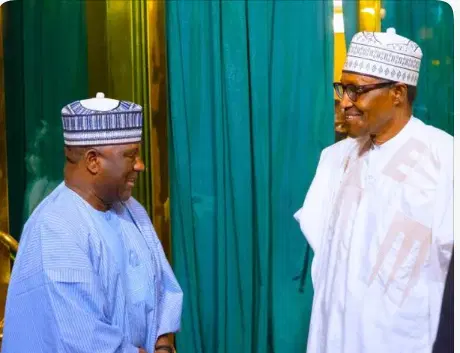
Buhari Saved My Business from Collapse — BUA Chairman
BUA Group Chairman Abdul Samad Rabiu says former President Muhammadu Buhari’s intervention during a business crisis saved his investments from collapse.
 News
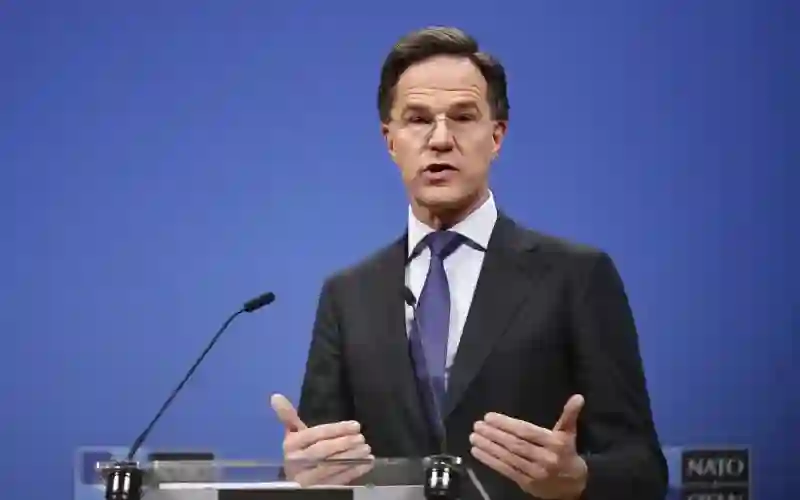
NATO Pledges to Defend Poland After Russian Missile Incursion
NATO Secretary General Mark Rutte has pledged to defend Poland following Russian missile incursions, as the alliance prepares discussions on strengthening eastern-flank security.
Comments (0)
Leave a comment
All comments are moderated before publishing. Your email is never published.