
EFCC’s FAAC Monitoring Initiative: A Welcome Move, Long Overdue
GNA welcomes EFCC's monitoring of FAAC allocations, calling for transparent spending, grassroots accountability and citizen participation.

By Dr. Kayode Elusoji
Executive Director, Great Nigerian Assembly (GNA)
On behalf of the Great Nigerian Assembly (GNA) and our members at home and in the diaspora, I commend President Bola Ahmed Tinubu for approving the involvement of the Economic and Financial Crimes Commission (EFCC) in monitoring allocations from the Federation Account Allocation Committee (FAAC) to Nigeria’s 36 states and 774 local government areas.
I also commend the EFCC Chairman, Mr. Ola Olukoyede, who announced the presidential approval during the commissioning of the Commission’s new Zonal Directorate in Awka, Anambra State. His establishment of a Department of Fraud Risk Assessment and Control to examine how public funds are released and utilised reflects an important shift in the approach to financial accountability.
His words deserve particular attention: “We no longer wait for money to be stolen before EFCC acts.”
This is the kind of proactive approach Nigeria needs. But let me be equally clear: it is long overdue.
For decades, public allocations have left Abuja every month, yet countless communities have continued to wait for the roads, schools, healthcare facilities and clean water those funds were intended to provide. Moving from merely recovering stolen funds to preventing their diversion in the first place is an important step towards strengthening public accountability.
We Saw This Moment Coming in 2024
When President Tinubu championed local government financial autonomy in 2024, following the Supreme Court’s landmark judgment of July 2024 on direct allocation payments to local governments, GNA convened a global seminar in November of that year to examine what the development would mean for ordinary Nigerians.
Our conclusion was straightforward: local government autonomy was a welcome development, but its success depended on two essential conditions — an enabling legal framework for implementation and firm accountability mechanisms to prevent the misuse of public funds.
We maintained that autonomy, supported by these safeguards, would bring governance closer to the people and make government activities more visible and impactful at the grassroots.
The approval now given to the EFCC represents one of the accountability safeguards we advocated. It is an important part of the institutional framework required to ensure that local government autonomy becomes a genuine benefit to citizens rather than another missed opportunity.
Where Funds Are Used Properly, the People Feel the Impact
Developments since 2024 offer useful examples of what responsible resource management can achieve. Where local governments have applied their allocations judiciously, improvements in infrastructure and public services have become more visible.
Lagos State provides notable examples, with several local councils recording progress in infrastructure development.
This performance was recognised at the GNA Global Pacesetter Awards 2025, where Hon. Alabi Kolade David, then Chairman of Bariga Local Council Development Area, was named Local Government Chairman of the Year, while Governor Babajide Sanwo-Olu received the Governor of the Year award.
Our awards are guided by verifiable records of performance rather than political affiliations or personalities. The underlying principle is simple: when public resources reach the grassroots and are managed responsibly, the dividends of democracy become visible in roads, drainage systems, schools and healthcare facilities.
Four Things Must Now Happen
For the EFCC’s new monitoring responsibility to achieve its intended purpose, GNA respectfully urges the following:
1. Track Every Naira to the Last Mile.
Monitoring must extend beyond state treasuries to individual local government accounts and, ultimately, to the specific projects and services financed by public allocations. The objective should be to establish a clear connection between funds released and results delivered.
2. Make Allocation and Expenditure Figures Public.
Monthly allocations received by every state and local government, alongside details of how the funds are spent, should be published in simple, accessible formats. Citizens cannot effectively demand accountability when relevant financial information is unavailable.
3. Exercise Oversight with Fairness and Impartiality.
The powers entrusted to the EFCC and other relevant agencies must be exercised with fairness, due process and strict impartiality. The monitoring exercise must remain focused on accountability and must not be perceived as a political instrument or a means of settling scores.
4. Clarify the Legal and Operational Framework.
The legal and operational details of the monitoring arrangement should be made public. Nigerians deserve clarity on how the EFCC will collaborate with the Office of the Accountant-General, the Federal Ministry of Finance, the Central Bank of Nigeria and the Independent Corrupt Practices and Other Related Offences Commission (ICPC). Transparency about these responsibilities will strengthen public confidence.
Citizens Are Ready: The GNA CAA Governance Model
The EFCC Chairman has called on citizens, civil society organisations, traditional rulers, professional bodies and communities to participate in monitoring public projects and expenditure.
GNA has already taken steps in this direction.
Our Coverage Area Administrator (CAA) Governance Model is a citizen-driven, technology-enabled framework designed to connect Nigerians with their political office holders in a shared commitment to nation-building. It is designed for implementation across all 774 local government areas.
Within each participating local government, the structure brings together a CAA Governance Committee, Ward Managers across the wards, five Special Development Committees, a Local Government Advisory Council and trained Certified Citizen Reporters (CCRs).
Working together, these structures document community infrastructure, assess its condition, monitor projects from announcement to completion and verify reported outcomes through the GNA CAA Governance App.
Under this framework, each Responsible Party’s Record of Performance is based on verified completed projects, not promises, project flag-offs or publicity statements.
On October 24, 2026, with the blessing of His Imperial Majesty, the Ooni of Ife, GNA inaugurated the first of these governance structures in Ife Central and Ife East Local Government Areas of Osun State.
The model is now operational in both councils, with a broader vision of extending the initiative across Nigeria’s 774 local governments.
This is the missing link between monthly public allocations and visible community development. While the EFCC monitors the movement and utilisation of public funds, trained citizens can independently document and verify the projects delivered on the ground.
The GNA CAA structure provides a practical platform for government, communities and responsible political office holders to work together. Government institutions gain access to reliable grassroots information, communities have a voice supported by evidence, and public office holders who deliver on their responsibilities can build verifiable records of performance.
One Million Youths to Take Ownership of the Land
To strengthen citizen participation and expand the country’s human capacity, GNA is preparing to commence the training of one million young Nigerians as Certified Citizen Reporters.
The initiative will also provide opportunities for progression into other professional certifications, including Certified Digital Journalist, Certified Healthcare Assistant, Certified Cybersecurity Professional, Certified Agriculture Professional and Certified AI Associate.
This ambitious programme is intended to prepare Nigerian youths for the next phase of national development by equipping them with practical skills, professional knowledge and opportunities to contribute meaningfully to their communities.
Our young people should not have to leave Nigeria in search of a better life because of governance challenges. They should have the skills, opportunities and enabling environment to build that better life here at home.
I have always maintained that Nigeria is richly endowed with the human, material and natural resources required to become a leading nation. Few countries possess the combination of resources and potential available to Nigeria.
If these resources are properly managed, transparently accounted for and directed towards productive development, the fortunes of our country can change significantly in the years ahead.
The Real Dividends of Democracy Are Within Reach
GNA is a non-political and non-partisan organisation. We neither seek to replace any arm or tier of government nor position ourselves in opposition to or in support of any political party.
Our interest is straightforward: ensuring that public resources reach the people they are intended to serve.
We therefore offer our full cooperation to the Presidency, the EFCC and all relevant government agencies. We also invite state and local governments to partner with the CAA governance structures in their respective areas.
Nigeria’s development requires a collective commitment. Government institutions must uphold accountability, communities must participate actively, and political office holders must be prepared to demonstrate their performance through measurable results.
The EFCC’s monitoring initiative, combined with credible citizen participation and independent verification of projects, presents an opportunity to strengthen accountability across all levels of government.
If implemented transparently, fairly and consistently, the gap between public allocations and actual development can be significantly reduced.
The real dividends of democracy are within reach. The responsibility to make them a reality belongs to all of us.
• GN (Dr.) Kayode Elusoji
Executive Director, Great Nigerian Assembly (GNA)
Chairman, GNA TV & News · GNA Weekly · GNA
Global Pacesetter
Sponsored

Related stories
 News
US Judge Bars Justice Department From Threatening Election Officials
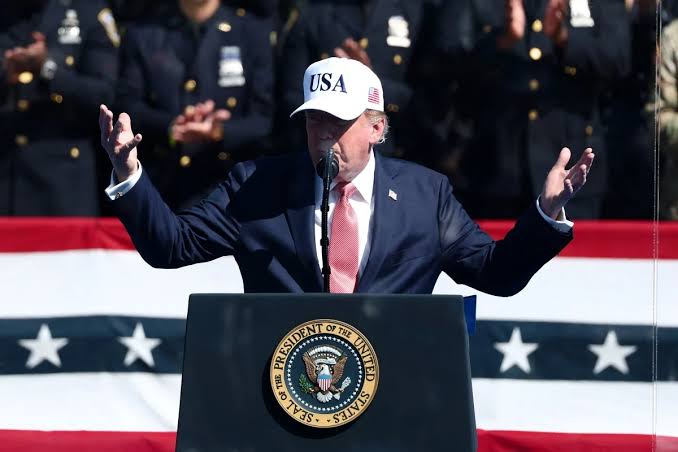
A federal judge in California has ordered the US Department of Justice to stop threatening state and local election officials with prosecution over their handling of ballots linked to voters the Trump administration alleges are non-citizens.
 News
Fani-Kayode Formally Assumes Duties as Nigeria’s High Commissioner to South Africa
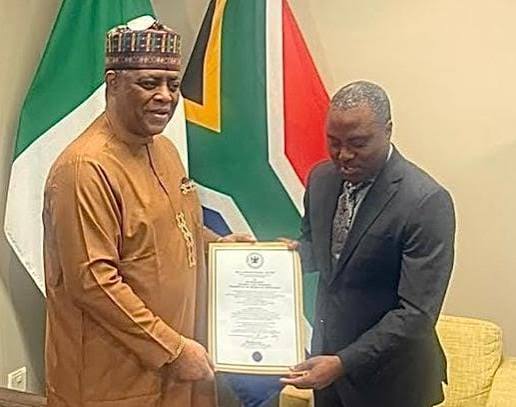
Former Minister of Aviation Femi Fani-Kayode has formally assumed diplomatic duties as Nigeria’s High Commissioner to South Africa after presenting copies of his Letters of Credence to the South African Department of International Relations and Cooperation.
 News
Hamzat Unveils 100-Point Manifesto, Pledges Broad Reforms for Lagos
Lagos State Deputy Governor and All Progressives Congress (APC) governorship candidate, Obafemi Hamzat, has unveiled a 100-point manifesto ahead of the 2027 election, outlining proposals on healthcare, education, transportation, housing, job creation, security and environmental management.
 News
Police Rescue Three Girls from Suspected Human Trafficking in Lagos
The Lagos State Police Command has rescued three young girls allegedly being trafficked after officers intercepted a commercial motorcycle conveying them along Owode Apa Road in Badagry.
Comments (0)
Leave a comment
All comments are moderated before publishing. Your email is never published.