
Coup Trial: Accused Colonel Rejects Military Court Over Jurisdiction Challenge
Coup Trial: Accused Colonel Rejects Military Court Over Jurisdiction Challenge
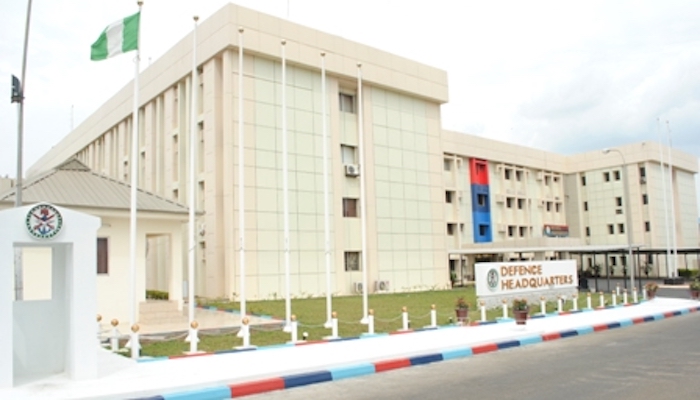
Colonel Mohammed Ma’aji, one of the accused persons in the ongoing trial of alleged mutiny and a plot to overthrow President Bola Tinubu, has challenged the jurisdiction of the Defence Headquarters General Court Martial sitting in Asokoro, Abuja, to hear the case.
Ma’aji is among 36 persons facing charges before the military tribunal under Charge No: DHQ/GAR/ABJ/49/ADM, instituted by the Armed Forces of Nigeria over allegations bordering on mutiny and an attempted overthrow of government.
In a preliminary objection filed before the court martial, Ma’aji asked the panel to strike out all counts against him, arguing that the tribunal lacks legal jurisdiction and that the charges are fundamentally defective.
He contended that the complainant listed as the Armed Forces of Nigeria is not a juristic person and therefore cannot validly initiate or prosecute criminal proceedings.
According to his submission, this alleged legal defect automatically strips the court martial of the authority to hear the case, rendering the entire charge incompetent.
Ma’aji’s legal team also argued that the offences as framed do not properly fall under the scope of mutiny as defined by the Armed Forces Act 2004, insisting that the allegations instead relate to broader constitutional issues outside military discipline.
He maintained that the particulars of the charge fail to establish key elements required for mutiny, including insubordination or organised rebellion within a military command structure.
Relying on several Supreme Court precedents, the defence argued that criminal statutes must be interpreted strictly in favour of the accused, and that any ambiguity should lead to dismissal of the charges.
The objection further urged the court to strike out counts one to nine for lack of jurisdiction and to decline any further proceedings in the matter.
Meanwhile, proceedings in a related trial at the Federal High Court in Abuja have continued, where a prosecution witness alleged that Ma’aji was linked to discussions about forcibly accessing the Presidential Villa.
The witness, Zekeri Umoru, claimed in video evidence that plans were discussed involving recruitment of insiders, disruption of power supply within the Villa, and payment negotiations to facilitate entry through security routes.
He also alleged that Ma’aji insisted on pushing ahead with the plan despite warnings that it could lead to bloodshed, claims the accused has not publicly responded to in detail in court.
The court has since adjourned the matter for continuation of the trial-within-trial over the admissibility of the defendants’ statements.
Sponsored

Related stories
 News
News
FG Seeks World Bank Guarantees for Infrastructure Financing
Nigeria’s Oyedele and Cardoso seek World Bank guarantees to attract private capital for infrastructure projects.
 News
News
Power: FG to Clear GenCos’ Legacy Debts in 2027 — Tegbe
Power Minister Joseph Tegbe says the Federal Government aims to settle outstanding legacy debts owed to electricity generation companies by 2027.
 News
News
IPO: Dangote Petroleum Refinery Extends Offer Period by Two Weeks
Dangote Refinery extends its share offer to October 27, giving investors more time to participate in the landmark IPO.
 News
News
Houthi Official Warns of ‘Swift, Painful Response’ if US Enters Yemen War
Houthi official Mohammed Al Bukhaiti threatens US interests if Washington joins Saudi Arabia’s military campaign against the group.
Comments (0)
Leave a comment
All comments are moderated before publishing. Your email is never published.