
CJN Warns Judges Against Pressure, Conflicting Orders Ahead of 2027 Elections
Chief Justice of Nigeria Kudirat Kekere-Ekun has urged judges to resist political pressure, prevent conflicting court orders and ensure that election-related disputes are handled impartially and in accordance with the law ahead of the 2027 general elections.
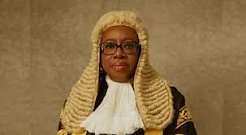
Chief Justice of Nigeria (CJN), Justice Kudirat Kekere-Ekun, has cautioned judicial officers, particularly heads of courts, against forum shopping, concealment of related proceedings and attempts to obtain conflicting court orders ahead of the 2027 general elections.
Kekere-Ekun gave the warning on Monday in Abuja at the opening of the 2026 Roundtable for Heads of Courts, organised by the National Judicial Institute (NJI).
She said election-related disputes often attract intense public interest and place considerable pressure on the judiciary, making it essential for judges to remain impartial and apply the law without interference from political interests or public sentiment.
The CJN stressed that the Constitution, the Electoral Act and applicable court rules must guide judicial decisions, regardless of the urgency or political sensitivity of a case.
She urged heads of courts to establish appropriate administrative arrangements for handling election-related cases promptly and in an orderly manner, while ensuring that applications were carefully examined and relevant facts fully disclosed.
Kekere-Ekun warned that litigants must not be allowed to manipulate judicial processes to secure favourable decisions by filing related cases in different courts or concealing the existence of pending proceedings. She said such practices undermine consistency, encourage abuse of court processes and expose the judiciary to avoidable controversy.
The CJN also expressed concern over delays in the administration of justice, noting that prolonged proceedings impose financial and emotional burdens on litigants, weaken confidence in the courts and reduce the practical value of judicial remedies.
She attributed some delays to inadequate funding, infrastructure and judicial manpower, while observing that others could be addressed through better court administration.
According to her, inefficient case management, repeated adjournments, poor scheduling and inadequate monitoring of inactive cases contribute to unnecessary delays.
She therefore urged heads of courts to maintain accurate records of pending cases, identify long-standing matters and develop strategies to reduce backlogs, improve hearing schedules and ensure that concluded cases were promptly removed from active dockets.
However, she cautioned against measuring judicial efficiency solely by the number of cases disposed of, emphasising that proceedings must be fair, competent and concluded within a reasonable time without compromising litigants’ rights to a fair hearing.
On judicial appointments, Kekere-Ekun called for transparent, fair and merit-based selection processes. She urged judicial leaders to resist external pressure and prioritise competence, character and suitability when recommending candidates for judicial office.
She added that maintaining public confidence required credible appointment procedures and a professional culture built on impartiality, accountability and integrity.
The CJN further directed heads of courts to ensure that judges commenced sittings punctually and that lawyers and litigants were promptly informed when scheduled court sessions were cancelled.
She described punctuality as a professional obligation, noting that it was unacceptable for litigants and lawyers to incur travel expenses only to discover that their cases would not be heard.
She also called for professional conduct in courtrooms, insisting that judicial authority should be exercised with fairness, composure and respect. Judges, she said, must maintain order without humiliating lawyers or litigants and ensure that courtrooms remain free from bullying and harassment.
Kekere-Ekun advocated sustained investment in judicial support personnel, including registrars, research officers, administrative staff and information technology workers. She also recommended structured mentorship programmes through which newly appointed judges could gain experience under the guidance of senior judicial officers before sitting independently.
Earlier, NJI Administrator and retired President of the National Industrial Court, Justice Babatunde Adejumo, said the judiciary remained under close public scrutiny because of its responsibility for administering justice and upholding the rule of law.
Adejumo described the roundtable as an opportunity for heads of courts to discuss shared challenges and develop practical solutions, adding that the programme was designed to encourage open deliberations and minimise external interference.
He also commended the CJN for reforms which, he said, had strengthened judicial independence and promoted integrity across the courts.
The meeting comes as Nigeria prepares for the 2027 general elections, a period expected to bring increased litigation over political parties, candidates and electoral processes.
Sponsored

Related stories
.jpg) News
Katsina Governor Mourns Slain Islamic Cleric, Calls for Thorough Investigation
Katsina State Governor Dikko Radda has condemned the killing of Islamic cleric Sheikh Yahaya Masussuka and his associate, urging security agencies to identify and arrest those responsible.
.jpg) News
Gunmen Kill Islamic Cleric, Friend in Katsina
Gunmen on a motorcycle have killed Islamic scholar Sheikh Yahaya Ibrahim Masussuka and his friend, Adamu Abubakar, outside the cleric’s residence in Dutsin-Ma, Katsina State, prompting police to launch an investigation and deploy teams to track down the attackers.
 News
Nigerian Fugitive Arrested at US Airport Six Years After Fleeing Trial
US authorities have arrested Nigerian national Adetunji Abudu at Boston Logan International Airport, six years after he fled to Nigeria amid an investigation into an alleged money-laundering conspiracy linked to fraud schemes targeting elderly Americans.
 News
Gunmen Kill Islamic Cleric, Friend in Katsina
Gunmen on a motorcycle have killed Islamic scholar Sheikh Yahaya Ibrahim Masussuka and his friend, Adamu Abubakar, outside the cleric’s residence in Dutsin-Ma, Katsina State, prompting police to launch an investigation and deploy teams to track down the attackers.
Comments (0)
Leave a comment
All comments are moderated before publishing. Your email is never published.