
Brymo Challenges Afrobeats’ ‘Big Three’ Narrative
Controversial singer Brymo has ignited a fresh firestorm in Nigerian music circles, publicly questioning the entrenched “Big Three” narrative that elevates Davido, Burna Boy, and Wizkid above every other Afrobeats act. In a blistering intervention that cuts to the heart of how the industry manufactures hierarchy, Brymo argues that the trio’s dominance is as much a media construction as a musical fact—and warns that the myth is suffocating the genre’s next generation.

The singer Brymo has never been one to genuflect at the altar of Afrobeats royalty. This week, he proved it again, publicly challenging the “Big Three” designation that has for years grouped Davido, Burna Boy, and Wizkid as the undisputed summit of Nigerian music.
In a series of remarks that have since detonated across social media and music blogs, Brymo questioned the logic, fairness, and historical accuracy of a label that has become so entrenched it is now treated as fact. The “Big Three” framing—cemented by streaming numbers, sold-out arenas, Grammy nominations, and relentless media repetition—has long been the industry’s shorthand for excellence. Brymo’s intervention suggests it is something else entirely: a marketing convenience that erases the contributions of dozens of artists who built Afrobeats before the global spotlight arrived.
At the heart of Brymo’s argument is a provocation that will not sit well with the trio’s legions of fans: that commercial dominance is not the same as artistic leadership, and that chart success does not confer the right to be called the genre’s definitive voices. The singer, known for his genre-defying catalogue and equally defiant public statements, has consistently rejected the industry’s obsession with ranking artists by streaming figures and brand endorsements. His latest salvo extends that critique to the “Big Three” itself.
The timing is pointed. Afrobeats is in the midst of its most consequential global expansion, with Nigerian artists selling out stadiums in London, New York, and Los Angeles, headlining major festivals, and signing landmark deals with international labels. Yet the industry’s internal hierarchies have hardened even as its global footprint has widened. Critics argue that the “Big Three” narrative has become a self-fulfilling prophecy: media outlets cover the trio obsessively, brands pay premiums for their endorsement, playlists prioritise their releases, and emerging artists are measured against a standard that few can realistically reach.
Brymo’s intervention taps into a broader unease. Veteran artists, producers, and industry insiders have long whispered that the “Big Three” label is reductive—a convenient shorthand that ignores the foundational contributions of artists like 2Baba, D’banj, P-Square, and Asa, as well as the innovative work of contemporary acts such as Rema, Fireboy DML, Omah Lay, Tems, and Ayra Starr, who have built international audiences on their own terms. For Brymo, the question is not whether Davido, Burna Boy, and Wizkid are successful—their achievements are undeniable—but whether success alone should determine who gets to define a genre’s identity.
The singer’s critique also carries a personal dimension. Brymo has spent years operating outside the industry’s mainstream infrastructure, releasing critically acclaimed albums without the backing of major labels or the playlist machinery that powers commercial hits. His career is a living argument that artistic merit and commercial ranking are not synonymous, and that the “Big Three” framework marginalises artists who choose a different path.
Reaction has been immediate and polarised. Fans of the trio accused Brymo of bitterness and attention-seeking, pointing to their idols’ streaming numbers, awards, and global tours as irrefutable evidence of supremacy. Supporters of Brymo countered that he was raising a necessary question about how the industry manufactures consensus and silences dissent. Industry observers, meanwhile, noted that the debate is not new—similar arguments have surfaced about “Big Two” narratives in hip-hop and “Big Four” labels in rock—but that it has rarely been articulated so directly by a peer.
The controversy also raises uncomfortable questions about gatekeeping in Afrobeats. Who decides which artists belong at the top? Is it streaming platforms, radio stations, award committees, or fans? And what happens to the genre’s diversity of sound and perspective when a handful of acts absorb the bulk of media attention, brand investment, and international opportunity?
For now, Brymo has achieved what he may have intended: forcing a conversation the industry would rather avoid. Whether or not one agrees with him, his intervention has exposed a fault line that runs through the heart of Afrobeats’ global ascent—between the stories the industry tells about itself and the more complicated reality beneath. The “Big Three” may remain the dominant narrative, but Brymo has ensured it will no longer go unquestioned.
Sponsored

Related stories
 Entertainment
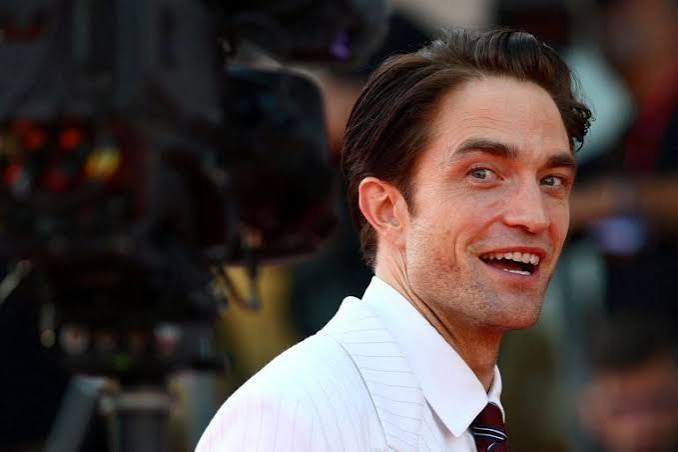
Robert Pattinson Named as New James Bond
British actor Robert Pattinson has been officially confirmed as the next James Bond, succeeding Daniel Craig in the iconic 007 franchise. The upcoming film will be directed by Denis Villeneuve, with a screenplay by Steven Knight.
 Entertainment
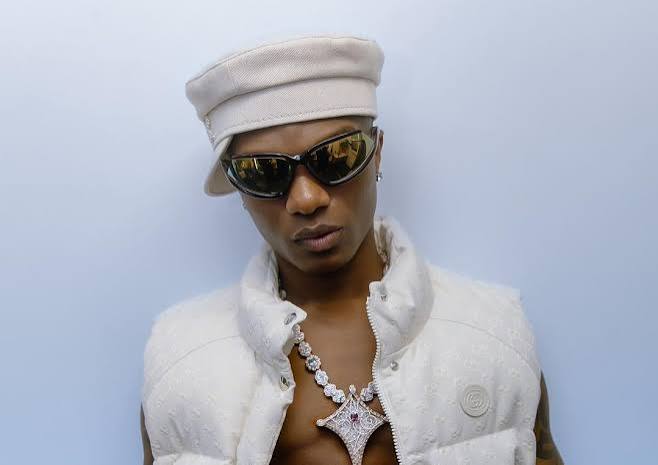
Wizkid, Asake, Davido, Burna Boy, Tems, Ayra Starr Earn 2027 Grammy Nominations
Nigerian singer Wizkid has earned a 2027 Grammy nomination through his collaboration with Asake on ‘Jogodo’, while Asake secured two nominations. Davido, Burna Boy, Tems and Ayra Starr also received recognition across different categories at the 69th Grammy Awards.
 Entertainment
Davido’s Sister Styles Her Own Wig After Stylist Arrives Late
Sharon Adeleke, founder of Rona Wigs, publicly criticised a hairstylist who arrived about an hour after a booked 8:00 a.m. appointment, saying she had already styled her own hair and urging Nigerian vendors to respect their clients’ time.
 Entertainment
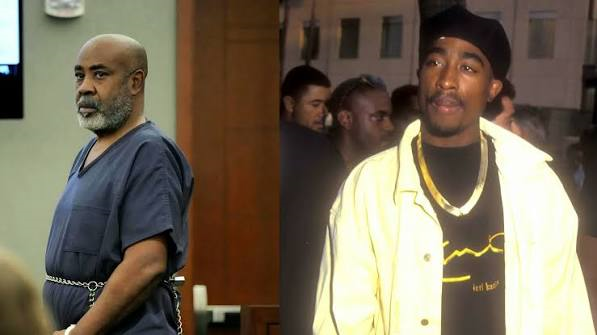
Keffe D Sentenced to 40 Years to Life for Tupac Shakur’s Murder
Duane “Keffe D” Davis, the former gang leader convicted of orchestrating Tupac Shakur’s 1996 murder, has been sentenced to 40 years to life in a Las Vegas courtroom. Davis, who insisted he would appeal, was told by the judge: “It took us 30 years, but at this time, you are going to face justice for what you did.”
Comments (0)
Leave a comment
All comments are moderated before publishing. Your email is never published.