
APC, ADC Trade Blame Over Campaign Violence as Jonathan Warns of Post-Election Crisis
Former President Goodluck Jonathan has warned that growing political intolerance, electoral violence and declining public confidence in democratic institutions could trigger a serious crisis after the 2027 elections. Meanwhile, the APC and ADC have exchanged accusations over attacks on campaign activities, as the Senate and INEC call for accountability.
Former President Goodluck Jonathan has warned that Nigeria could face a serious crisis after the 2027 general elections if rising political intolerance, thuggery, ethnic rivalry and declining confidence in democratic institutions are not urgently addressed.
Jonathan gave the warning on Tuesday at the 2026 Goodluck Jonathan Foundation Peace Conference in Abuja, themed, “Safeguarding Trust and Strengthening Social Cohesion in a Competitive Political Environment”.
He expressed concern that political parties and campaign organisations were increasingly operating like rival groups, with opponents treated as enemies rather than participants in a democratic process.
The former president said he had received calls from Nigerians and friends abroad expressing concern about the country's political direction and the possibility of post-election instability.
He also criticised conflicting judicial pronouncements, particularly when courts of coordinate jurisdiction issue contradictory decisions on the same matters, warning that public perceptions of judicial manipulation could undermine confidence in the justice system.
Jonathan cautioned that the 2027 elections could degenerate into destructive ethnic rivalry if political leaders continued exploiting divisions for electoral advantage.
He warned that losing confidence in the courts could encourage citizens to resort to self-help, with potentially disastrous consequences for national unity.
Using football as an analogy, he described the Independent National Electoral Commission (INEC) as the referee, the judiciary as the video assistant referee, while the public represented supporters whose conduct could influence the outcome of the game.
He urged religious leaders, traditional rulers and other influential members of society to promote tolerance and discourage political violence.
Speaking at the conference, INEC Chairman, Professor Joash Amupitan, acknowledged that the 2023 general elections had left a significant trust deficit.
He condemned attacks on political convoys and supporters, warning that security agencies would pursue those responsible for promoting and perpetrating violence without political bias.
Former President of the ECOWAS Commission, Dr Omar Alieu Touray, also identified public trust, responsible political competition, inclusive development and effective responses to misinformation as essential requirements for peaceful elections.
He cited Jonathan's decision to concede defeat in the 2015 presidential election as an example of leadership that prioritised national stability over personal ambition.
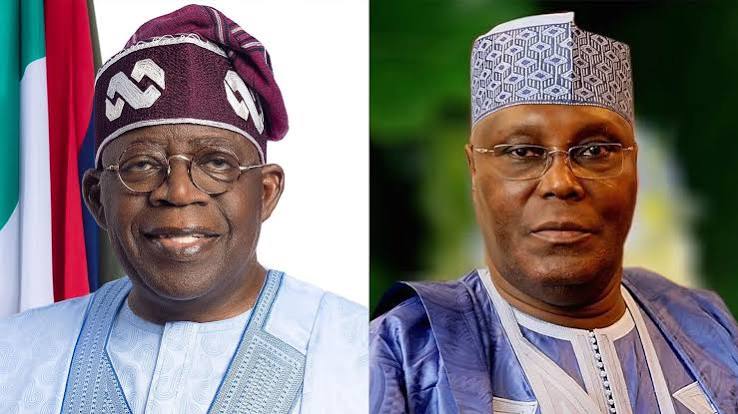
Meanwhile, the ruling All Progressives Congress (APC) and the opposition African Democratic Congress (ADC) have continued to exchange accusations over violence surrounding political campaigns ahead of the 2027 elections.
The APC Presidential Campaign Council accused the ADC and the Nigeria Democratic Congress (NDC) of sponsoring violence, recruiting young people to disrupt its campaign activities and using propaganda to undermine President Bola Tinubu's administration.
In a statement issued on Tuesday, the council's spokesperson, Dele Alake, alleged that opposition elements were deploying hoodlums, artificial intelligence-generated images, deepfakes, misinformation and sponsored protests to create political tension.
He recalled that the council had raised concerns ahead of the APC presidential campaign rally in Kaduna on October 24, alleging that opposition groups planned to introduce violence into the campaign process.
Alake also cited an incident at an Abuja mosque last Friday, where protesters reportedly pelted the President's motorcade with stones, describing it as part of an alleged attempt to disrupt the ruling party's activities.
However, the APC campaign council did not provide evidence in its statement to establish the alleged involvement of the ADC and NDC in the incident.
Responding, the ADC Presidential Campaign Council accused the ruling party of attempting to blame the opposition for public dissatisfaction arising from economic hardship.
Its Director of Strategic Communication, Phrank Shaibu, rejected the allegations, insisting that the party neither sponsors violence nor recruits young people to attack political opponents.
The council argued that the APC should address concerns over the rising cost of living rather than portray public anger as an opposition conspiracy.
It also questioned conflicting accounts by the Presidency and the APC campaign council regarding the Abuja motorcade incident, demanding evidence linking the opposition to the confrontation.
The ADC condemned attacks on political campaigners, supporters, places of worship and public property, regardless of political affiliation, and called for impartial investigations into reported incidents.
The opposition party also criticised the Kaduna State Government for refusing to grant it access to the Ranchers Bees Stadium for its scheduled rally on Wednesday.
The state Ministry of Local Government had rejected the party's application in a letter dated November 12, citing ongoing renovation work at the facility.
However, the ADC's National Publicity Secretary, Bolaji Abdullahi, questioned the explanation, noting that the APC had held its presidential campaign flag-off at the same stadium on October 24.
The party insisted that it would proceed with its rally in Kaduna, even if it had to take its activities to the streets.
In a related development, the Senate has ordered a one-week investigation into reported attacks involving President Tinubu, former Vice-President Atiku Abubakar and other political figures.
The resolution followed a motion sponsored by Senator Abdul Ningi, representing Bauchi Central, who raised concerns over attacks on political gatherings and campaign supporters ahead of the 2027 elections.
Ningi cited the disruption of an NDC procession in Sapele, Delta State, on November 7, which reportedly left one person dead and five others injured.
He also referenced the reported attack on Atiku's convoy in Sokoto, alongside other incidents in Benue and Edo states.
During the debate, Senator Babangida Husaini accused the National Assembly of failing to ensure the implementation of previous electoral reform recommendations designed to address political violence.
He recalled the recommendations of the 2008 Justice Muhammadu Uwais Electoral Reform Committee, which proposed establishing institutions to address electoral offences and violence.
Husaini argued that successive administrations had failed to implement key recommendations, including proposals to strengthen the independence of INEC and improve the prosecution of electoral offences.
Other lawmakers called for tougher action against politicians who sponsor violence, with some proposing special courts to handle electoral offences and prosecute those financing attacks.
Senate President Godswill Akpabio warned that candidates who sponsor violence or deploy armed thugs against political opponents could face disqualification under the Electoral Act 2026.
He also drew attention to Sections 121 to 128 of the Act, which provide penalties for electoral offences, including intimidation and attacks involving dangerous weapons.
The Senate's intervention and Jonathan's warning come amid growing concerns over the safety of political campaigns and the credibility of Nigeria's democratic institutions ahead of the 2027 general elections.
Sponsored

Related stories
 News
‘My Visit Was About Nigeria’s Development’ — Obi Debunks US Congress Endorsement Claims
Peter Obi says his Washington engagements focused on Nigeria’s development and democracy, insisting he neither sought nor claimed an American endorsement.
 News
NLC, TUC Reconcile, Resolve to Cooperate for Workers’ Welfare
Nigeria’s two major labour centres have ended their public disagreement, pledging renewed unity and cooperation to protect workers’ rights and welfare.
 News
ICPC Opposes PFIPC Adeyemi’s Bail, Says ‘Fraud Victims’ May Attack Him Outside Custody
The ICPC has urged an Abuja court to deny Adeniyi Adeyemi bail, arguing that alleged fraud victims could physically attack him if released.
 News
US Commends Nigeria for Rescuing 125 Kidnap Victims, Dismantling Terrorist Camps
The United States has praised Nigerian troops for rescuing 125 abducted persons, dismantling terrorist camps, recovering weapons and clearing explosives.
Comments (0)
Leave a comment
All comments are moderated before publishing. Your email is never published.